Bttr. · Field Guide
What Is an AI Product Design Agency?
An AI product design agency designs, builds, and operates AI native product surfaces for companies. Definition, what they actually do, and how they differ from a traditional design agency.
The short answer
The agency that ships AI native products, not retrofit ones.
Most software products were designed for deterministic systems. The engineer knew what the output would be. The designer drew a button. The user clicked it. Predictable.
AI products invert that. The model decides the output. The designer cannot draw the final UI · the UI is dynamic, generated, sometimes wrong, occasionally surprising. The product surface has to handle uncertainty, refusal, hallucination, and partial answers without breaking trust.
An AI product design agency is built for that inversion. Senior product designers, AI engineers, brand strategists, and operators in one team · designing for non-deterministic systems, engineering the AI layer in production, and staying to operate the result.
What they actually do
Four layers of work in one engagement.
01
Design AI native product surfaces.
UI for systems that talk back. Chat-first interfaces, agentic workflows, prompt-shaped UX, model-aware error states, and the human controls around them. Not retrofit UI for legacy software.
02
Engineer the AI layer in production.
Model selection, retrieval architecture, agent loops, evals, observability, cost modeling, and the operational layer that makes AI features ship and stay shipped.
03
Build the brand around the AI product.
How an AI product sounds, what it refuses, how it admits uncertainty, what it looks like when it fails · all brand decisions, not just UX. The agency that builds the AI product builds the trust around it.
04
Operate after launch.
AI products do not work the same on day 60 as day 1. The agency that designs and builds the system stays to operate it · eval pipelines, prompt updates, model migrations, drift management.
vs a traditional design agency
Same word, different scope.
Traditional design agency
Designs interfaces for systems where the engineer knows what the output will be. Pixel-precise mockups, deterministic flows, fixed copy. The output of the engagement is a design deliverable handed to engineering.
AI product design agency
Designs interfaces for systems where the model decides the output. Prompt-shaped UX, non-deterministic flows, dynamic copy, model-aware error states. The output of the engagement is a working product surface that includes the AI integration and operates after launch.
How to pick one
Senior team, shipped AI products, operates after launch.
- Senior only. The team you meet in the pitch is the team that ships. No juniors handed off after kickoff.
- Production AI experience. Ask for at least three AI products they shipped that are still running. Not demos. Not prototypes.
- Operates after launch. The agency stays for the operate phase, not just the build. AI products do not work the same on day 60 as day 1.
- Regulated experience. For mission critical work, the agency should have shipped inside HIPAA, FDA, FAA, ITAR, or similar constraint sets.
- Engagement formats that match the work. Sprint, milestone, retainer, operate. Not one fixed shape forced on every client.
Frequently asked
AI product design agency, common questions.
What is an AI product design agency?
An AI product design agency designs, builds, and operates AI native product surfaces for companies. The work spans interface design for AI-first products, engineering the AI layer itself (models, retrieval, agents, evals), brand design around AI products, and operating the AI system after launch. It is distinct from a traditional design agency because the products it ships have model-driven, non-deterministic behavior at their core.
How is an AI product design agency different from a traditional design agency?
A traditional design agency designs interfaces for deterministic systems and hands deliverables to engineering. An AI product design agency designs interfaces for non-deterministic, model-driven systems AND engineers the AI layer AND operates the result. The two run different engagement shapes, different team compositions, and ship different things.
What does an AI product design agency actually do?
Four things, sequenced. (1) Design AI native product surfaces · chat, agents, model-aware UX. (2) Engineer the AI layer in production · model selection, retrieval, evals, observability. (3) Build the brand around the AI product · voice, refusal policies, uncertainty admission, failure-mode design. (4) Operate after launch · eval pipelines, model migrations, drift management.
Why would I hire an AI product design agency instead of building in house?
Speed and senior judgment. Building an AI product surface that ships well requires senior product designers, AI engineers, brand strategists, and operators working together. Most companies do not have all four in house at senior level. An AI product design agency provides that team, fully assembled, on a fixed timebox.
How is an AI product design agency different from an AI sprint or AI Sprint?
An AI Sprint is one type of engagement an AI product design agency runs. The agency offers multiple engagement formats · Sprint, milestone, retainer, operate · depending on whether you need to ship one surface, build a whole product, or run an existing AI system.
Does an AI product design agency only work on AI products?
No, most also work on adjacent product surfaces · internal tooling, dashboards, content workflows, design ops · for clients shipping into AI-heavy contexts. The expertise is in AI native UX, but the engagement scope expands to whatever the client needs to ship.
What kinds of clients does Bttr. work with as an AI product design agency?
Regulated, mission critical organizations. Allergan Aesthetics, AbbVie, GE Aerospace, GE Vernova, Tiger BioSciences, Alterra Mountain Company, and other companies where AI products have to pass audit, work for real users, and stay shipped at year five.
How long does an AI product design engagement take?
Depends on the engagement format. AI Sprint: 2-4 weeks. Brand Sprint with AI integration: 4-8 weeks. Full product build: 3-6 months. Operate phase: ongoing. The engagement format is matched to the surface, not the calendar.
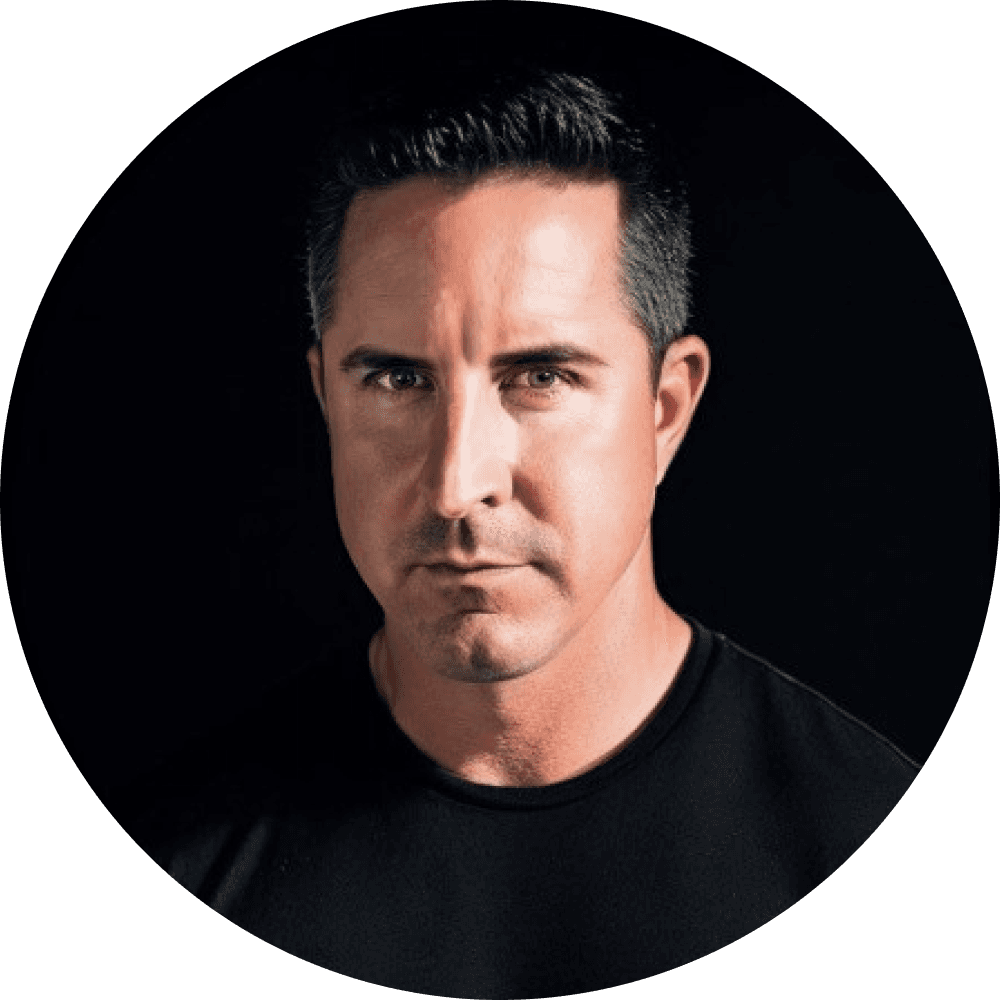
Written by · May 22, 2026
Donny Smith · ECD, Founder, Bttr.
Over the past 15 years, he has led creative teams and contributed to products used by millions of people worldwide, working with companies including Apple, Opendoor, JP Morgan, GE Aerospace, Pepsi, and Alterra Mountain Company.
LinkedInHiring? Compare Bttr.
Where Bttr. fits.
The Field Guide series
Related field guides
Every pillar in the series. The set is designed to be read together.
AI · Concept
What Is AI Search Visibility?
The AI era equivalent of search ranking, measured per engine across ChatGPT, Perplexity, Claude, and Gemini.
Read the field guide →
AI · Method
What Is an AI Sprint?
A two week applied AI engagement that ships a working system your team owns.
Read the field guide →
AI · Generative
Midjourney for 3D
The fastest path from a written idea to a render that reads as a real object.
Read the field guide →
AI · Tactic
The Reddit Effect
Why ChatGPT searches "Reddit" instead of browsing it, and how brands rank for the search it triggers.
Read the field guide →
Bttr. Field Brief
More like this in your inbox.
Monthly. One signal worth your time on Brand Operating Systems, AI search visibility, and the infrastructure buildout. No filler.