Case Study / Tarform
Designing the connected experience for an award-winning electric motorcycle
A real time 3D configurator, a native iPhone companion app, and a manufacturing pipeline that turns a click in Brooklyn into a hand-built electric motorcycle.
Work / Tarform
Sectors
Electric Vehicles
Luxury & Lifestyle
Manufacturing
Client
Tarform
Brooklyn Navy Yard, NY
Year
2026
Our Roles
Product Strategy
UX Design
UI Design
iOS App Design
3D Visualization
Web Experience
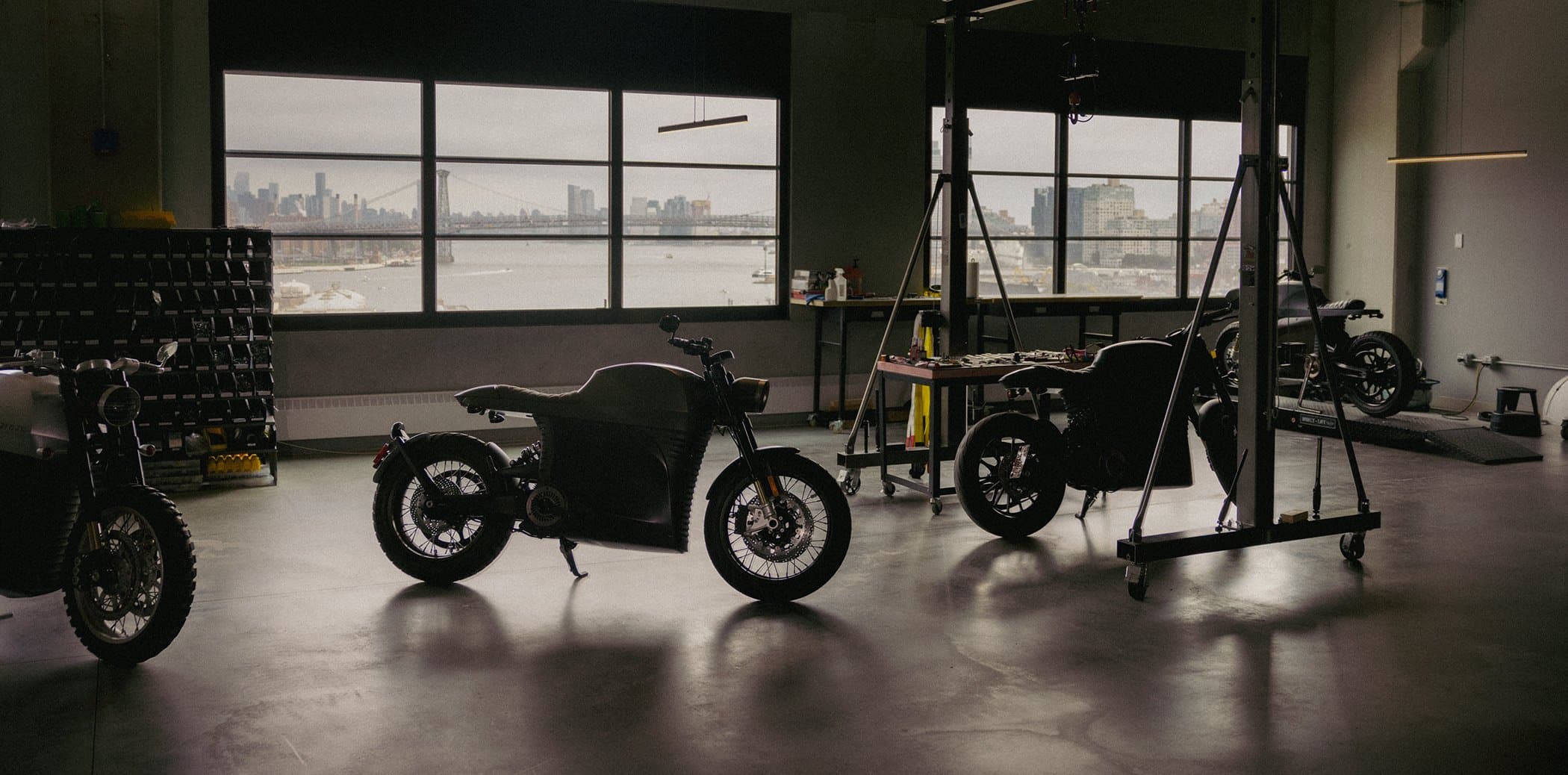
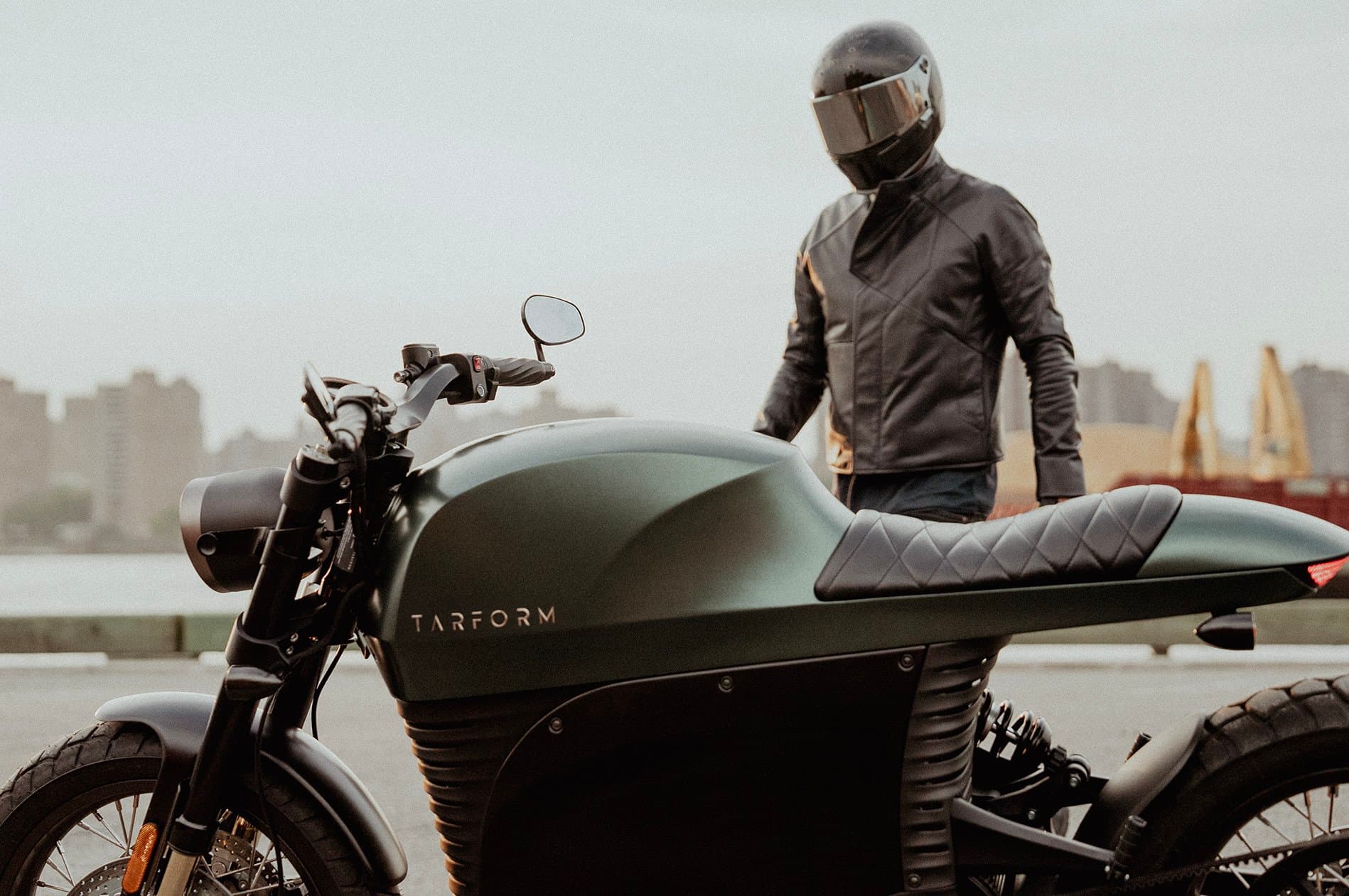
Tarform is a Brooklyn-based manufacturer of electric motorcycles built around a clear principle: objects should be designed to be repaired, not replaced. Sustainable materials, modular hardware, and software that keeps the machine alive long after delivery.
Bttr. partnered with Tarform to design the digital surface of that thesis, a real time 3D configurator that lets buyers commit to a $42K+ build with confidence, and a native iPhone app that turns the bike into a connected, ridable companion.
About Tarform
Built in the Brooklyn Navy Yard. Designed to be kept.
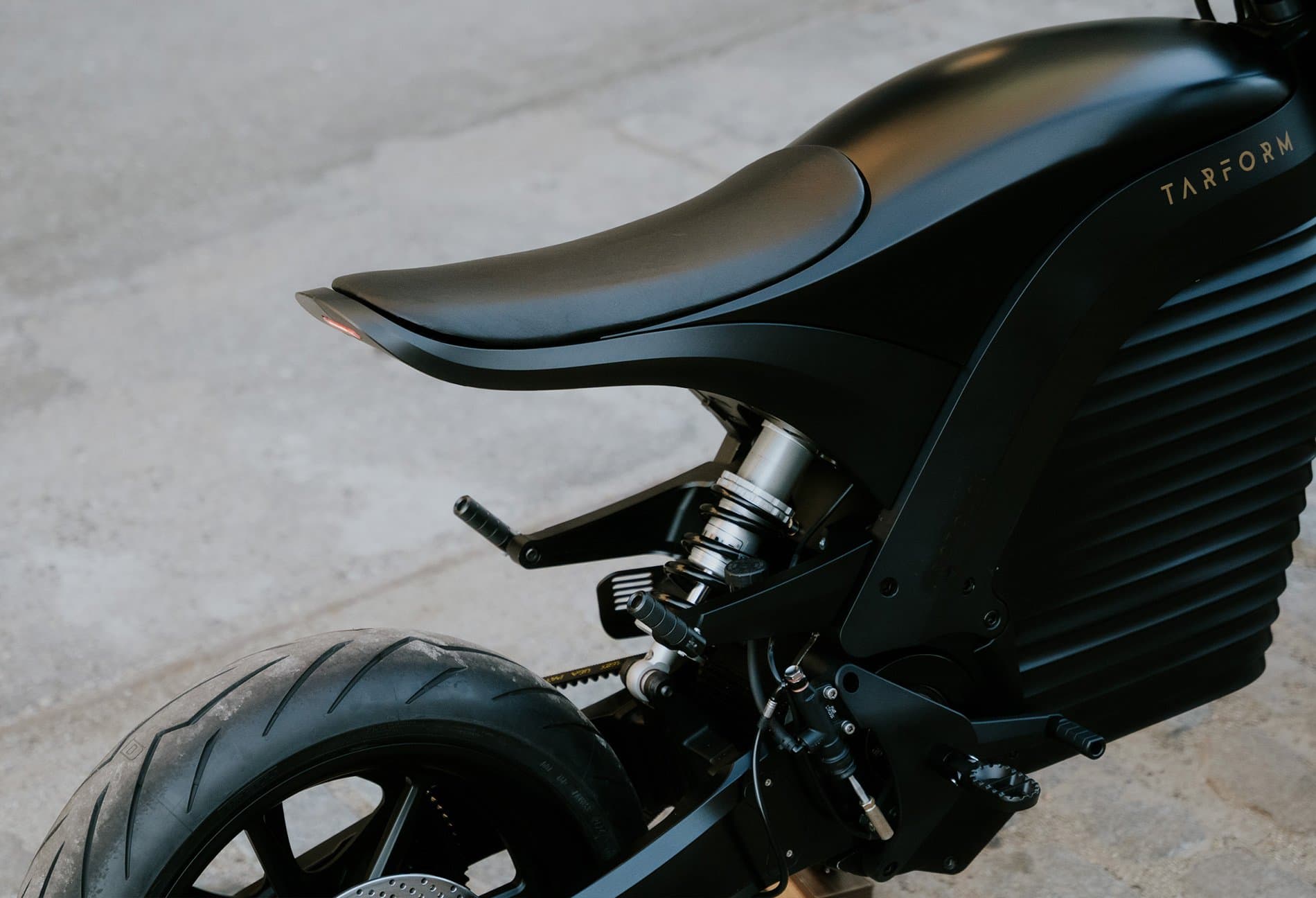
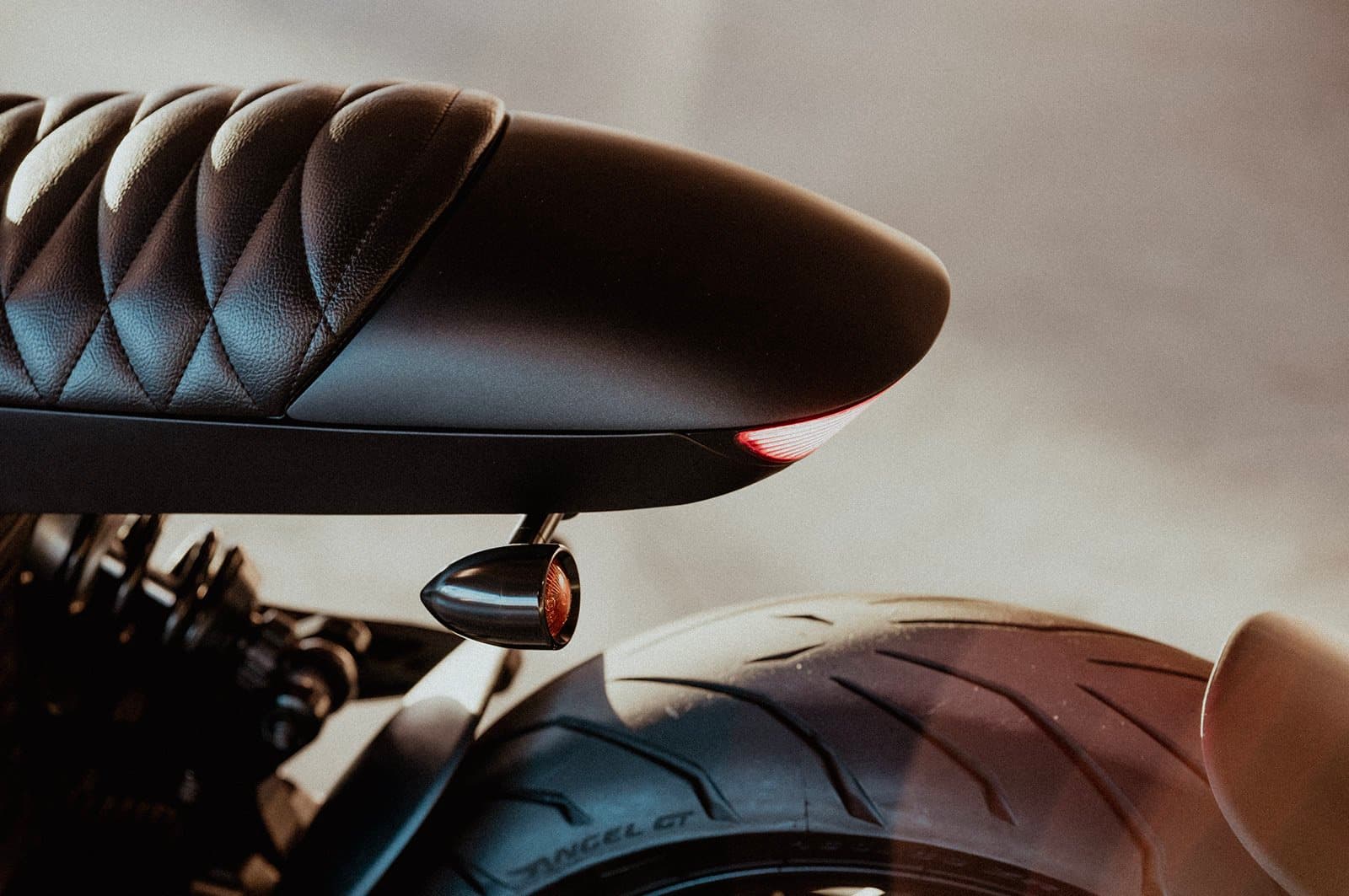
Founded by designer Taras Kravtchouk in 2016, Tarform sits at the intersection of vintage motorcycle craft and modern propulsion. Each bike is assembled by hand in the Navy Yard, finished with honest materials, metal that feels like metal, leather that earns a patina, and engineered to be serviced, upgraded, and passed on.
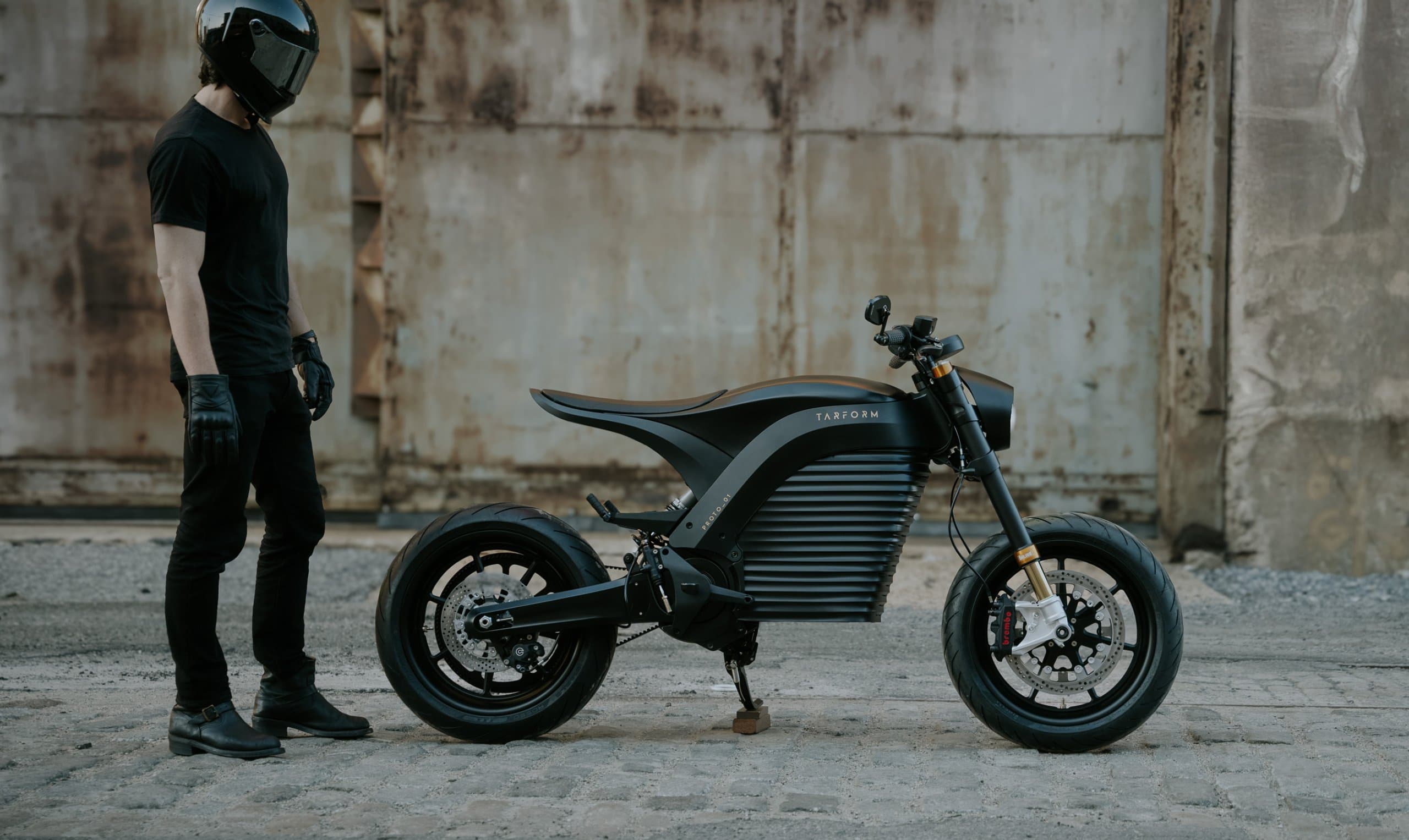
Their first motorcycle, Luna, established the brand. Vera, the new model, is the next chapter: lighter, more agile, and with first deliveries beginning August 2026. Our work was to build the digital layer that carries this thinking from first click to thousandth ride.
“What Tesla has done to bring zero-emission transport, Tarform hopes to do for zero waste.”
“When I first saw these beautiful machines, my jaw dropped. And I’m not even into motorcycles.”
“It’s a statement of intent, a blueprint for the future.”
The Brief
Sell a $42K hand-built motorcycle online. Then make ownership feel that considered too.
Tarform’s buyers are not browsing. They’re committing to a hand-built object at a price point that competes with luxury cars. The old PDF spec sheet and form-based order flow could not carry that weight.
We were asked to do two things, in sequence. First: rebuild the configurator as a real time 3D experience that earns the decision. Then: design a native iPhone app that extends the brand past delivery, telemetry, charging, ride history, OTA updates, and a direct line back to the studio.
01, The Configurator
A real time 3D build experience that earns a $42K decision
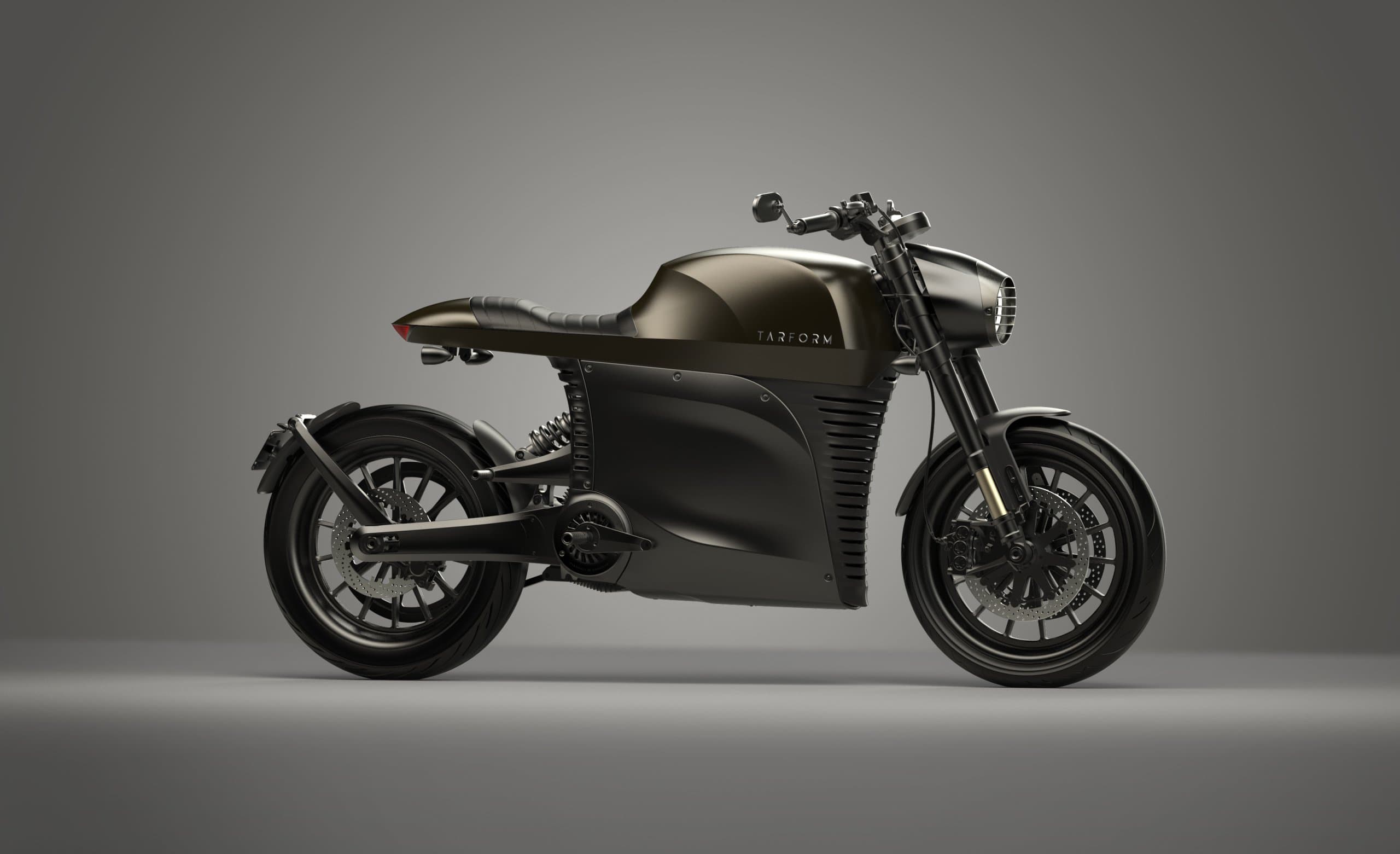
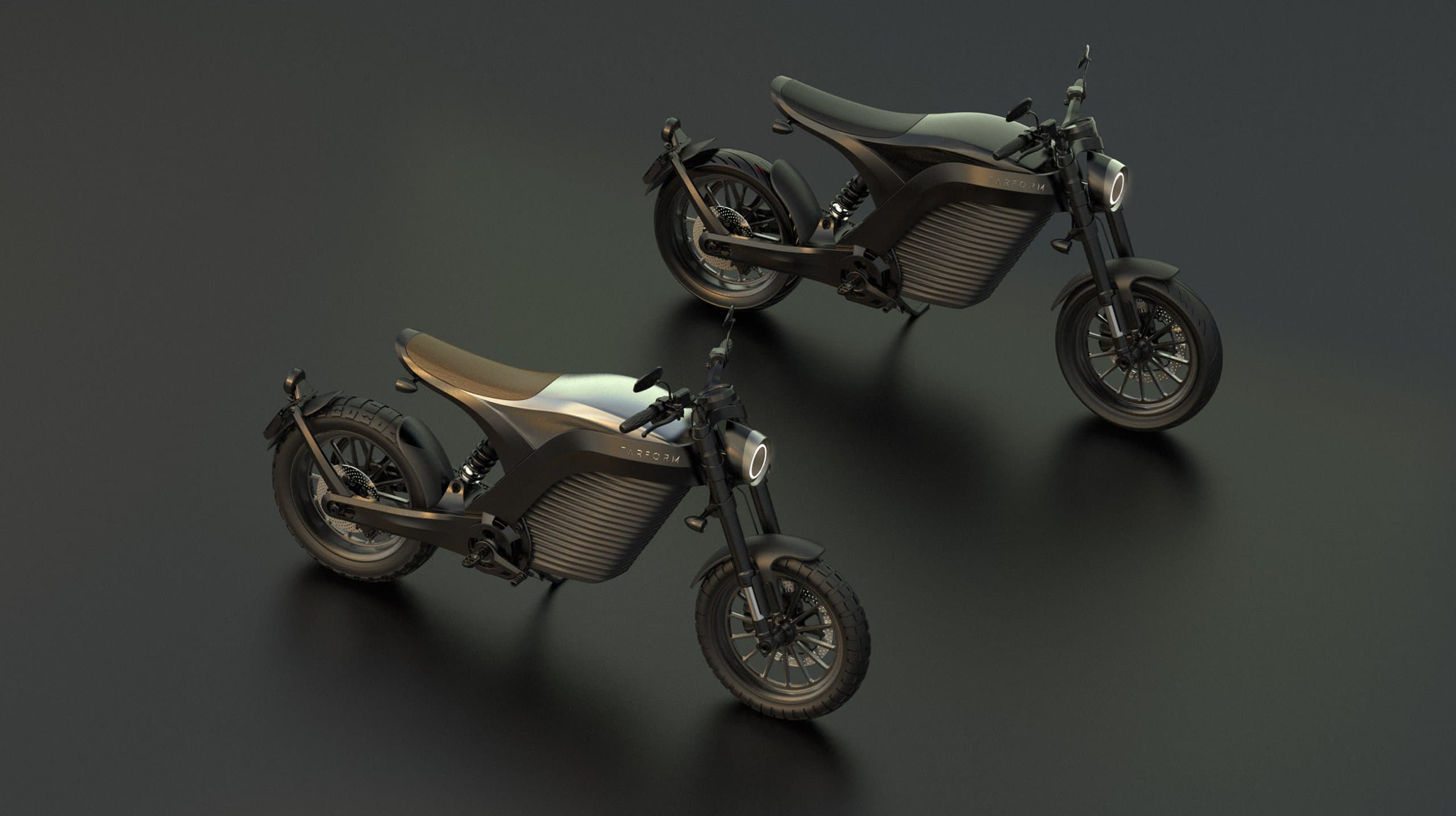
The configurator lets a buyer build their motorcycle in the browser, frame finish, seat material, performance package, wheel and lighting options, and see every choice rendered in real time on a high fidelity 3D model.
We rebuilt the asset pipeline from the ground up so the same 3D source files drive marketing imagery, the on-site configurator, and the iPhone app. One source of truth for how the bike looks, everywhere it appears.
- Real time material and trim swaps with no page reload
- Camera presets tuned for hero, detail, and rider views
- Saved builds, shareable links, persistent across devices
- Checkout flow built for a six-month deposit cycle

02, The iPhone App
The motorcycle in your pocket
For a brand whose thesis is “objects you keep,” software is how the object stays alive. We designed Tarform’s first native iPhone app from a blank canvas, a daily companion that turns the bike into a connected device without losing the craft of the hardware.
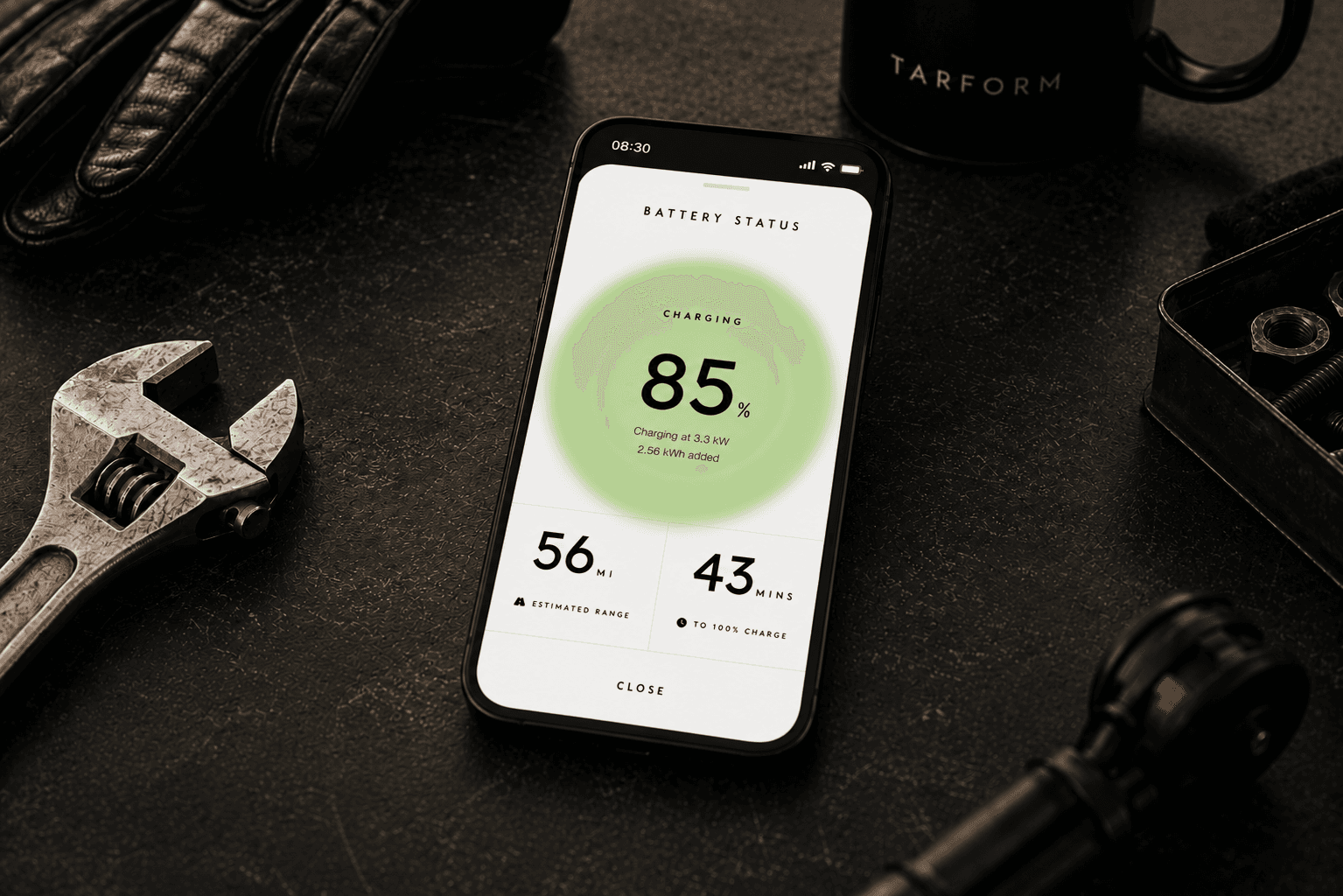
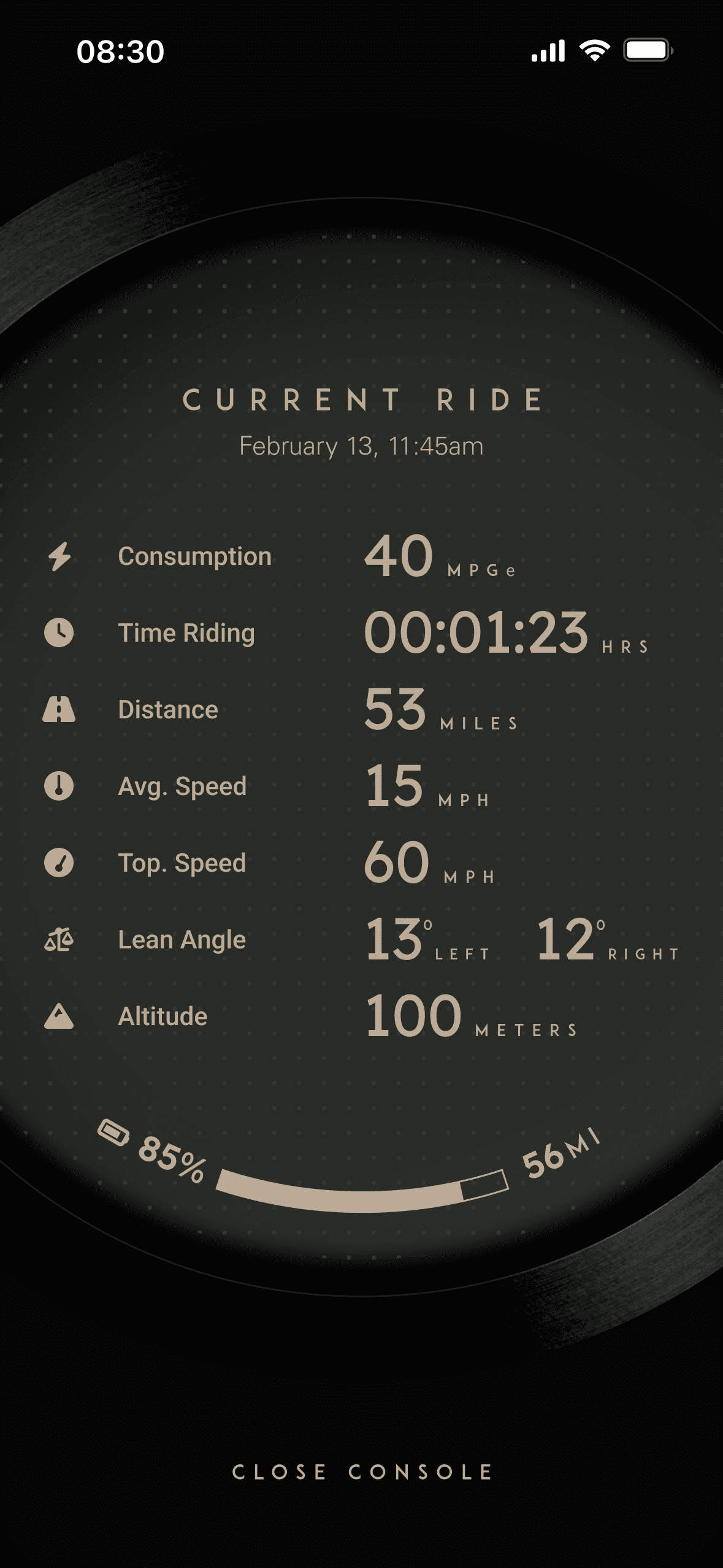
The app is the rider’s second seat. Range and state of charge at a glance. A digital key that unlocks the bike as you approach. Ride telemetry, distance, lean, regen, recorded and replayable. Service requests routed straight to the Navy Yard studio. And over-the-air updates that let the motorcycle get better after you’ve already bought it.
Surfaces
Dashboard, Ride, Charge, Build, Studio
Platforms
iPhone, Apple Watch, CarPlay-adjacent HUD
Key features
Digital key, OTA updates, ride history, range planner
Design system
Shared with the configurator and on-bike 3.4″ display
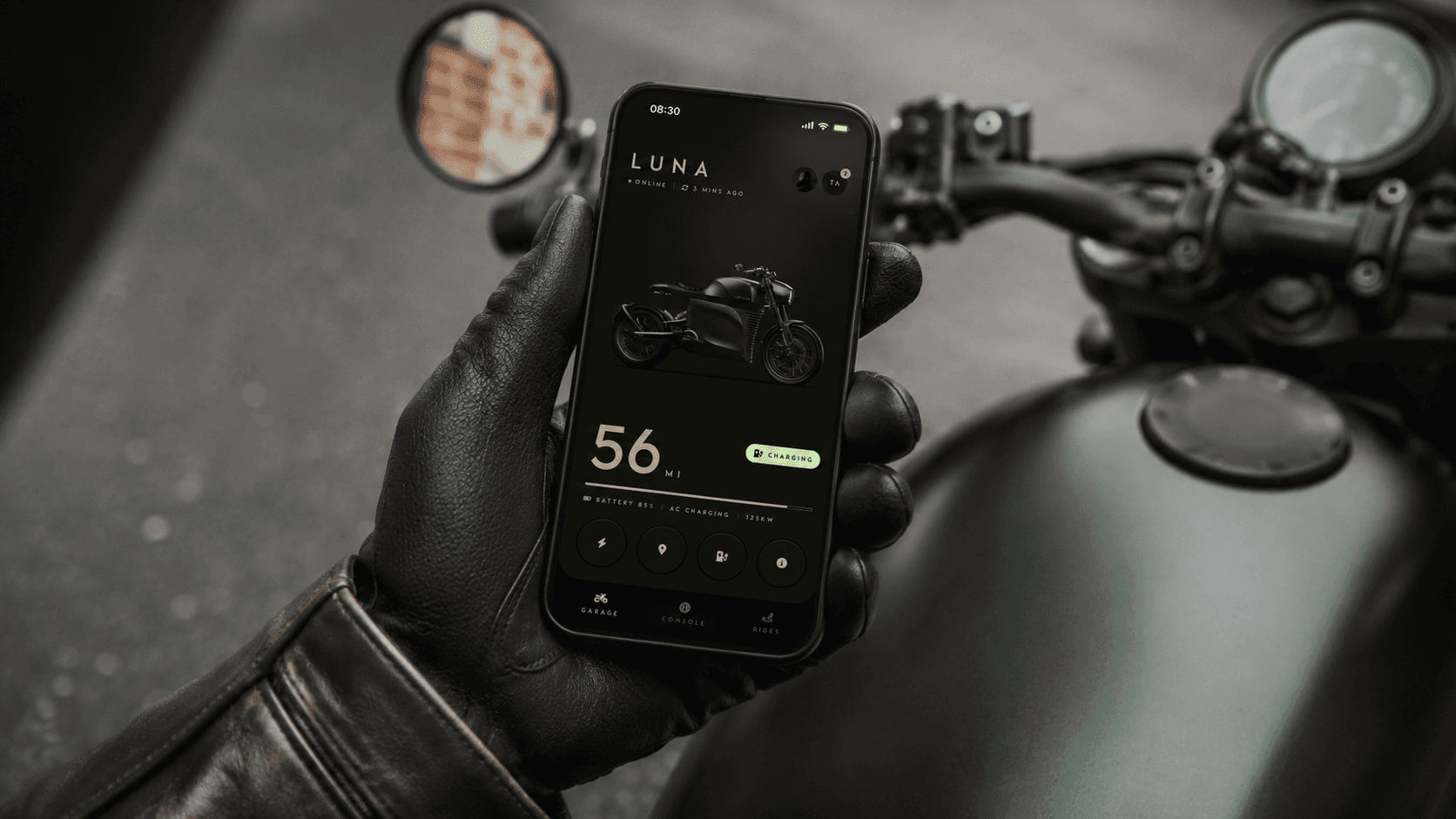
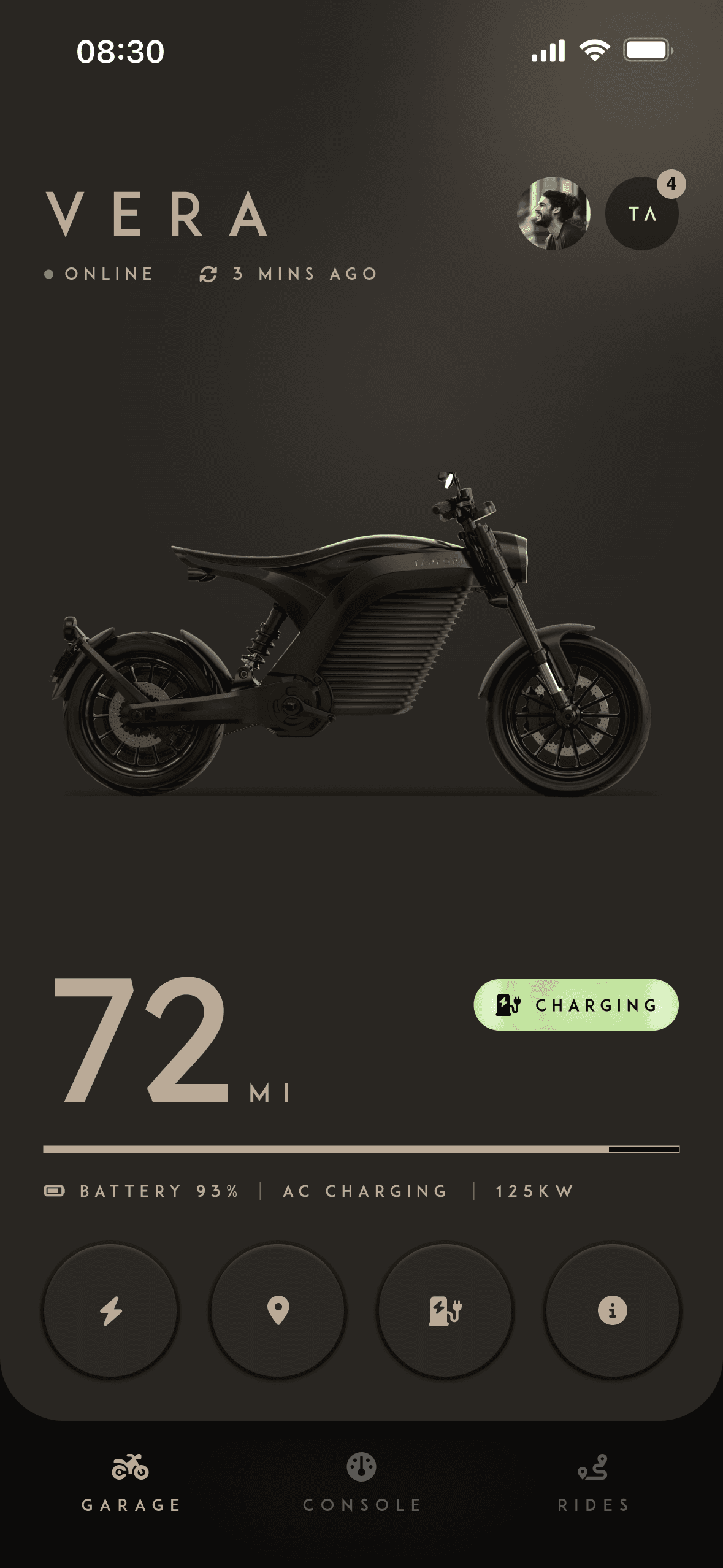
The app in hand, the bike in the garage
Principle 01
Hardware first, software in service
The app never competes with the ride. Glanceable on the bike, deeper when you’re off it.
Principle 02
One design system, three surfaces
The configurator, the iPhone app, and the bike’s 3.4″ cluster share type, color, and motion. The brand reads the same on every screen.
Principle 03
Designed to be kept current
Over-the-air updates and a modular information architecture so the app can grow alongside the bike for the decade-plus Tarform expects each motorcycle to ride.
Five Surfaces
One app, five jobs, each one a primary screen
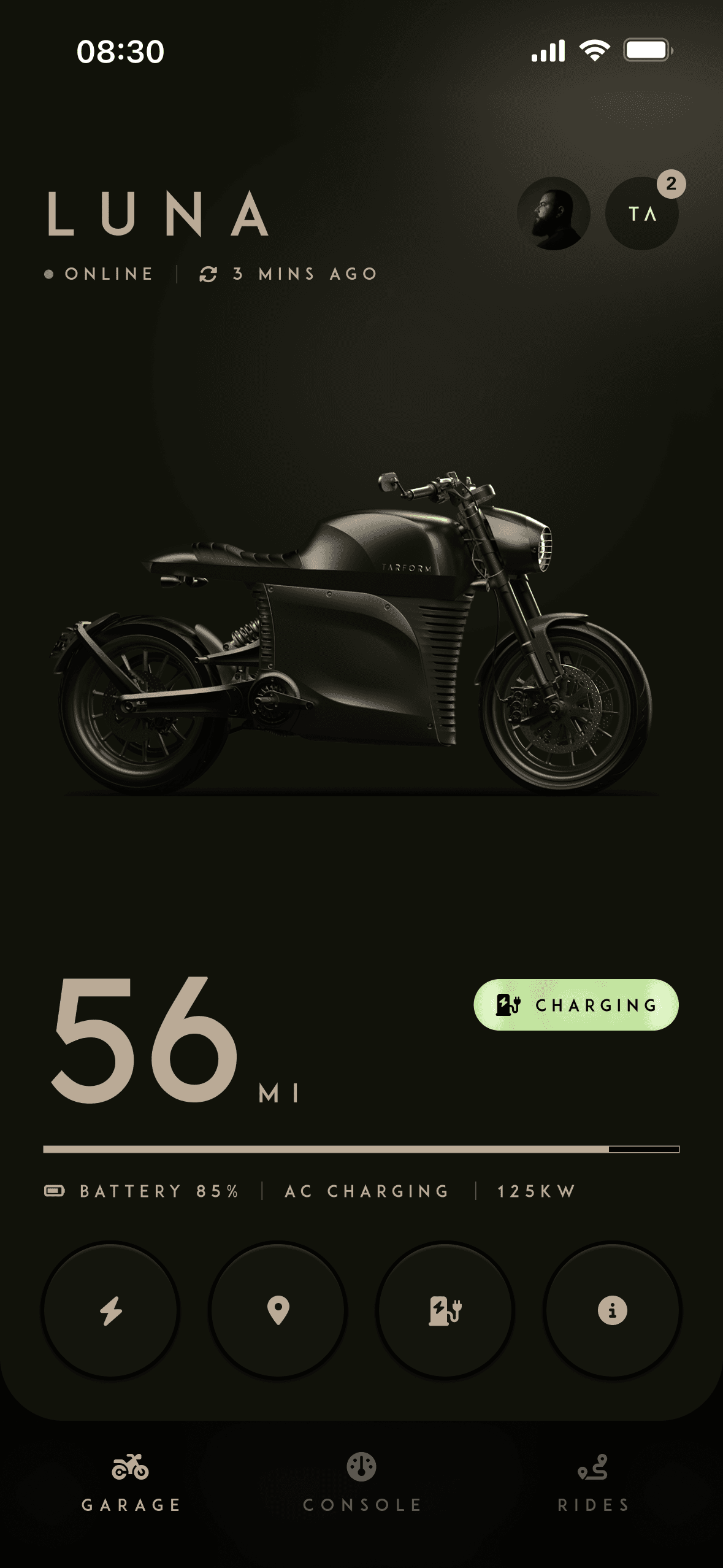
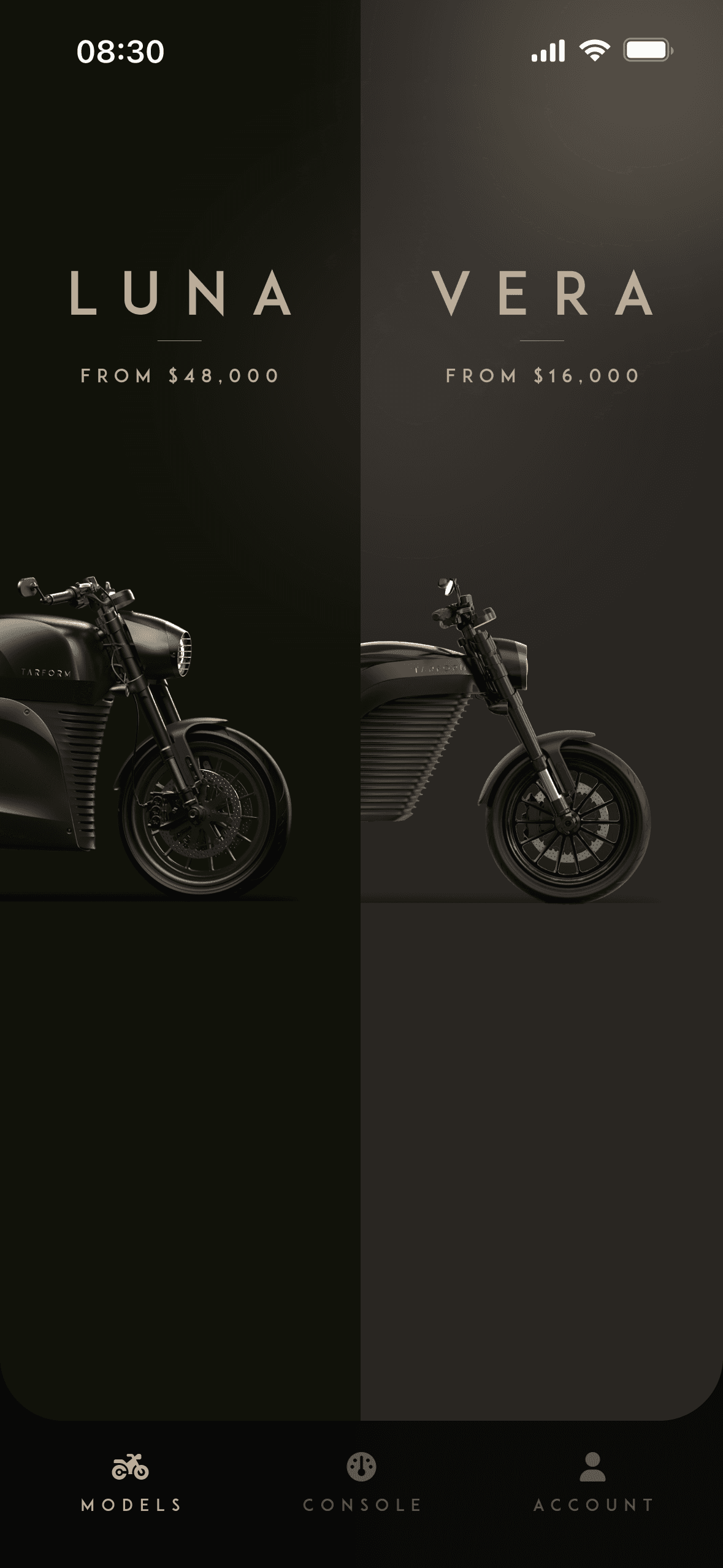
Dashboard
Range, charge, key
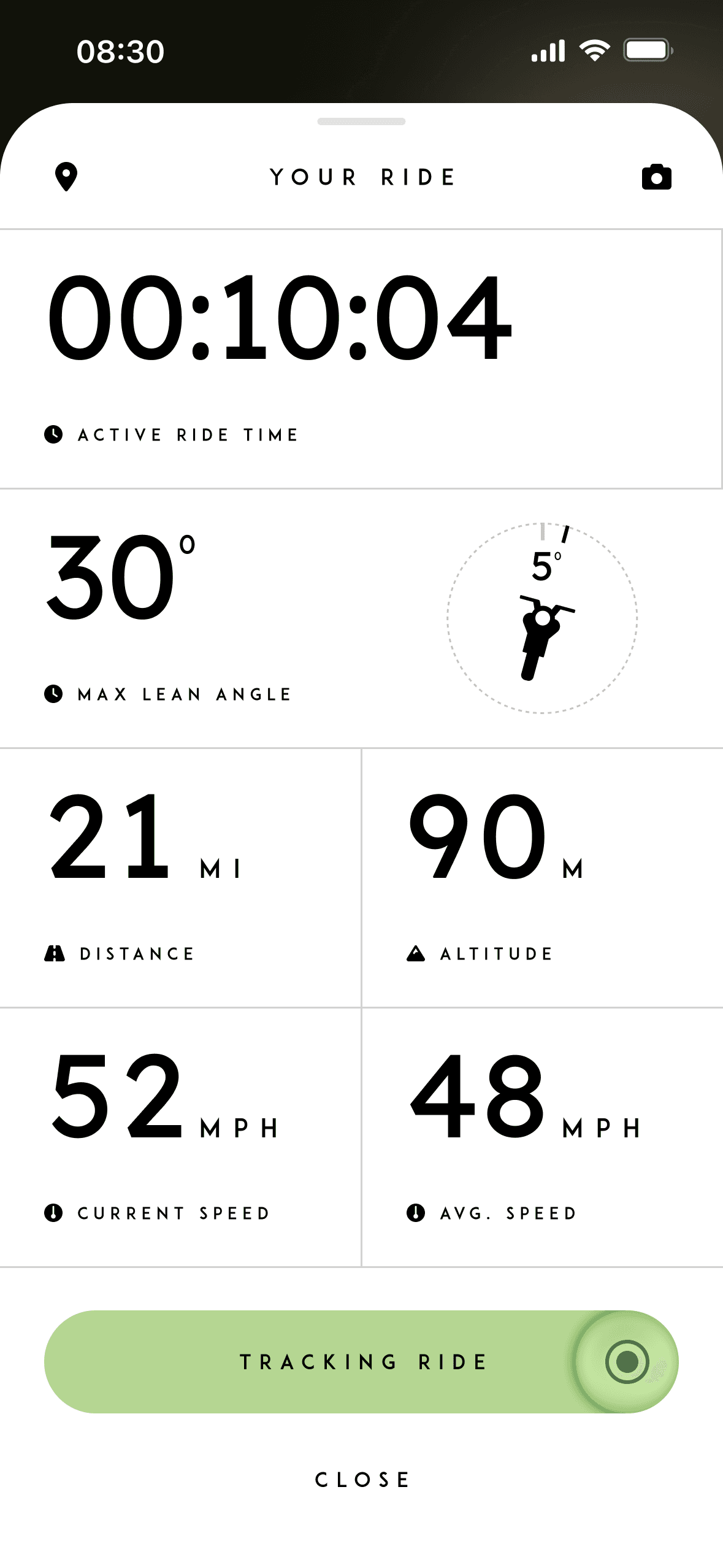
Ride
Live telemetry
Build
Configure and order
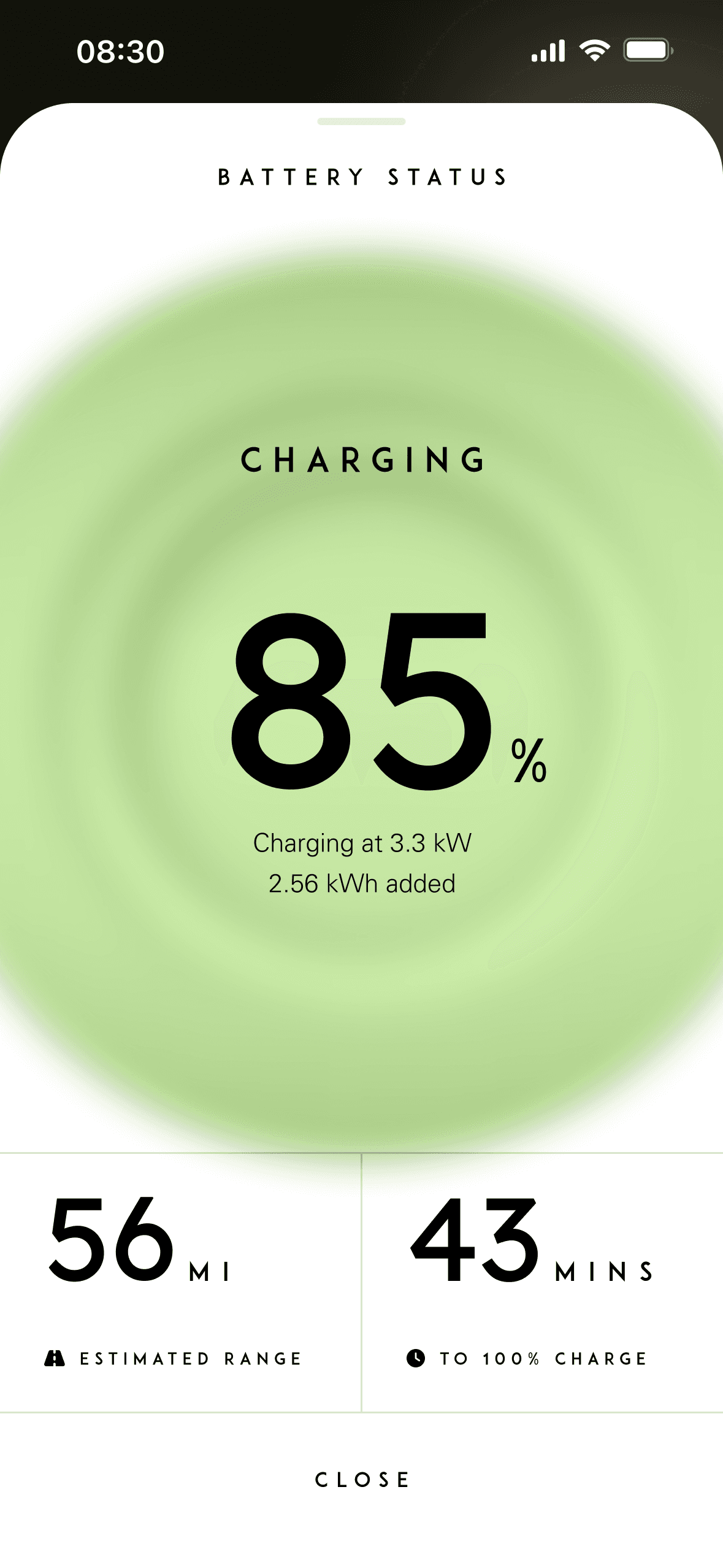
Charge
Sessions and history
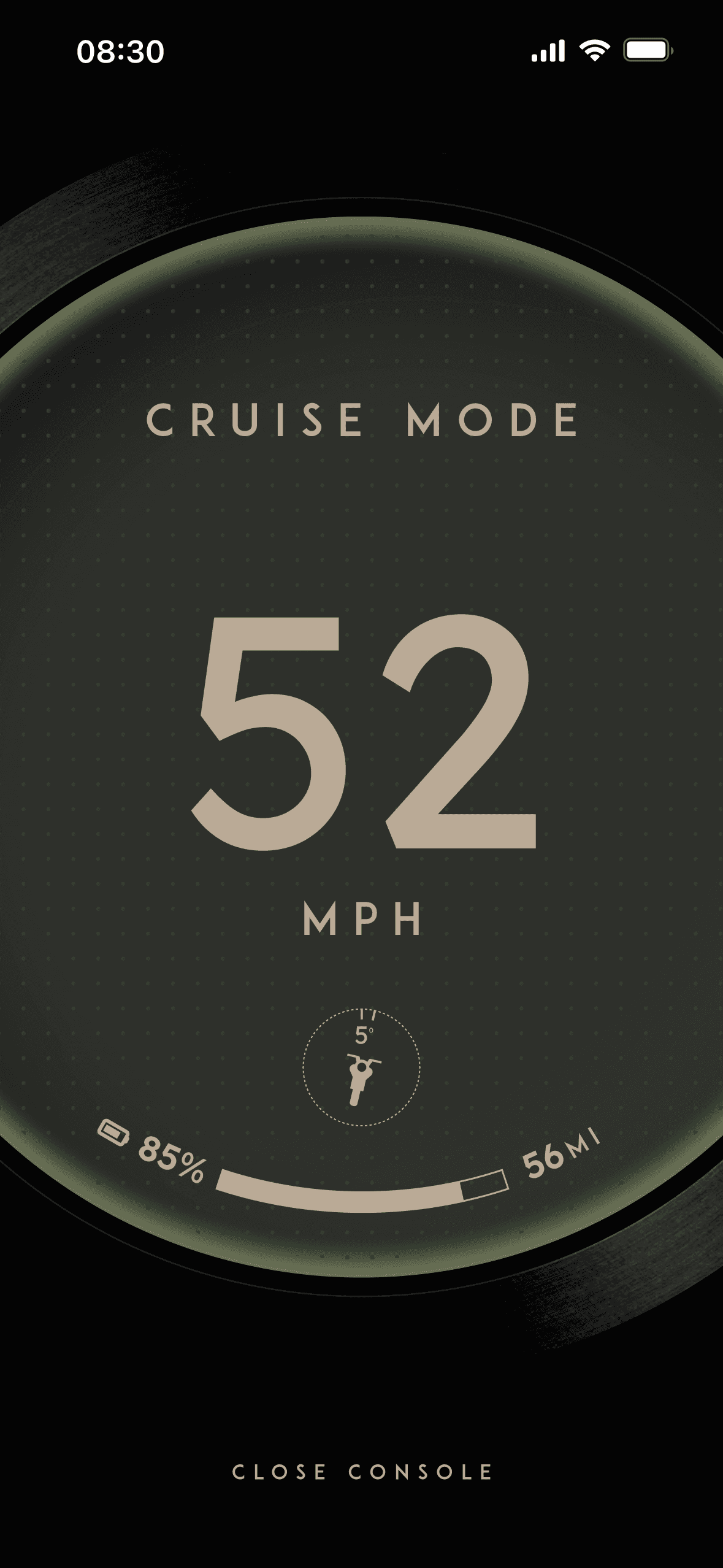
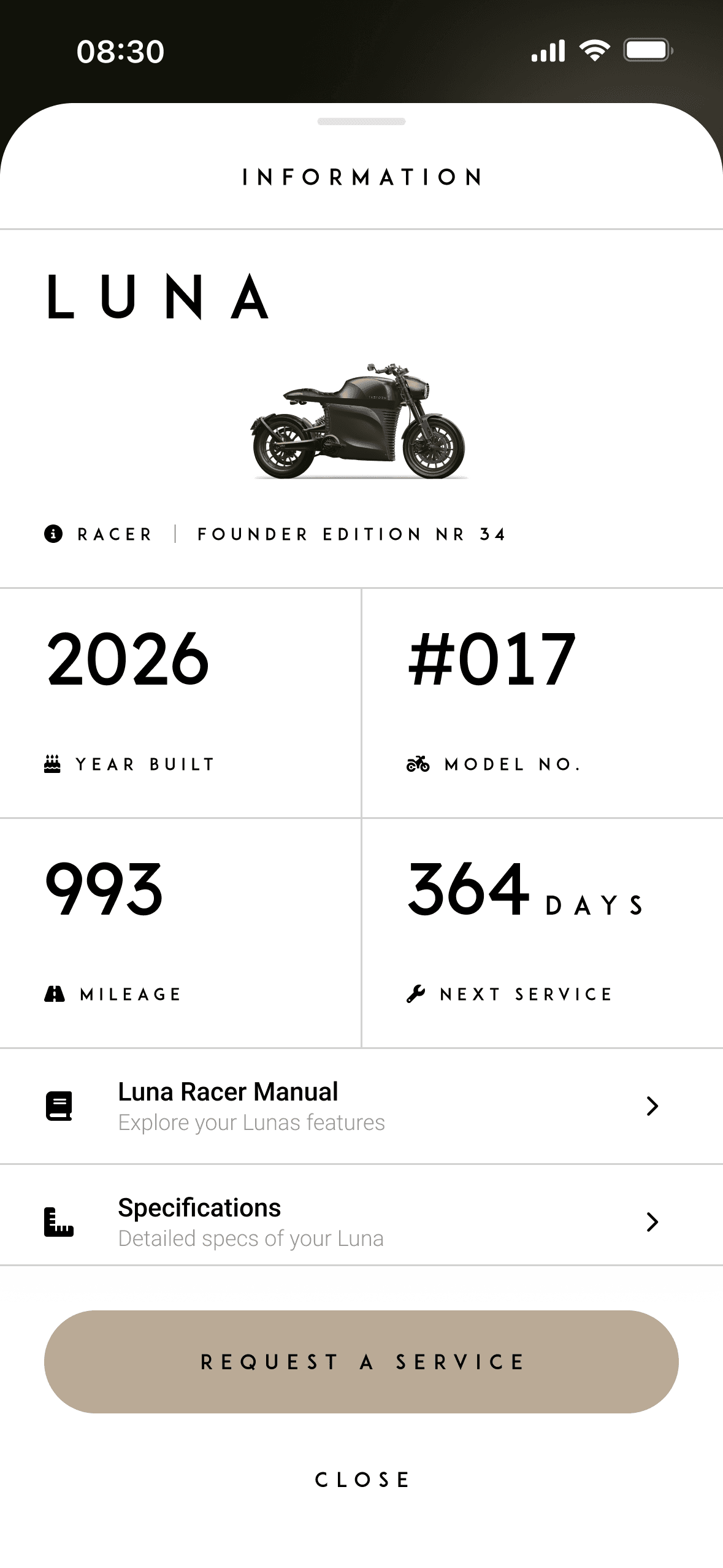
Console
Settings and service
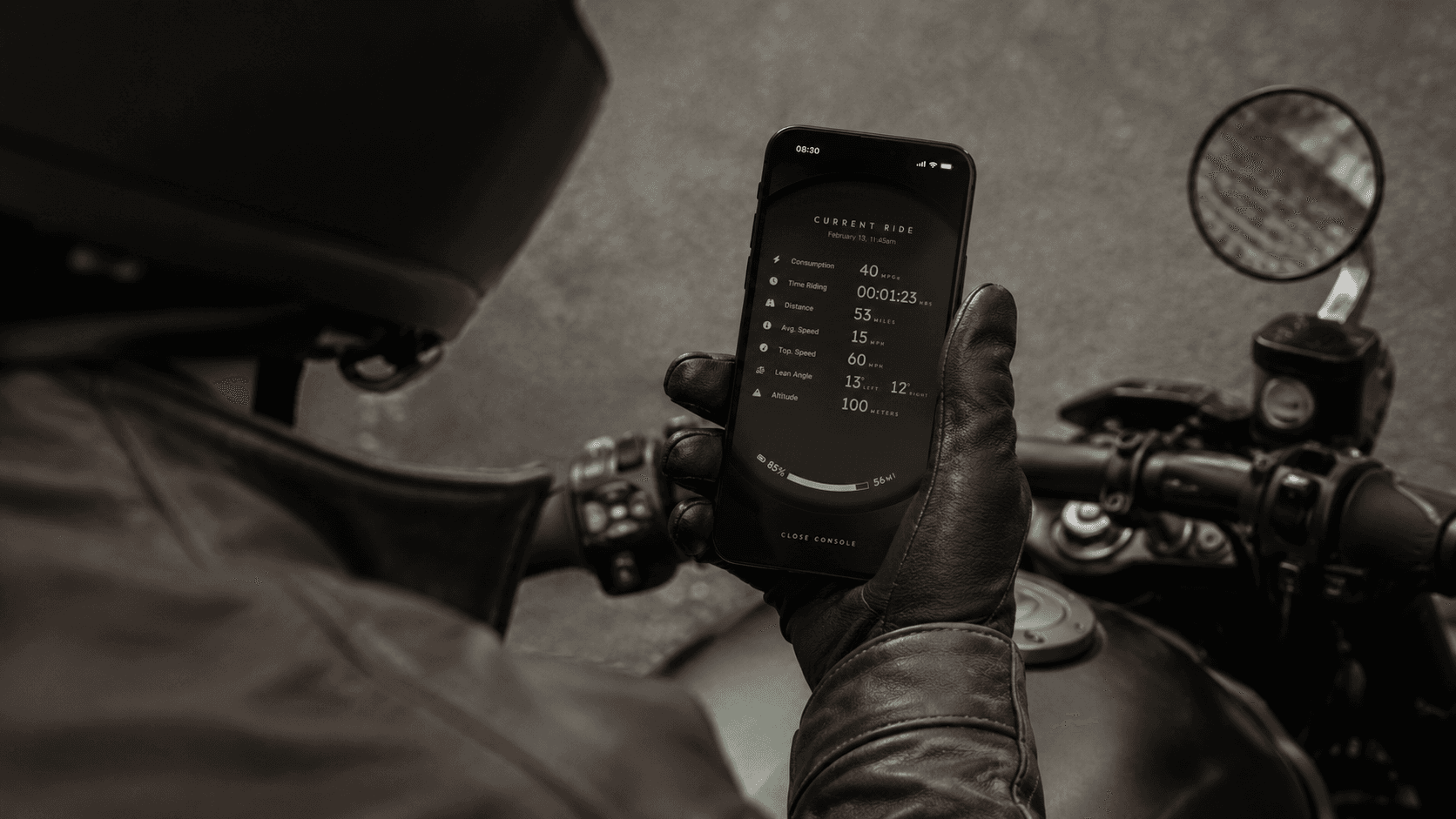
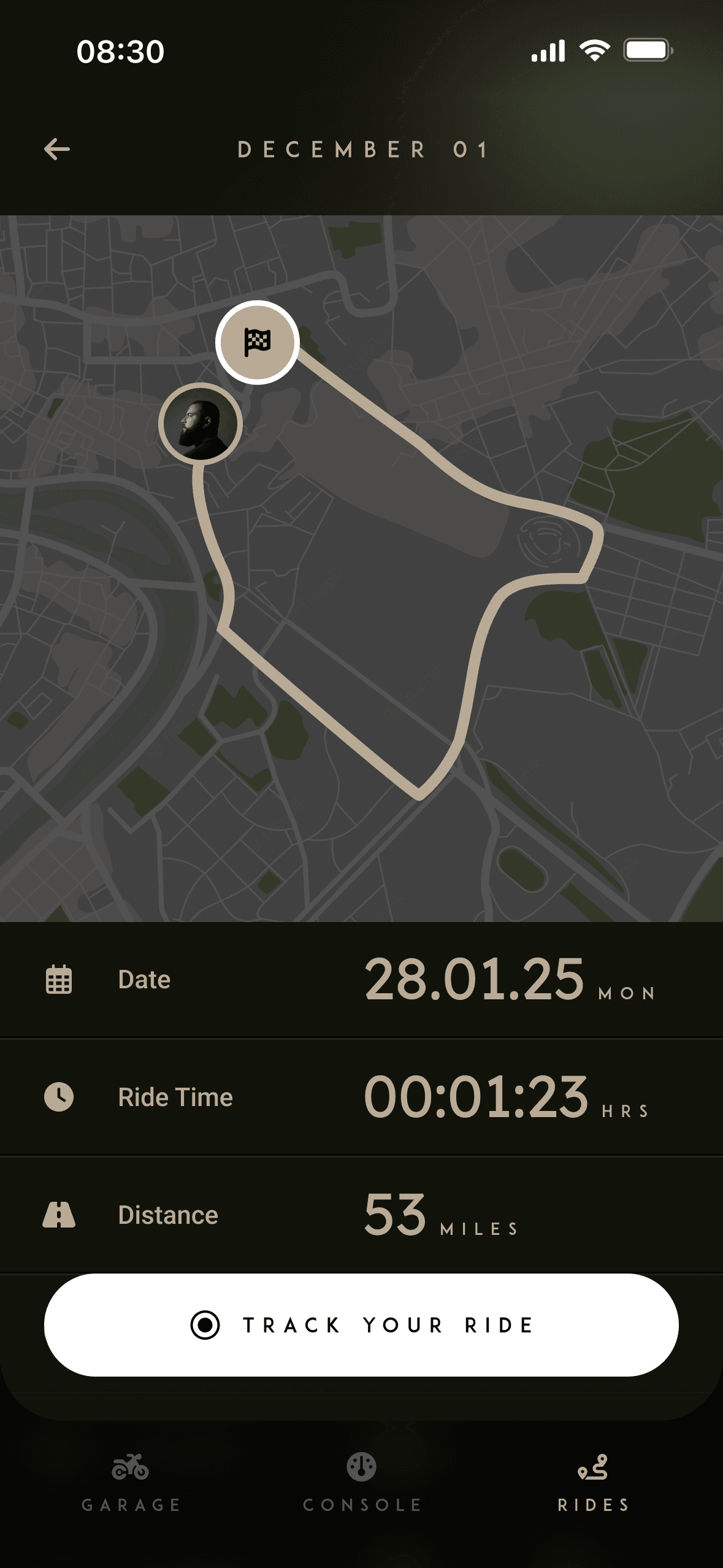
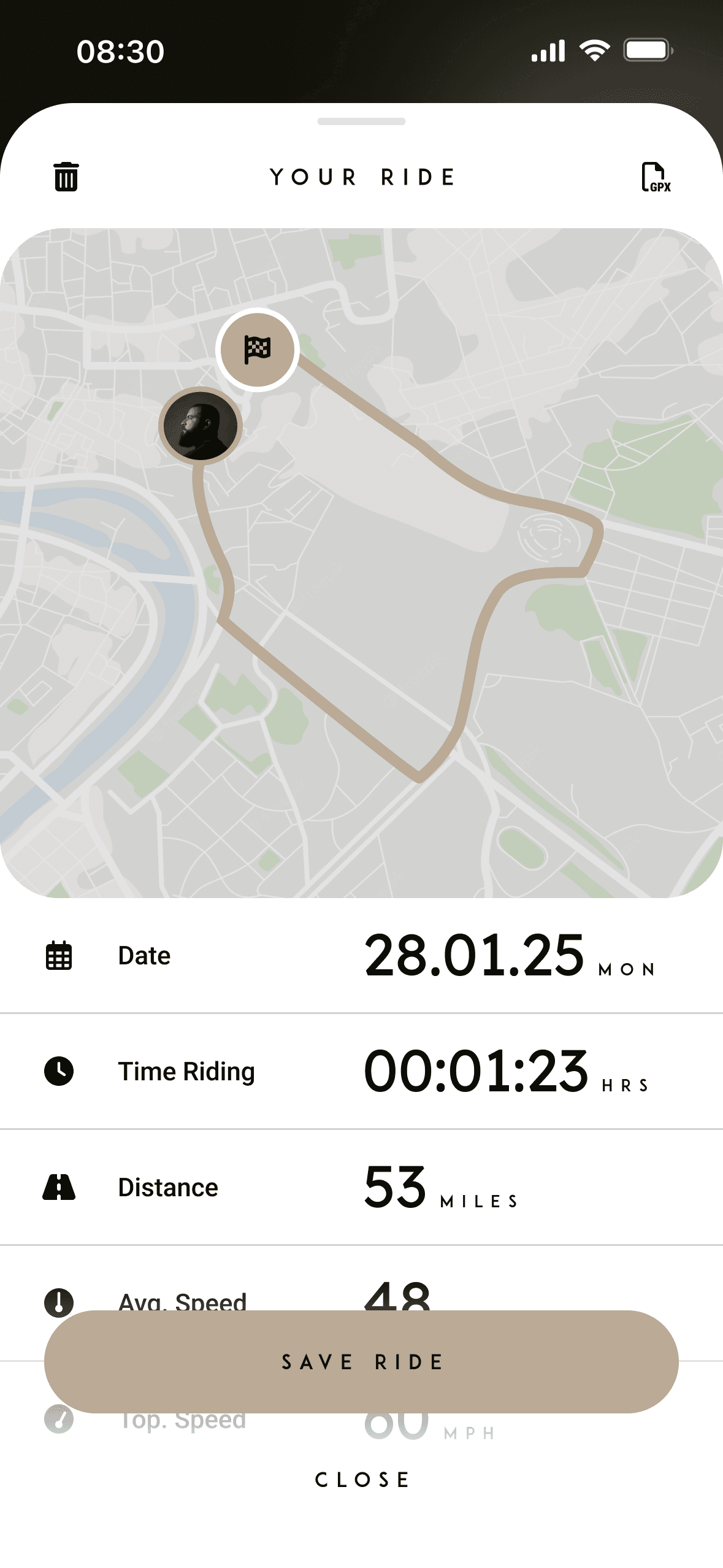
Ride
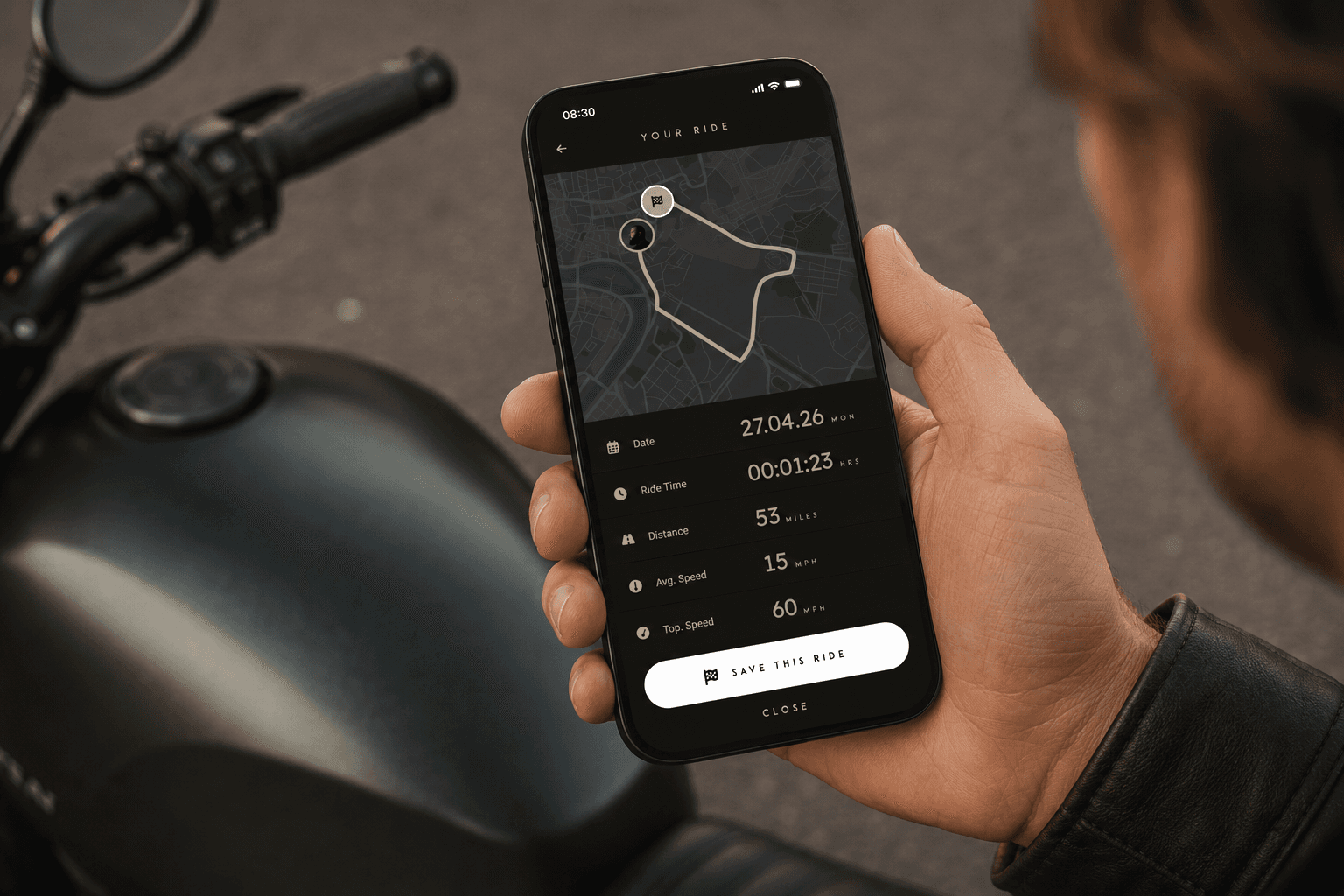
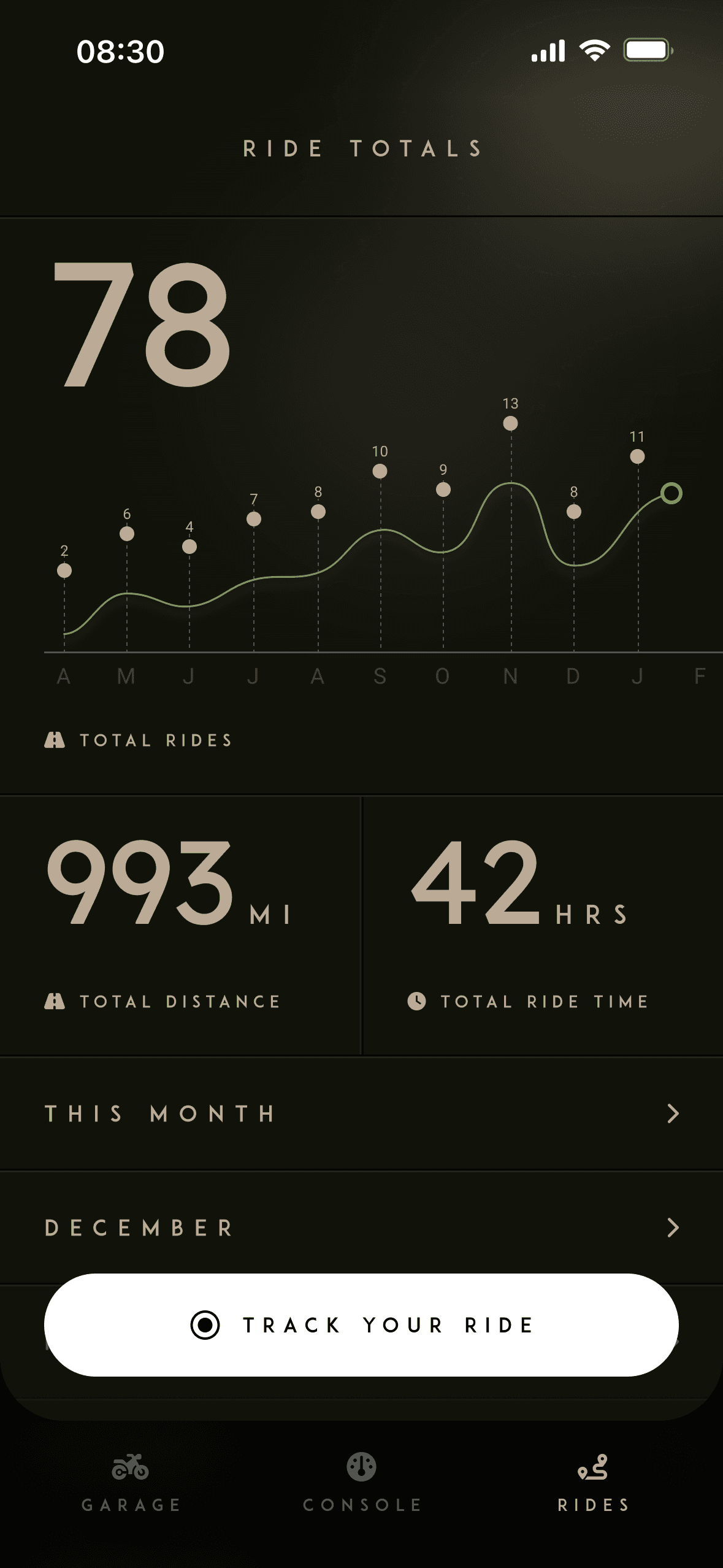
Every ride, recorded and replayable
Distance, lean angle, regen, route, recorded automatically and replayable from the phone. The Ride surface is the rider’s logbook, designed to deepen with every trip.
Design System
One language across the bike, the web, and the app
Type, color, motion, iconography, the same system reads on the 3.4″ cluster between the handlebars, on the configurator in a browser, and on iPhone in the rider’s pocket. Three surfaces, one brand, no translation loss.
On the bike
3.4″ high-resolution cluster, glanceable in motion
On the web
Real time 3D configurator, the buy decision
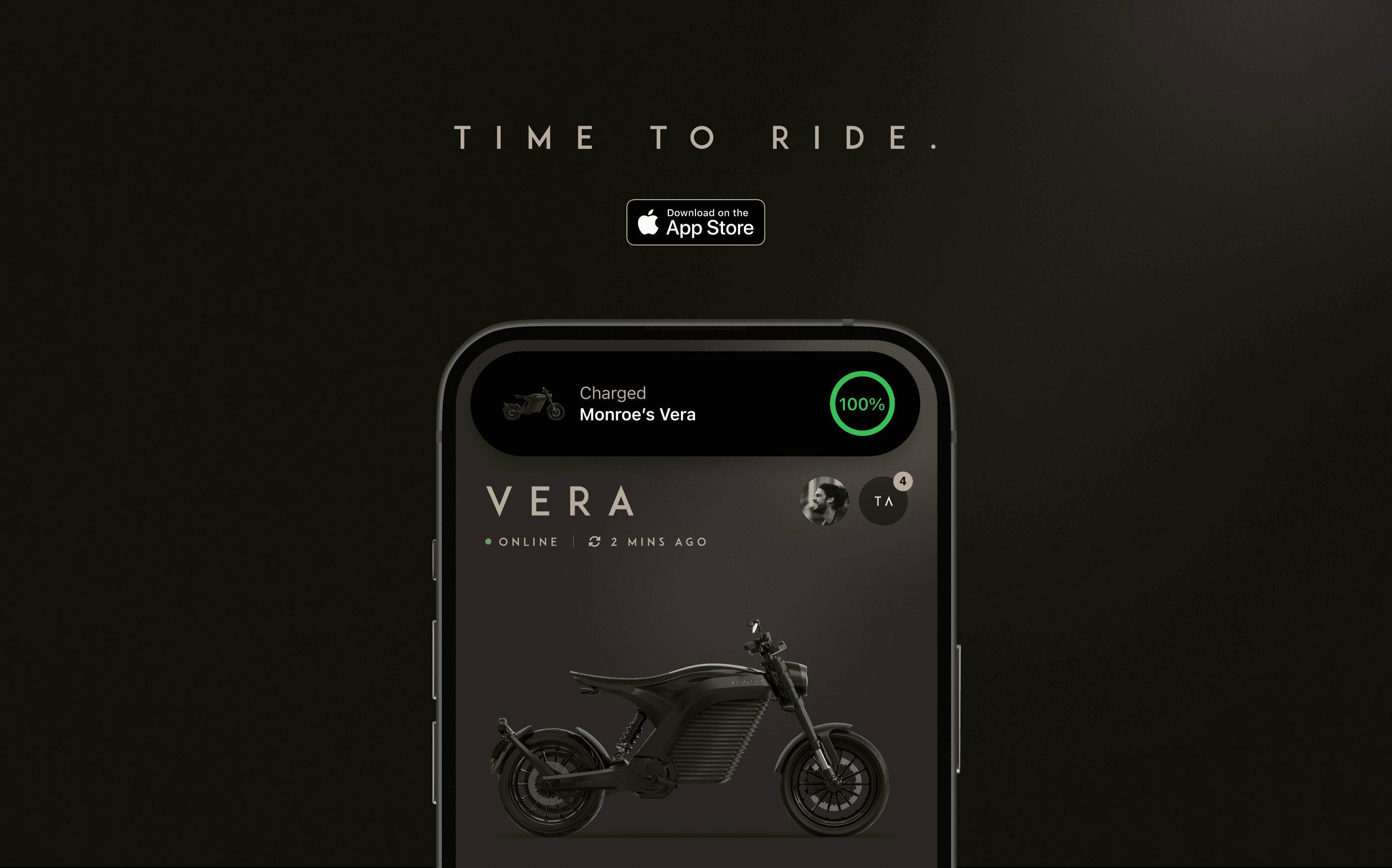
In the pocket
iPhone companion, the daily ritual
How We Worked
Designed in the studio. Tested in motion.
01, Listen
Time in the Navy Yard
The work started on the shop floor, riding the bike, watching how Taras and the team assemble it, talking to early owners. Software decisions came out of that, not the other way around.
02, Design in motion
Prototypes, ridden
Every screen, every camera angle in the configurator was pressure-tested against real ride scenarios. If the dashboard didn’t hold up at 60 mph in winter gloves, we rebuilt it.
03, Ship in seasons
One pipeline, many releases
Configurator, app, and on-bike firmware ship from a shared pipeline. New seat fabric, new range tuning, new App Store build, same release, same week.
Founder
“There is no finish line here. Only this practice, refined through use, again and again.”
03, Manufacturing Integration
A click in Brooklyn, a hand-built motorcycle on the line
Every confirmed configuration writes to the build pipeline. Trim, materials, performance package, even the rider’s seat height preference flow into the studio’s production system as a single source-of-truth build record.
The team in the Navy Yard sees the same digital twin the buyer spec’d, with assembly notes attached. The same record then syncs to the iPhone app so the owner can watch their bike progress through the build, a deliberate ritual at a price point where that ritual matters.
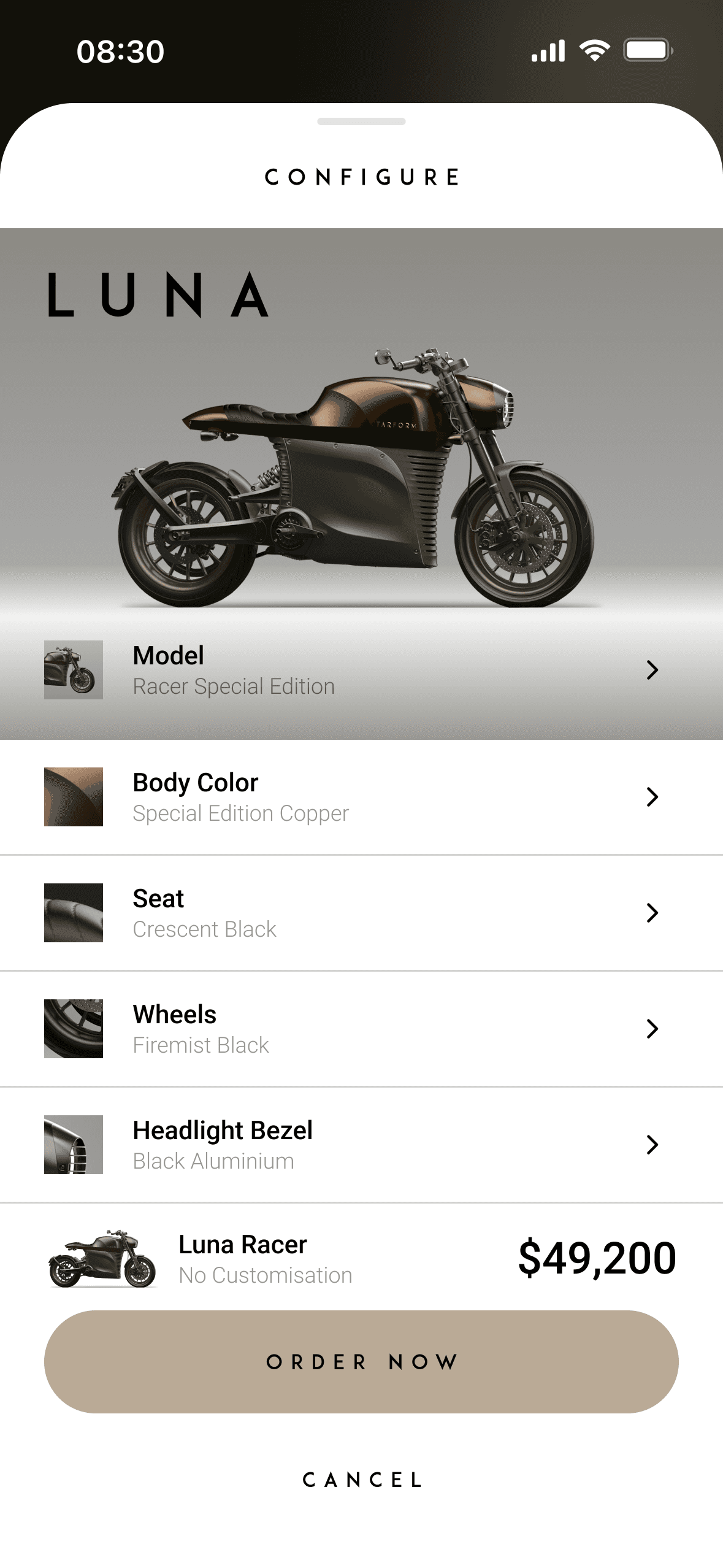
Configure
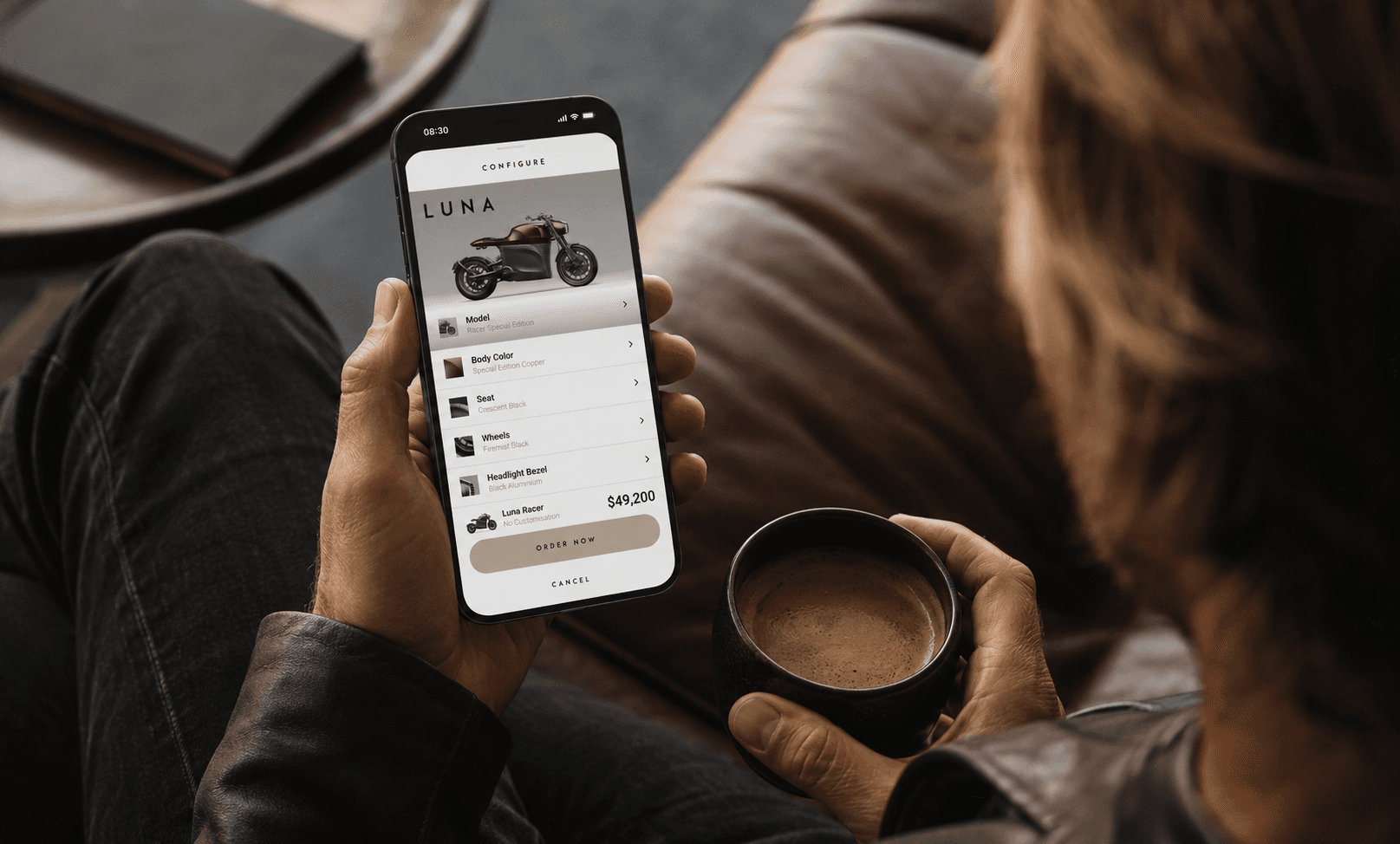
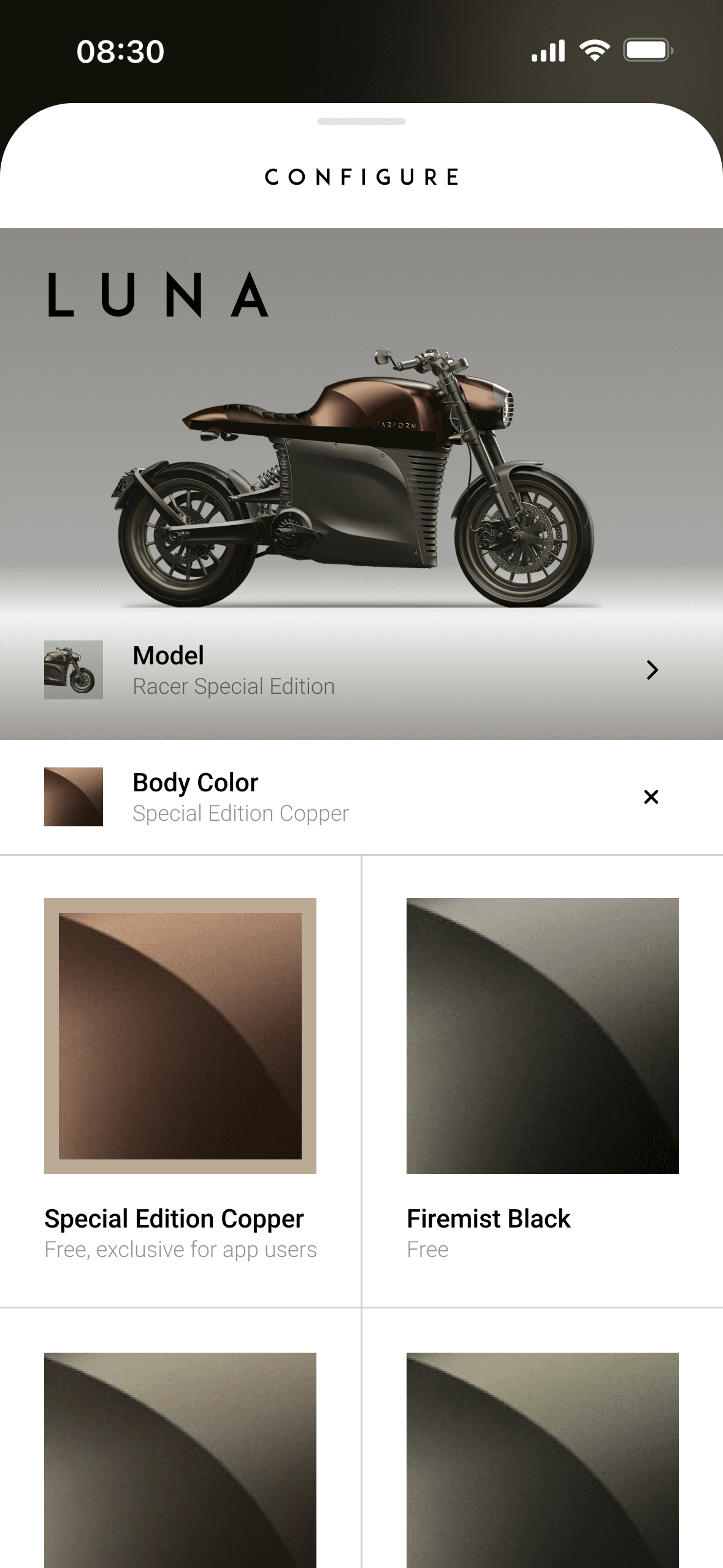
Every choice, considered, all the way to the swatch
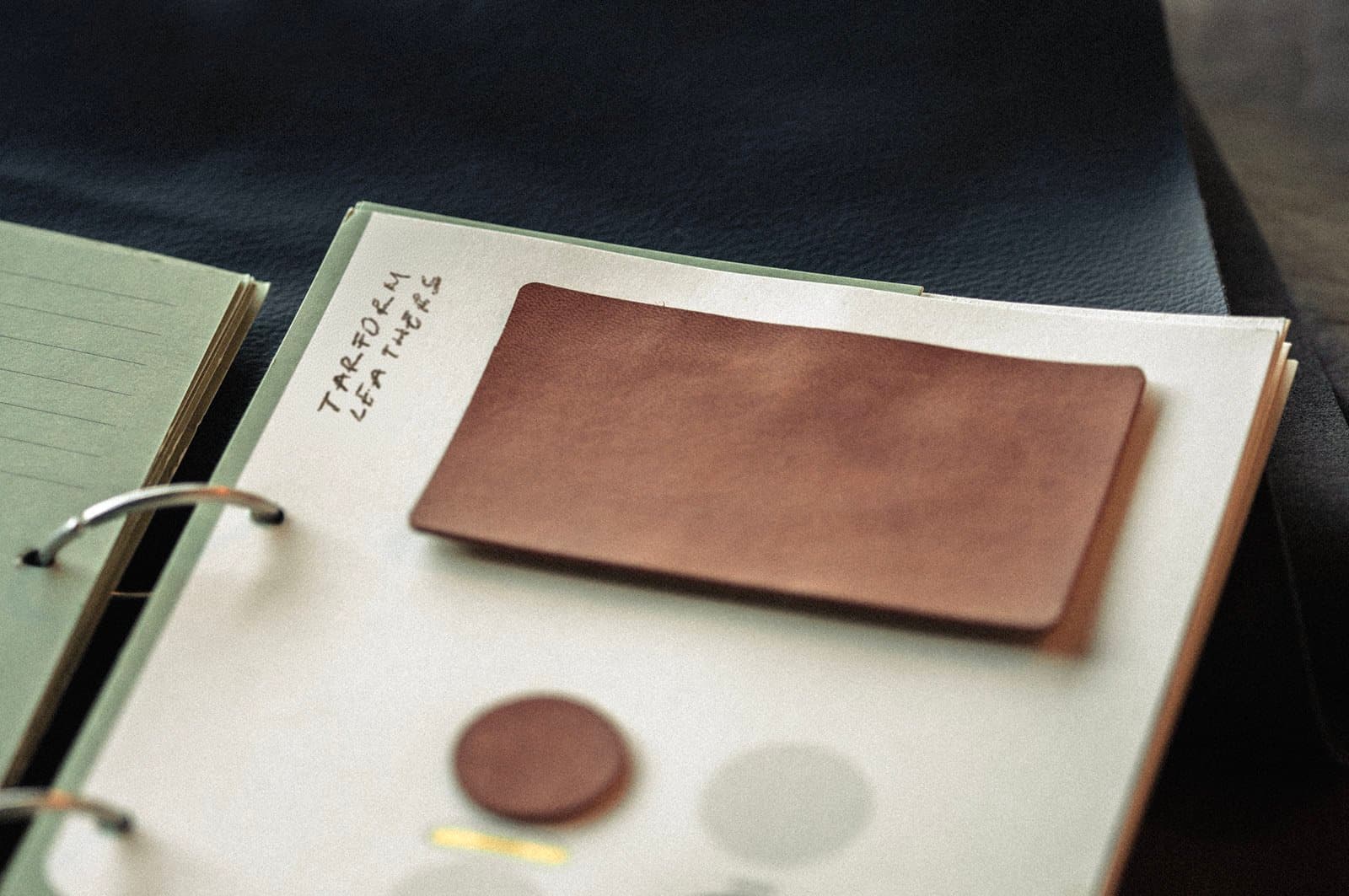
The Build surface mirrors the web configurator on the phone. Trim, materials, performance package, color, picked at the level of the swatch. A six-month deposit cycle becomes six months of considered ownership, by design.
The Next Bike
Vera, designed to feel light, balanced, and immediate
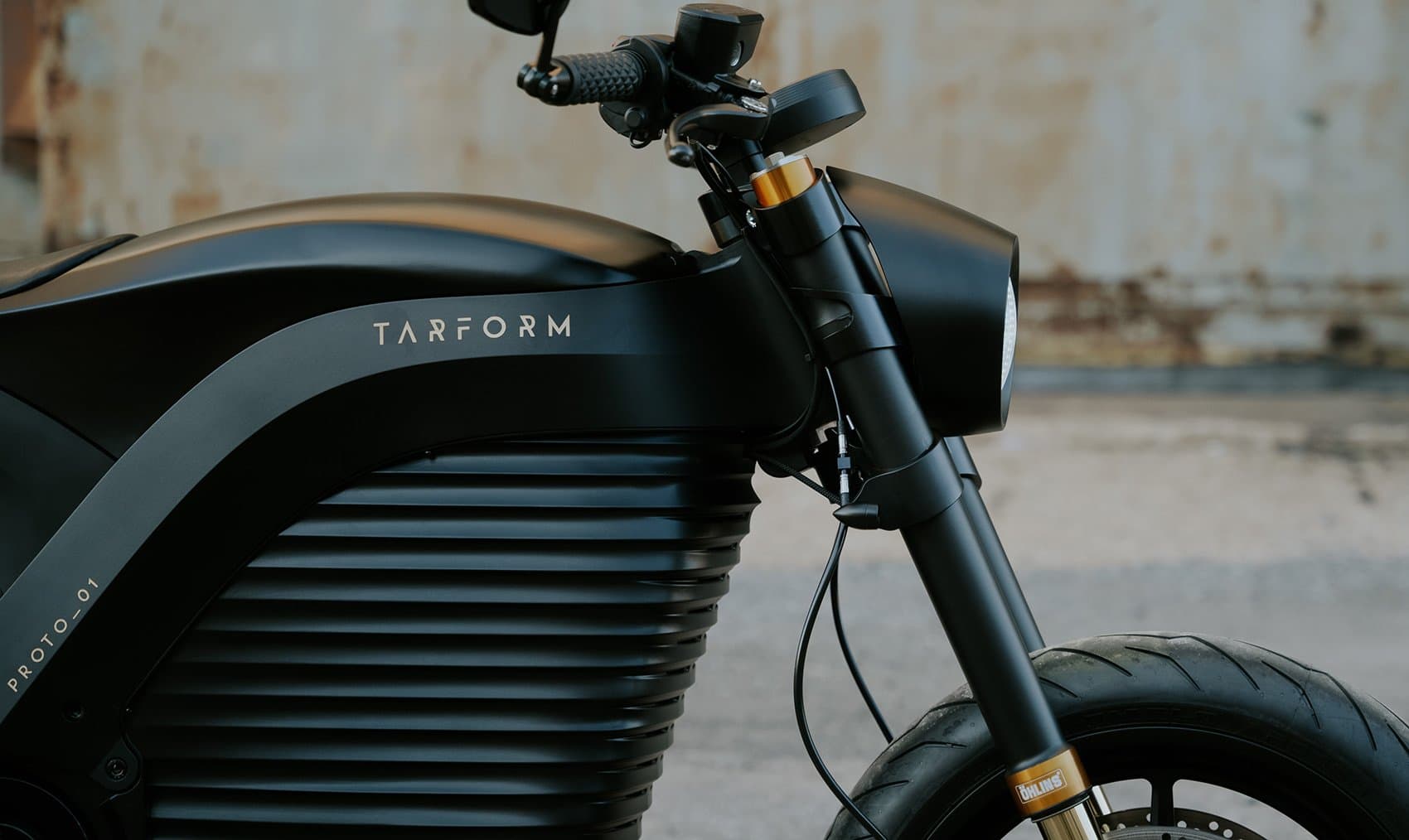
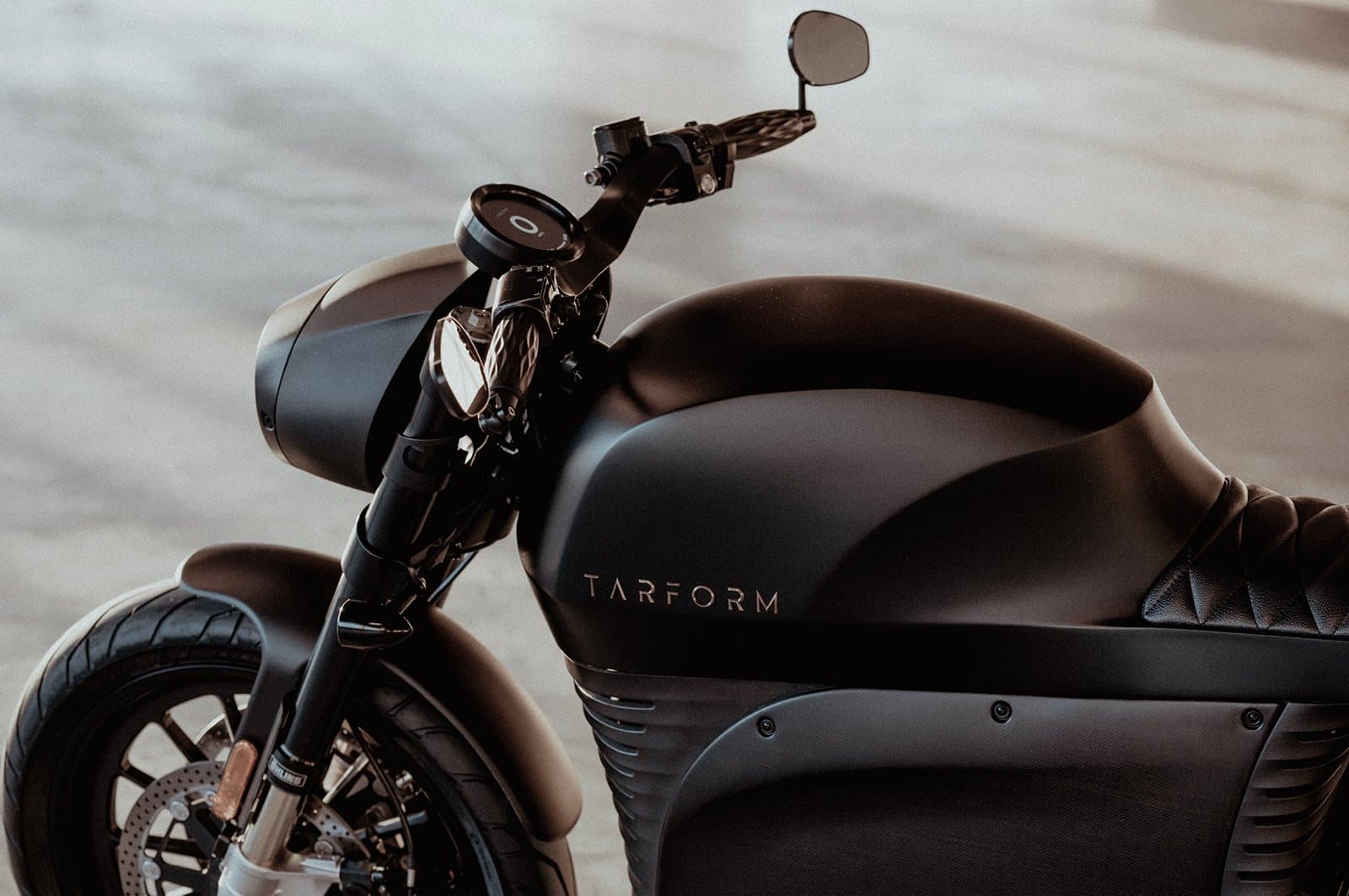
Vera takes the ideals that shaped Luna and brings them into everyday use. Fewer parts. Clearer assembly. Built to move with the rider. First deliveries begin August 2026. From $18,000.
- 0·60 mph
- ~3.3s
- Top Speed
- 90 mph
- Peak Torque
- 130 Nm
- Curb Weight
- 368 lbs
- Range
- 100 mi
- Battery
- 8.2 kWh
- Display
- 3.4″
- Connectivity
- BT + Wi-Fi
- Updates
- OTA
Longevity
Software is just another material, and it should last
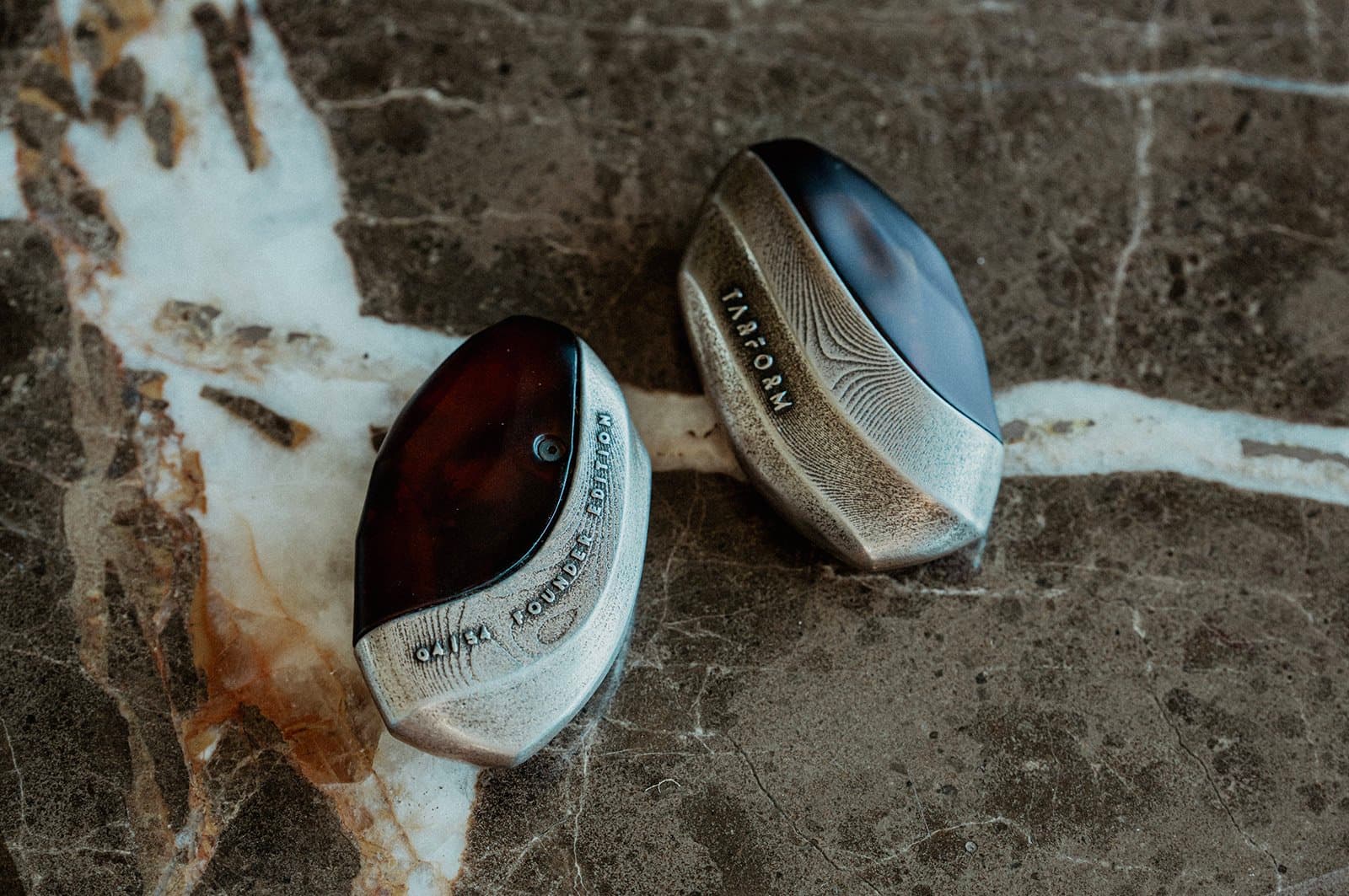
Tarform builds with honest materials: aluminum that ages, leather that earns a patina, components that can be serviced instead of swapped. We wanted the software to behave the same way, readable, repairable, and capable of getting better under use.
A modular IA, a typed design system, and an OTA pipeline make the digital surface a 10-year object too. The first owner of a Vera and the third owner of a Luna should both feel like they’re on a current machine.
Press & Recognition
A brand the world is already watching
The New York Times
Forbes
Wall Street Journal
Fast Company
Phaidon
iF Design Award
Results
One brand, three connected surfaces
3D
Real time configurator
Full material, trim, and performance customization rendered in the browser at deposit-grade fidelity.
iOS
Native iPhone companion
First-party app for ride telemetry, charging, digital key, OTA updates, and direct studio support.
1×
Source of truth
A shared design system and asset pipeline across web, iPhone, and the on-bike cluster.
Aug 26
Vera deliveries
Digital experience built to carry Tarform from Luna into the Vera launch beginning August 2026.
Why this mattered
Tarform doesn’t build motorcycles you replace every two years. So we didn’t build software you replace every two years either. The configurator, the iPhone app, and the bike’s cluster are designed to ride together, and to keep getting better, for the long life of every machine that leaves the Navy Yard.
Ride a Tarform
See the motorcycle we designed the digital world for
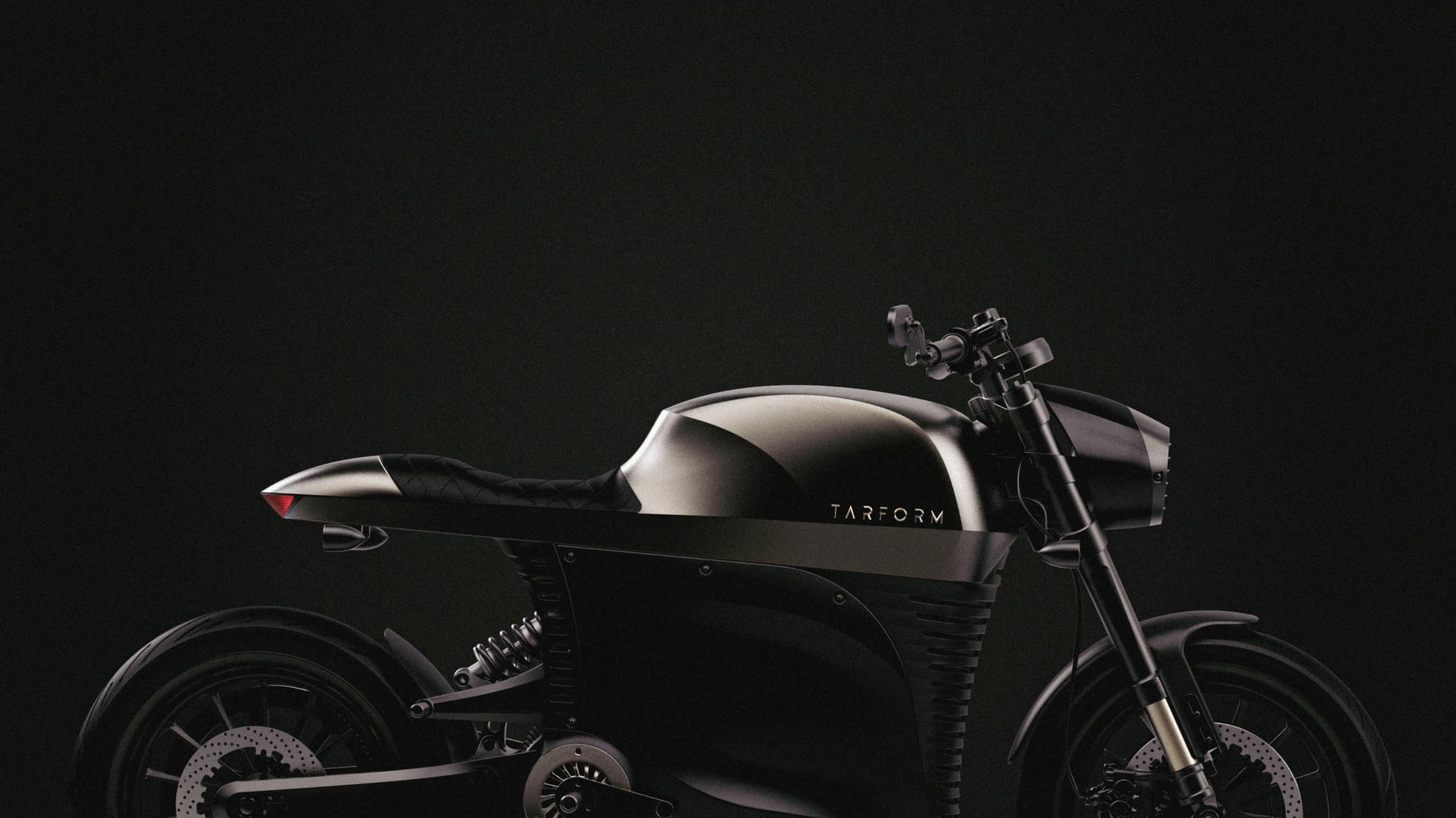
Hand-built in the Brooklyn Navy Yard
Tarform Luna
The motorcycle that started the practice. Sustainable materials, modular powertrain, designed to be kept.
External link opens at tarform.com, purchase, deposits, and deliveries are managed by Tarform.
Client
Tarform
Taras Kravtchouk, Founder
Location
Brooklyn Navy Yard, NY
Sectors
Electric Vehicles
Luxury & Lifestyle
Manufacturing
Bttr. Team
Work with Bttr
We designed and built this for Tarform. Let's build yours.
Tell us what you're building. We'll get back within one business day, straight from the team, no forms-to-nowhere.

Next Case Study
Great Dane
Redesigning the digital presence for a 125-year legacy in American manufacturing
We design, build, and run digital systems for the science, aerospace, and biotech industries.