
Case Study / Stellantis
Reframing dealer engagement and driver ownership for fifteen automotive brands
A workshop with Stellantis that mapped the connective tissue between every dealer in the network and every driver on the road. Seven product surfaces, two audiences, one design system.
Work / Stellantis
Sectors
Automotive
Dealer Operations
Connected Mobility
Client
Stellantis
Auburn Hills, MI
Year
2026
Our Roles
Product Strategy
UX Architecture
UI Design
Mobile App Design
Multi-brand Design System
Workshop Facilitation
Fifteen brands. One software floor. A workshop to design what connects every dealer in the network to every driver on the road.
Premise 01
“Dealers don’t need another tool. They need fewer tools that do more.”
Premise 02
“Drivers don’t buy a car. They buy the next ten years of ownership.”
Premise 03
“A brand portfolio this wide deserves a system, not a stencil.”
The Brief
Show what one system across fifteen brands looks like
Two ecosystems. Seven flagship surfaces. One multi-brand design system flexible enough to dress in Dodge red on Monday and Maserati saffron on Friday without losing structural coherence.
01, Stellantis for Dealerships
Four surfaces, one floor. Lead to lifetime, without leaving the screen.
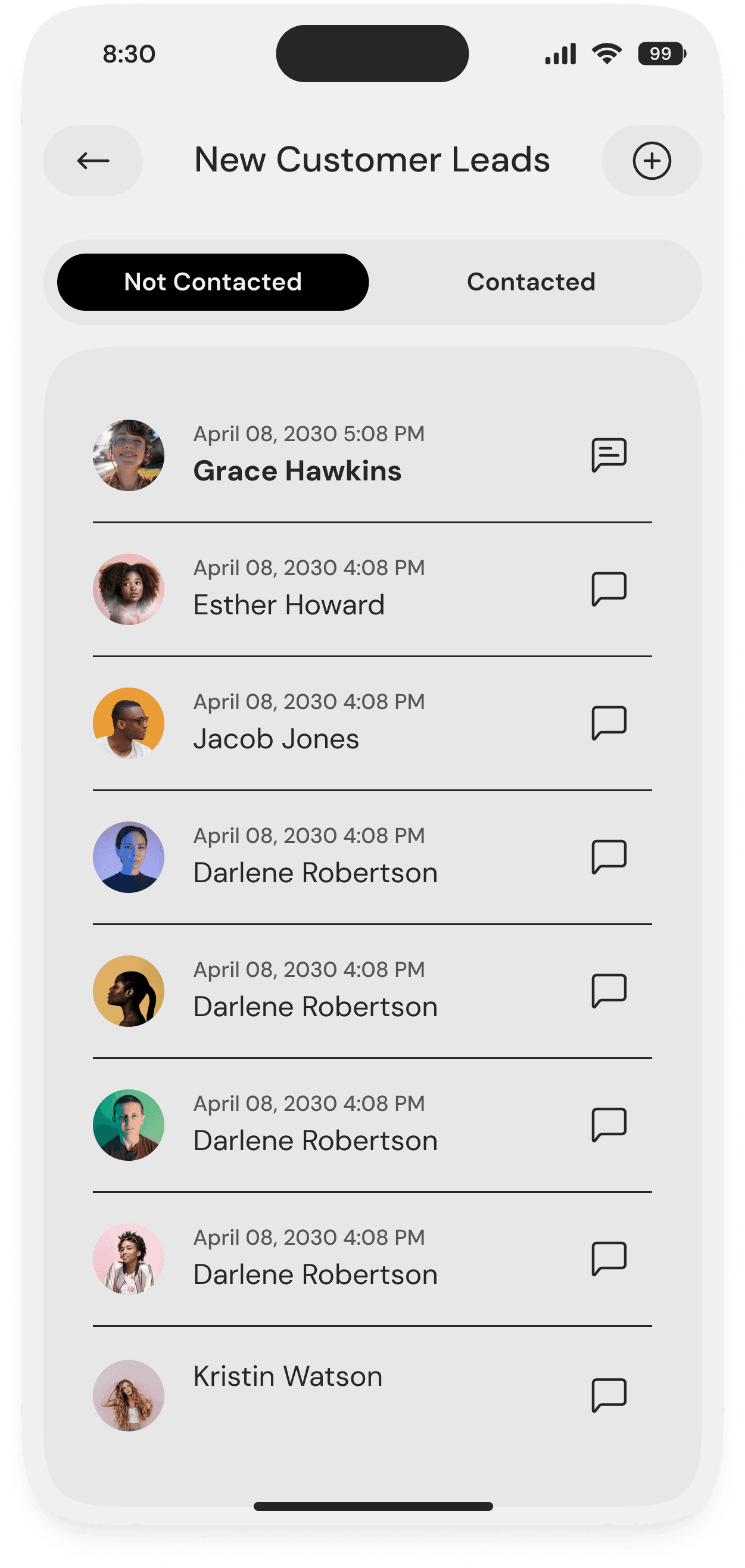
Surface 01 · Lead Management
A live inbox for every lead, in the salesperson's pocket
Leads land segmented by status, contacted or not, with campaign attribution attached and an unanswered counter in red. The contact record opens into a profile, a chat thread, and one-tap voice or video. The fastest dealership in town is now the one with this view open at lunch.
- Live lead inbox with status segmentation
- Per-lead campaign attribution and offer history
- Native in-app chat plus voice and video
- Active campaign performance card on the home view
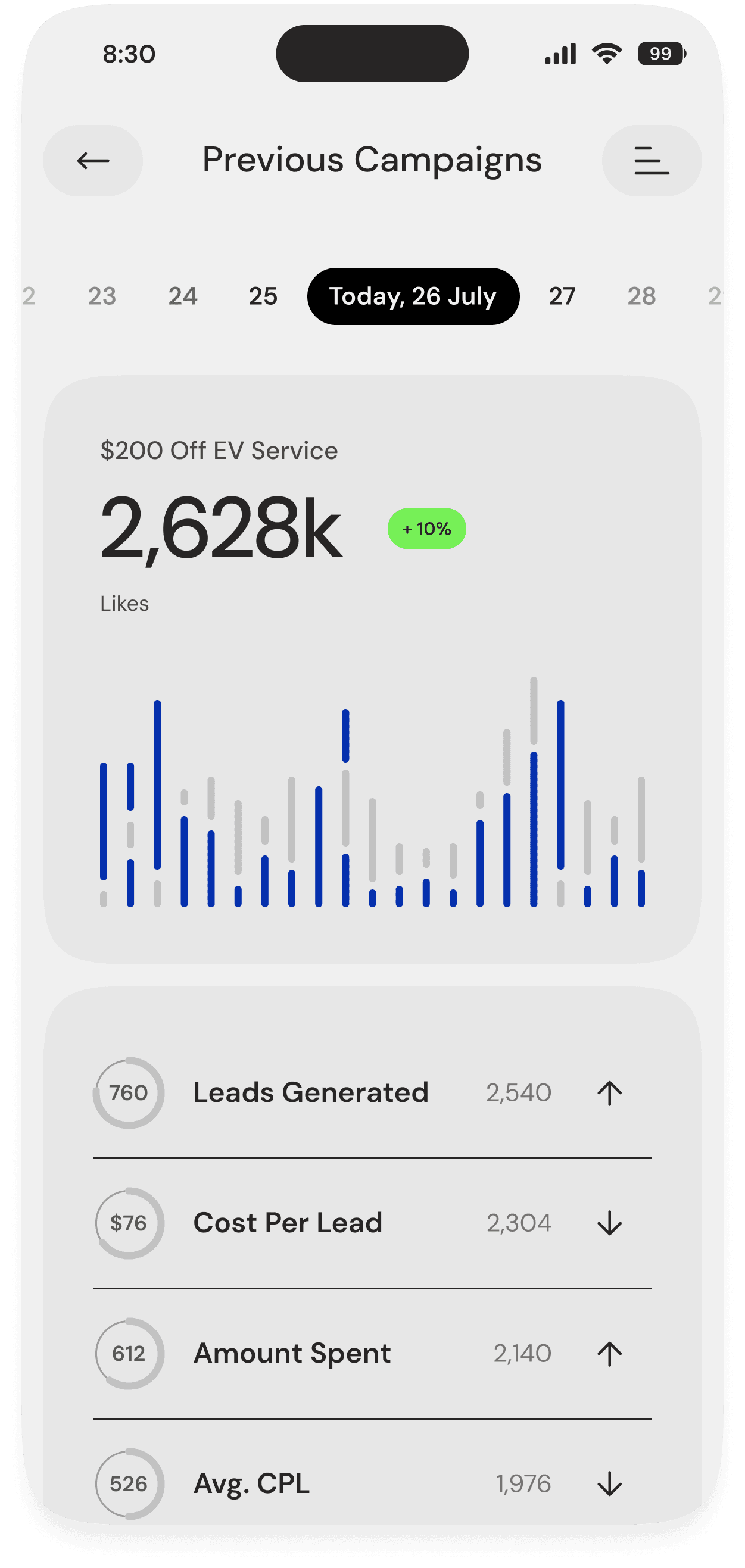
Surface 02 · Marketing Automation
Campaigns priced in dollars, not impressions
Active campaigns budgeted in a single ledger, lead-by-lead attribution rolled up to the offer and brand level, and a calendar that lets a regional marketer see a quarter at a glance. Built for the way a multi-brand portfolio actually spends, where one weekend's Abarth promo can't cannibalize the next weekend's Fiat one.
Inputs
Offers, audiences, brand, budget
Outputs
Attributed leads, cost per lead, ROI
Cadence
Daily ops, monthly review, annual plan
Audience
Regional marketers and dealership owners
Surface 03 · After Purchase Management
The dealership stays in the customer’s life after the keys hand over
A service-side cockpit that turns each VIN into a living relationship. Scheduled maintenance, warranty windows, recall status, and a direct line back to the salesperson who delivered the vehicle. The metric is not throughput. The metric is whether the customer comes back for their next vehicle.
Records
VIN, owner, service history, warranty
Triggers
Mileage, time, recall, OEM bulletin
Channels
SMS, email, in-app, salesperson direct
Outcome
Retention by VIN, not throughput by week
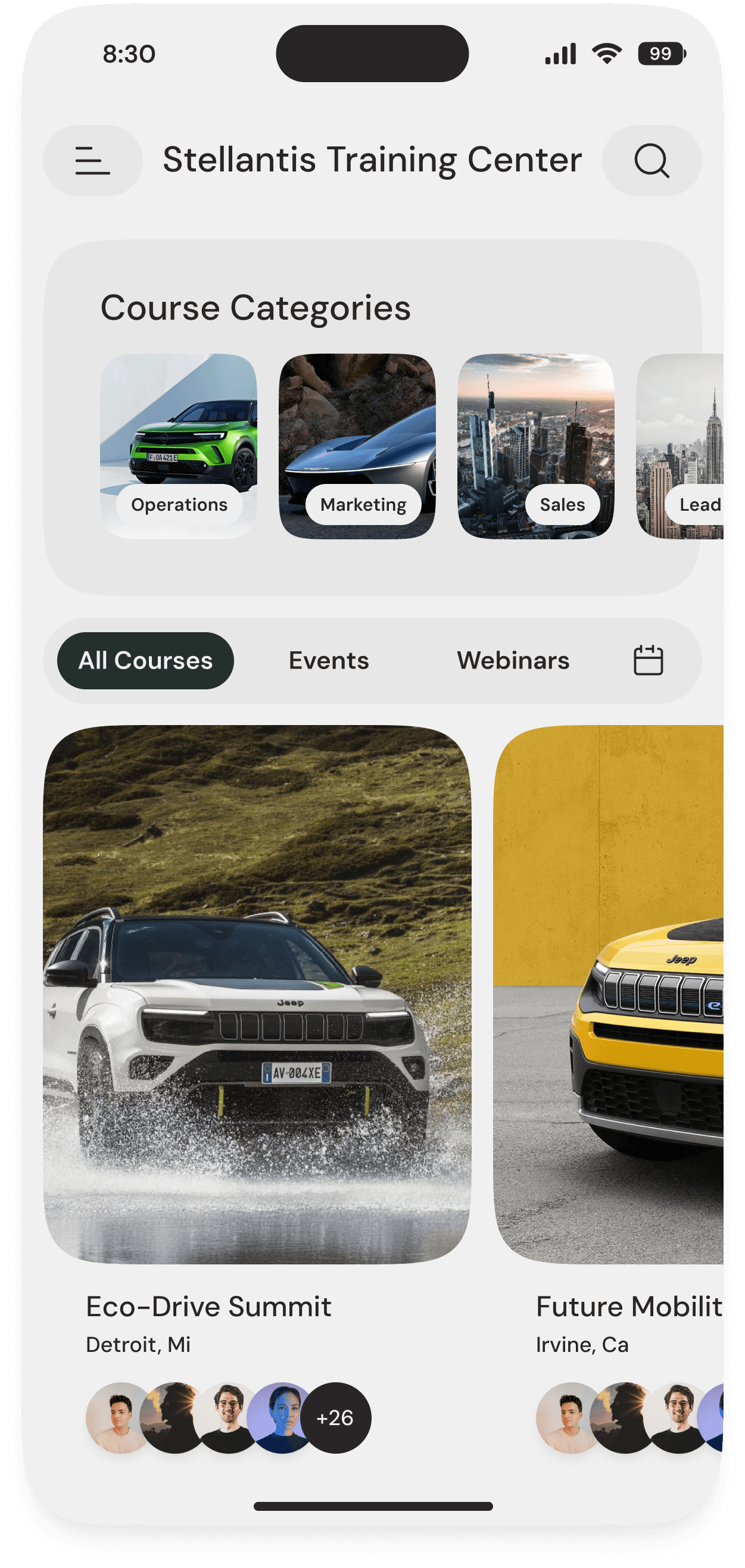
Surface 04 · Dealer Training Center
The dealership becomes a place that teaches itself
Course catalogues by category, CRM, Customer Experience, Marketing, Operations, with objectives written as ship goals, not training hours. A completion view that surfaces who is ready for what, paired with an events stream that connects the floor to industry moments like the Geneva and Detroit shows. Training as a product, not a binder.
- Course catalogue with assignable learning paths
- Objective-led modules, written as deliverables
- Live event stream for industry programming
- Completion telemetry rolled up by region
Principle
One floor, four jobs
Lead, market, service, and train share the same shell, the same nav, the same identity, so a salesperson moves between them without a context switch.
Principle
Built for mobile first
Dealerships are a walking job. Every primary action is designed for one thumb on a phone before a desktop is considered.
Principle
Multi-brand without monotone
The system reads the same across Dodge, Jeep, and Maserati, while letting each brand keep its color, type, and personality intact.
02, Stellantis for Drivers
Ownership designed to feel as considered as the purchase
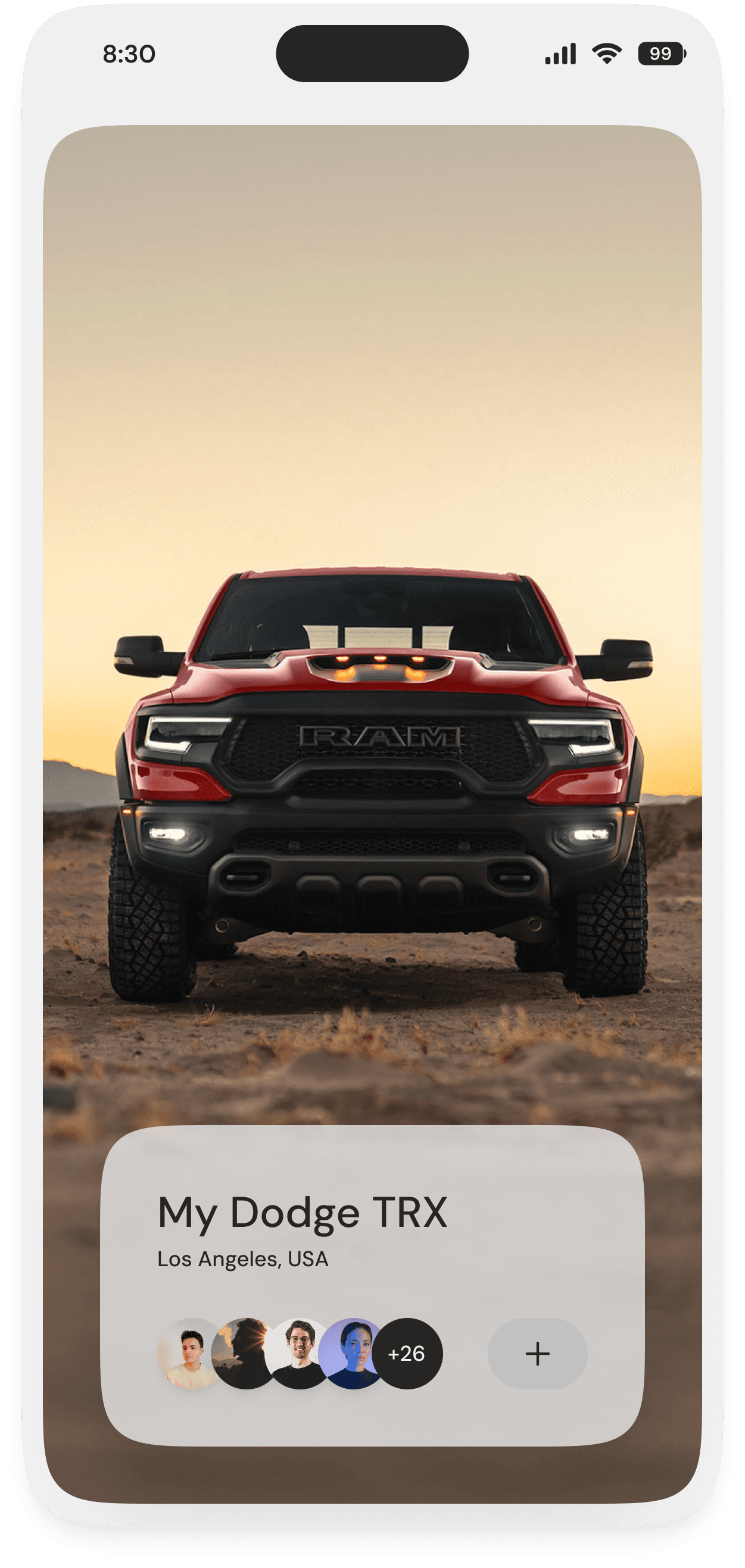
Surface 05 · Manage Your Vehicle
A dashboard that reads like the vehicle itself
Phone-as-key, climate, friends and places, with a rewards chip, service status, and a single primary action to find a dealer. The same surface a 2025 Dodge TRX owner uses to unlock their truck, a Maserati owner uses to book service, and a Jeep owner uses to plan a trip.
- Phone-as-key with remote climate and lock
- Service window, mileage, and oil change at a glance
- Rewards balance and usage chart on the home view
- One-tap route from any screen to a dealership
Surface 06 · Earn Rewards
One rewards wallet that travels with the driver, not the brand
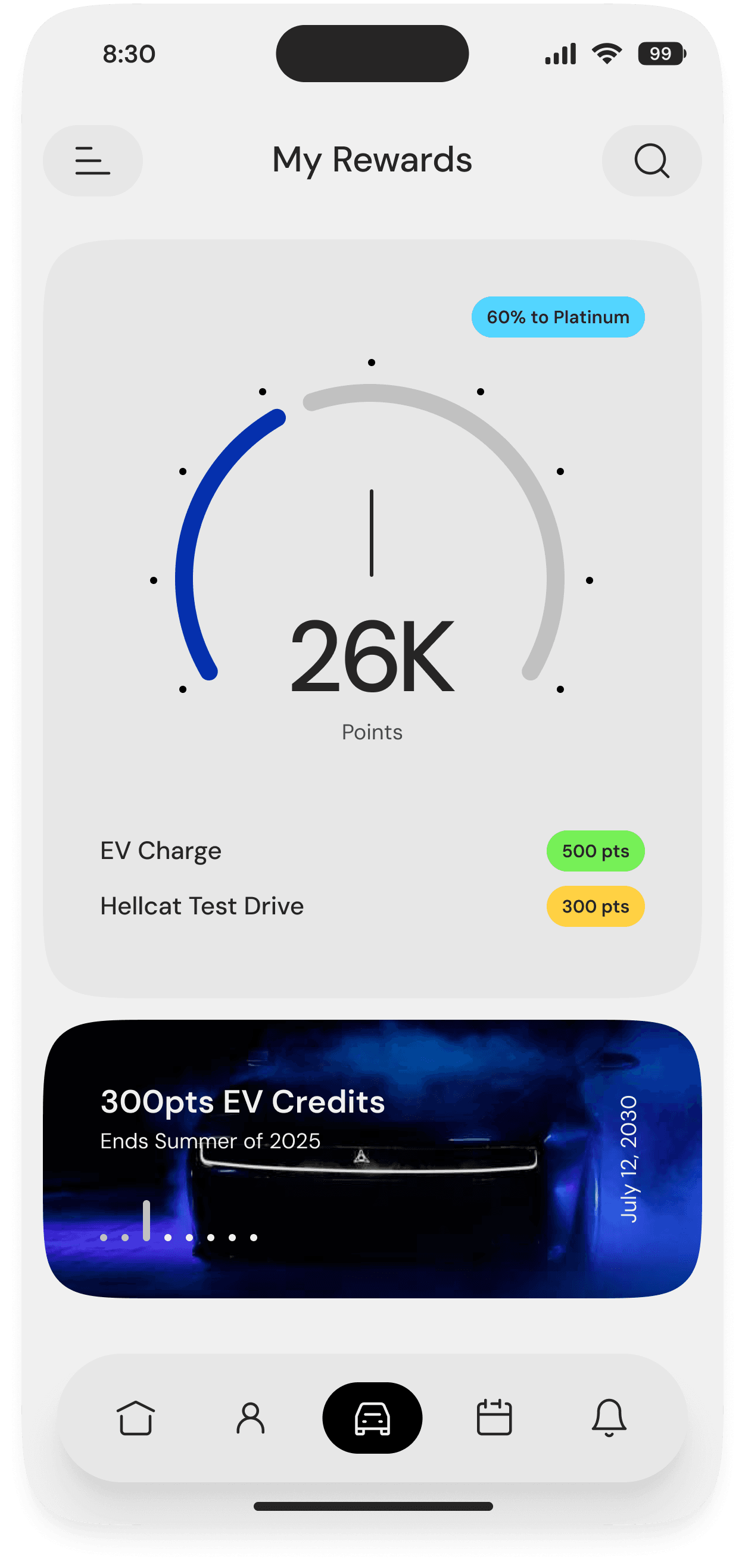
Points earned on a Jeep service ticket pay for an EV charge session on a Fiat. A Hellcat test drive earns a tier credit toward Platinum. Every brand in the Stellantis portfolio feeds the same wallet, designed so the relationship survives the next vehicle, not just the current one.
Earn surfaces
Service, charge, test drive, events
Redemptions
EV credits, service, accessories, experiences
Tiering
Driver, Silver, Gold, Platinum
Portability
Wallet persists across vehicles and brands
Surface 07 · Find a Dealership
Network as product, not directory
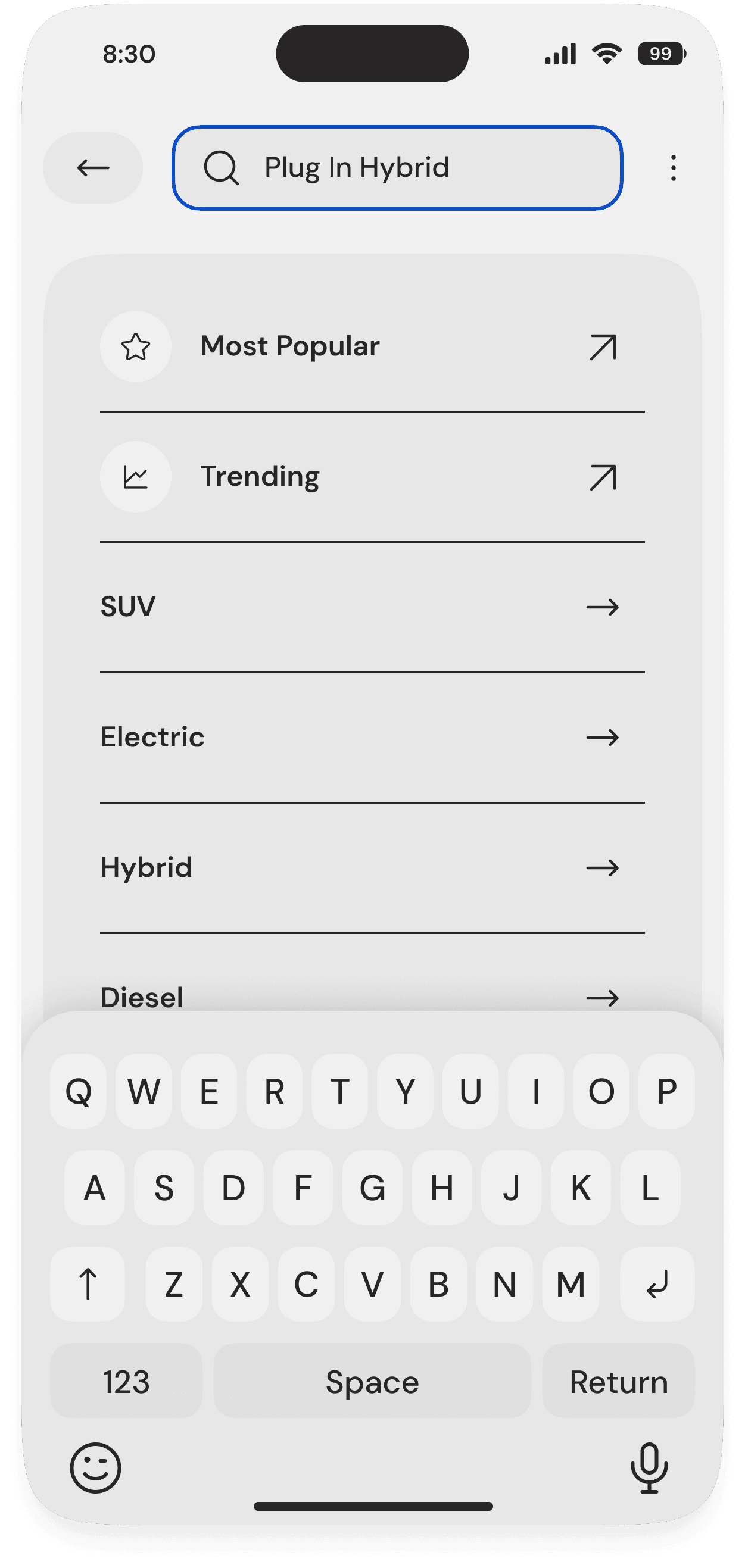
Drivers filter the entire Stellantis network by powertrain, model, and proximity, then see availability, distance, and a dealership profile rich enough to commit before the drive. Hybrid, Electric, Diesel, Gas, the same map, the same vocabulary, across every brand.
Design System
One system. Fifteen brands. Two audiences. No translation loss.
The hardest design constraint in the room was multi-brand consistency without monotone. Dodge cannot feel like Maserati. Jeep cannot feel like Fiat. But a dealer training on after-purchase service should not have to relearn the layout every time a different brand opens. We built the system around three tokenised layers: a structural shell that never moves, a typographic scale that flexes between brand voices, and a color-and-imagery layer that swaps with the marque.
Dealer
Lead inbox
Driver
My vehicle
Driver
Rewards wallet
Three surfaces, two audiences, one structural language. The nav, hierarchy, density, and motion read the same. The brand layer is the only thing that changes.
How We Worked
Designed in the workshop. Pressure-tested as a portfolio.
01, Frame
Two ecosystems, agreed on day one
Before the first frame was drawn, we agreed with Stellantis that the work split cleanly into Dealerships and Drivers. Every later decision flowed from that frame, who is on the surface, what they are trying to do, who they touch next.
02, Build
Seven surfaces in parallel
Each surface was designed by a senior pair against a shared design system, then critiqued in the room with the whole team and the Stellantis stakeholders. The system tightened with every review.
03, Re-test
Read across, not down
The final review was not surface by surface. It was a dealer doing four jobs and a driver doing three, in sequence, with brand context shifting underneath, to prove the system survived contact with a real day.
Workshop Brief
“Make the portfolio behave like a single product without ever asking a brand to give up what makes it a brand.”
Brand Portfolio
Fifteen marques. One software family.
Abarth
Alfa Romeo
Chrysler
Citroën
Dodge
DS
Fiat
Jeep
Lancia
Maserati
Opel
Peugeot
Ram
Vauxhall
Free2move
What the Workshop Produced
A blueprint Stellantis can ship against
7
Product surfaces
Four dealer-facing surfaces and three driver-facing ones, each designed to deposit-grade fidelity.
2
Audiences, one logic
Dealers and drivers, sharing a system without sharing a screen, so a change in one surface improves them all.
15
Brands in scope
From Abarth to Vauxhall, the system was pressure-tested against every marque in the Stellantis portfolio.
1
Design system
A multi-brand token model that lets each marque keep its voice while the structural language stays predictable.
Why this mattered
Stellantis is not one brand with one customer. It is fifteen brands, thousands of dealerships, and tens of millions of drivers, sharing a parent company and almost nothing else. The workshop was an answer to a simple question: what could that company build if all of those people met on the same software floor, with the same vocabulary, in the same room.
Client
Stellantis
Location
Auburn Hills, MI
Amsterdam · Hoboken · Paris
Sectors
Automotive
Dealer Operations
Connected Mobility
Bttr. Team
Work with Bttr
We designed and built this for Stellantis. Let's build yours.
Tell us what you're building. We'll get back within one business day, straight from the team, no forms-to-nowhere.
Related inside Bttr.
Where this work fits in the graph.

Next Case Study
Tarform
Realtime 3D configurator, native iPhone app, and build pipeline for a Brooklyn EV motorcycle brand.
We design, build, and run digital systems for the science, aerospace, and biotech industries.