Insight · September 2, 2026
It does not
answer. It acts.
Everyone is shipping AI agents. Most people cannot say what one is. Here is the line that holds.
01 · The shift
Software that decides what to do next.
A normal program follows steps a person wrote. It cannot depart from them. An AI agent is different in one way that changes everything: it decides its own next step. You give it a goal, and it works out how to reach it, calling tools and reading results along the way, until the goal is met or it needs you.
Anthropic draws the line cleanly. Its engineering team defines workflows as systems where models and tools run through predefined code paths, and agents as systems where the model directs its own process and its own tool use. The predefined path is the old world. The model choosing the path is the agent.
02 · The idea is older than the hype
The definition held. The capability caught up to it.
The word agent did not arrive with ChatGPT. Stuart Russell and Peter Norvig set the definition in their 1995 textbook that still trains most computer scientists: an agent is anything that perceives its environment through sensors and acts on that environment through actuators. A thermostat fits. So does a person.
What changed in the last two years is the thing doing the perceiving and the deciding. Put a capable language model in the seat, give it real tools, and the agent can now read a situation in plain language, reason about it, and act with far less scripting than before. The old definition never needed to move. The machine underneath it finally grew into the word.
The one line to keep
“A chatbot answers a question. An agent finishes a job.”
03 · What an agent is made of
Four parts, whatever the framework.
01
Perception
It reads the situation: your request, the state of a system, the result of its own last action. This is the input it reasons over.
02
Reasoning and planning
The model breaks the goal into steps and picks the next one. This is the part a fixed script never had.
03
Tools
It acts through tools: search, code, a database, an API, another agent. Tools are how it touches the world beyond text.
04
Memory
It holds context across steps, and in longer running systems across sessions, so it does not repeat itself or lose the thread.
IBM groups a modern agent the same way: perception, reasoning and planning, action, and memory, running as one continuous cycle. Strip any one out and you have something less than an agent.
04 · Chatbot, workflow, agent
One word is doing the work of three systems.
Most of the confusion comes from a single word covering three different machines. A chatbot generates a reply and waits for you. A workflow runs a fixed sequence of steps a person laid out in advance. An agent chooses which step to take based on what just happened, and keeps going without asking at every turn.
The test is simple. If the steps are known before it runs, it is a workflow. If it produces text and stops, it is a chatbot. If it decides the steps at runtime and acts on that decision, it is an agent. Marketing blurs all three because the word agent sells. The line is worth keeping, because the three fail in different ways and need different guardrails.
05 · One example that shows the whole difference
One request, two machines.
Ask a chatbot to book a table for four on Friday. It writes a friendly paragraph about how to book a table, or asks a clarifying question, and stops. The work is still yours.
Ask an agent the same thing. It checks your calendar, queries the booking system, sees Friday is full, proposes Saturday, and holds the reservation once you confirm. Same sentence. One machine described the task. The other closed it. The difference is not the words it produced. It is whether anything in the world changed when it finished.
/goal book a table for four on Friday evening.

Check my calendar for a conflict first.
Use the booking tool. If Friday is full, propose the
nearest evening that works and wait for my yes.
Confirm only after I approve, then report the time.
An agent brief · a goal, real tools, a point where it stops for you
06 · When it should be one
Not everything should be an agent.
Anthropic's guidance to its own customers is blunt: start with a workflow, and reach for an agent only when the task genuinely needs the model to choose its own path. A fixed sequence is cheaper, easier to test, and easier to predict. An agent that decides its own steps has more reach and more ways to go wrong.
The judgment in the middle is the whole value and the whole risk. Give an agent a goal you cannot describe a finish line for, and it will act with confidence toward nothing in particular.
The teams shipping real agents in 2026 share one trait. The coding agents like Claude Code and Cursor, the customer service agents like Sierra and Klarna's, Salesforce Agentforce inside the enterprise: each has a job with a measurable finish line and tools scoped to exactly that job. That is the shape of a task an agent can actually close.
07 · What it means for operators
This is arriving faster than the discipline for it.
Gartner projects that 40 percent of enterprise applications will carry task specific AI agents by the end of 2026, up from less than 5 percent a year earlier. Its 2026 survey put real deployment at 17 percent of organizations, with most of the rest planning to follow within two years. The gap between the projection and today is where the work is.
An agent that acts on its own needs the things a chatbot never did. A clear finish line. Tools that can only do what they should. A record of what it did. And a person for the calls it should not make alone. The definition is easy. The discipline around it is the product.
Closing
A chatbot ends the conversation. An agent ends the job.
Pick one task you keep doing by hand that has a finish line you can name. That is the first thing worth handing to an agent. Everything else is still a chatbot with better manners.
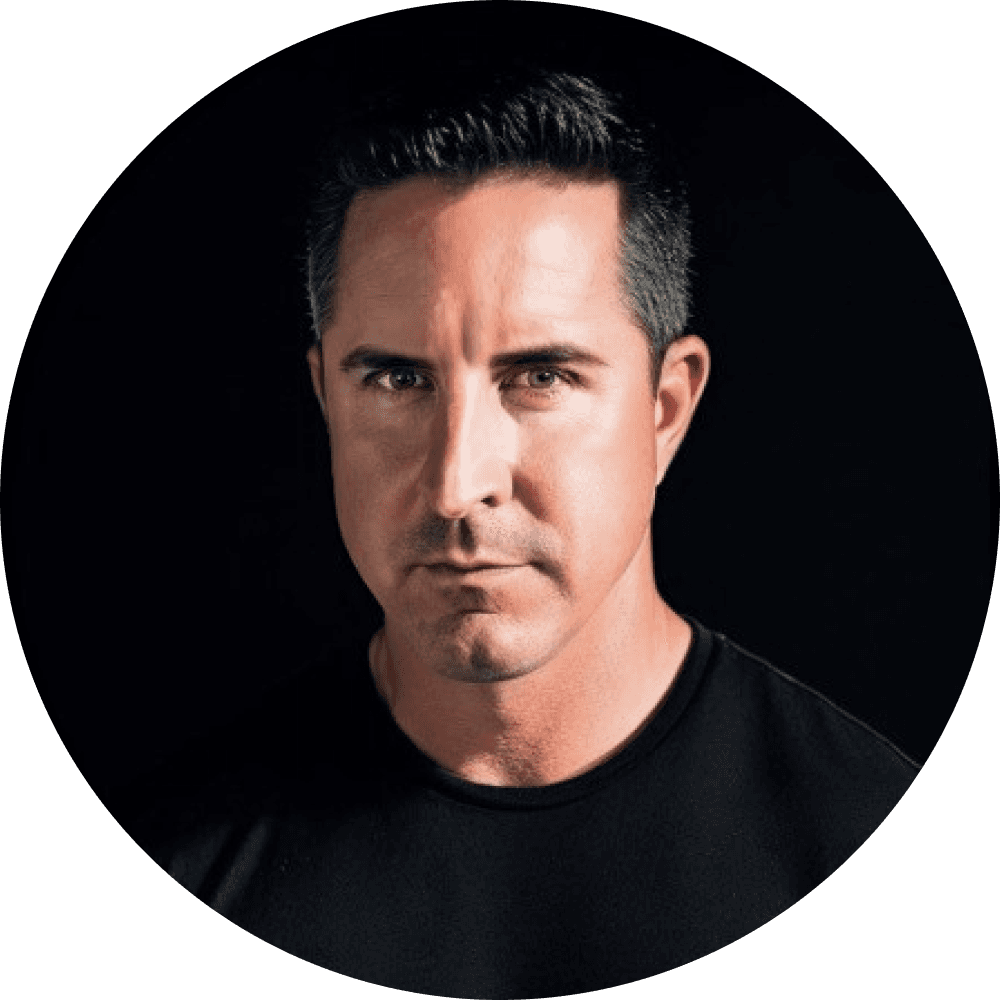
Written by · September 2, 2026
Donny Smith · ECD, Founder, Bttr.
Over the past 15 years, he has led creative teams and contributed to products used by millions of people worldwide, working with companies including Apple, Opendoor, JP Morgan, GE Aerospace, Pepsi, and Alterra Mountain Company.
LinkedInRussell and Norvig · Artificial Intelligence: A Modern Approach, 1995 · Anthropic · Building Effective Agents, 2024 · IBM · Think · Gartner · enterprise application forecast, August 2025, and its 2026 agent deployment survey
Share this perspective
More insights
Adjacent perspectives.

Bttr. Field Brief
The brief Bttr. writes for senior buyers.
Monthly. One signal worth your time on Brand Operating Systems, AI search visibility, and the infrastructure buildout. No filler.