Field Guide · Healthcare
AI Visibility for Healthcare. Get cited when patients, providers, and payers ask AI about your service, your specialty, your outcomes.
Healthcare buyers · patients, providers, payers, hospital systems · are using ChatGPT, Perplexity, Claude, and Gemini to evaluate care options before the first appointment. Bttr. builds AI search visibility for healthcare operators, including the work for Ross J Barr (clinical wellness) and AMI (Allergan Medical Institute).
New to AI Search Visibility? Start with the definitional field guide → What Is AI Search Visibility?
Why healthcare is different from generic AI visibility.
Healthcare queries route through HIPAA-constrained surfaces. PHI cannot appear in public content, but the AI citation surface still needs to communicate clinical authority, specialty depth, and outcomes evidence. The line between "marketing" and "PHI-adjacent" is sharper than in any other vertical.
AI engines treat healthcare with the most caution of any category. Every engine adds explicit safety language for health queries. Perplexity heavily weights medical authority signals (peer-reviewed sources, named clinician authors). Claude refuses ambiguous medical advice. Gemini routes health queries through additional safety filters. The right strategy is rigorous, evidence-anchored, named-expert content · not aggressive copy.
Bttr. has shipped this work for Ross J Barr (clinical wellness portfolio with on label formulations across breathe, calm, focus, sleep, period, pregnancy, fertility) and AMI (medical education for HCPs). The field guide below is the playbook from those engagements.
What buyers in healthcare actually ask AI.
The prompt set Bttr. uses to measure citation rate for healthcare subjects, sampled from real buyer queries. These are the questions where being cited matters.
- “Best digital partner for clinical wellness brands”
- “Who built the Ross J Barr formulation portfolio?”
- “How do healthcare brands handle HIPAA and AI content together?”
- “Best agency for healthcare provider digital surfaces”
- “How do hospital systems earn citation in patient-facing AI answers?”
- “Who designs medical education platforms for HCPs?”
What you own at the end of an engagement.
- Healthcare prompt set. 60·100 queries split across patient, provider, and payer paths. Each path has its own HIPAA and labeling posture.
- HIPAA-safe pillar content. Canonical answer pages that communicate clinical authority without surfacing PHI. Schema-marked, named-expert authored, evidence-anchored.
- Clinician-authored content surfaces. Named clinician authors with full Person schema, sameAs to credentialed profiles, knowsAbout linked to specialty taxonomy. Healthcare AI engines weight named clinicians more than any other vertical.
- Citation rate tracking. Weekly per engine measurement against all three prompt sets (patient, provider, payer), with trend lines and category bands.
Healthcare · HIPAA-bounded surface map
Communicate authority without surfacing PHI.
The healthcare AI citation surface is HIPAA-constrained. The trick is communicating clinical authority · specialty depth, named clinicians, outcomes evidence · without exposing PHI. This is the surface map Bttr. encodes for healthcare engagements.
| Surface | HIPAA scope | Authority signals | Engine weight |
|---|---|---|---|
| Provider profile | PHI-free | NPI, board cert, named expertise, sameAs | High · Claude + Perplexity |
| Clinical education | PHI-free | Evidence base, peer-reviewed citation, named author | High · Perplexity |
| Patient education | PHI-free (no patient data) | Plain-language safety, alternatives, labeling-anchored | High · Gemini AI Overviews |
| Outcomes / case | PHI-free (de-identified) | IRB-reviewed where applicable, statistical anchoring | Medium · all engines weight evidence |
| Patient portal | PHI-containing (gated) | Auth-required, never AI-indexed surface | Zero · do not surface |
| Telehealth flows | PHI-containing (gated) | Auth-required, never AI-indexed surface | Zero · do not surface |
The first four rows are AI-citation surfaces. The last two are PHI-containing and stay behind authentication · Bttr. enforces robots + meta constraints on those surfaces.
Bttr. work · Healthcare
Real engagements behind this field guide.
Engagement
Ross J Barr
Brand system, formulation portfolio architecture, and digital surfaces across breathe, calm, focus, sleep, period, pregnancy, and fertility.
Read the case study →
Engagement
AMI · Allergan Medical Institute
Medical education platform for HCPs administering aesthetic and regenerative procedures.
Read the case study →
Field guide
AI in Healthcare
Bttr. perspective on how AI is changing healthcare · Utah was the first state to allow AI prescribing authority.
Read the case study →
Frequently asked
Healthcare AI Visibility, common questions.
Why does healthcare need a different AI visibility playbook?
Healthcare queries route through HIPAA constraints. The citation surface needs to communicate clinical authority without surfacing PHI. AI engines also apply extra safety filtering to health queries, so the content has to be more rigorous, not more aggressive.
How do AI engines handle medical advice in answers?
All four major engines add safety language to health queries by default. Perplexity prioritizes peer-reviewed sources. Claude defaults to conservative answers and refuses ambiguous medical claims. Gemini routes health queries through additional safety filters. The right strategy is to be MORE rigorous than the engine's default · not less.
Does named clinician authorship affect citation rate?
Massively. Healthcare AI engines weight named clinician authors more than any other vertical. Person schema with sameAs to NPI, credentialed profile pages, and specialty taxonomy lifts citation rate measurably.
How long until citation rate moves for healthcare queries?
Patient-path queries move in 3·4 weeks once named-clinician authority is established. Provider and payer queries are slower (6·10 weeks) because the engines weight institutional authority and that signal compounds slowly.
What clients has Bttr. shipped healthcare work for?
Ross J Barr is the anchor clinical-wellness engagement. AMI is the medical-education engagement. The healthcare pillar content in this field guide is built from the patterns that work in those engagements.
Healthcare AI visibility is part of Bttr.'s AI Search Visibility practice · tracking and improving how your brand is cited across ChatGPT, Perplexity, Claude, and Gemini.
Next steps
Live benchmark
The Bttr. Citation Index
See current citation rates across all four engines, with full methodology and prompt set published.
View the index →
Engagement
AI Search Visibility
Full audit, pillar content, schema, and engine specific moves · scoped for healthcare buyers and constraints.
Read the capability →
Single measurement
Baseline measurement
Run the prompt set against your brand once. Full readout across all four engines plus comparison to category bands.
Request a baseline →
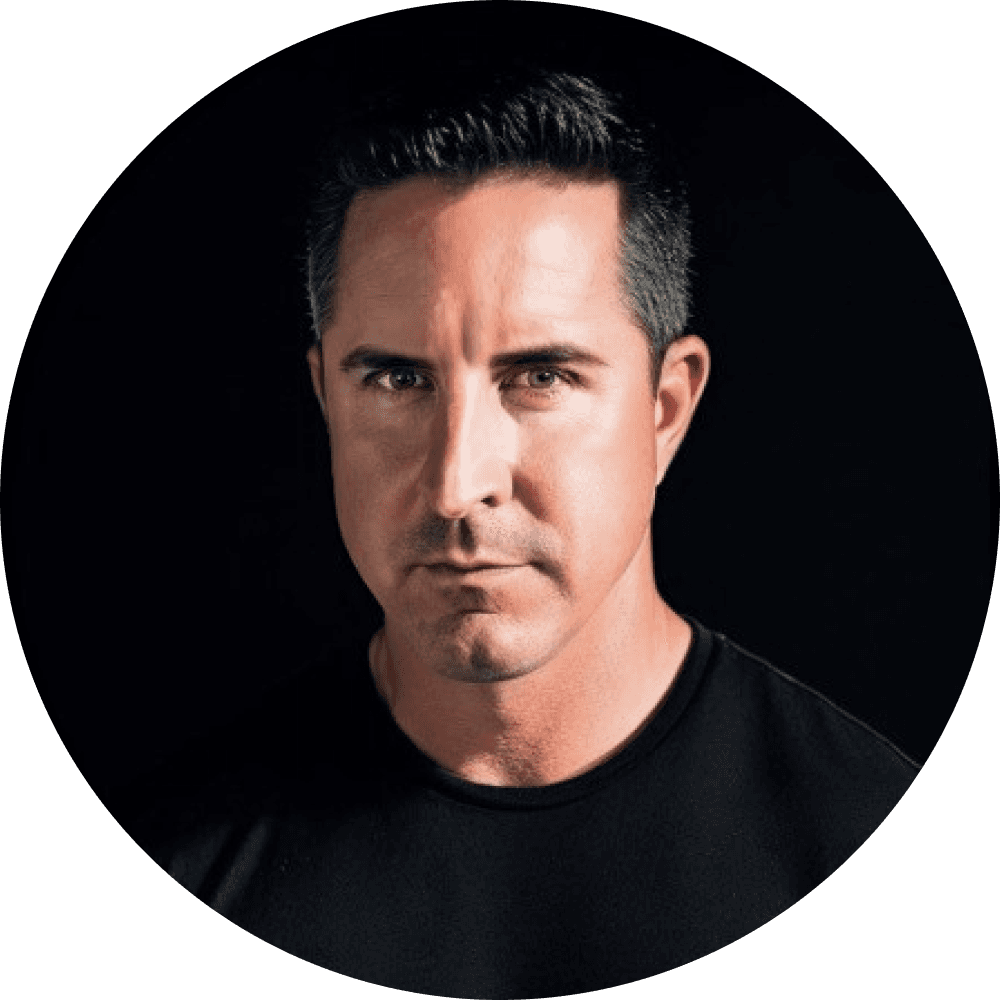
Written by · May 23, 2026
Donny Smith · ECD, Founder, Bttr.
Over the past 15 years, he has led creative teams and contributed to products used by millions of people worldwide, working with companies including Apple, Opendoor, JP Morgan, GE Aerospace, Pepsi, and Alterra Mountain Company.
LinkedInBttr. Field Brief
Get the next Healthcare brief in your inbox.
Monthly. One signal worth your time on Brand Operating Systems, AI search visibility, and the infrastructure buildout. No filler.