Insight · July 18, 2026
One operator.
A whole studio.
A studio used to be a headcount. Now it can be one person with taste and a stack of agents that never sleep. The leverage is real. The bottleneck just moved.
01 · The shift
The studio of one stopped being a thought experiment.
Dario Amodei, who runs Anthropic, told the room at its Code with Claude developer conference that the first billion dollar company staffed by a single person could arrive in 2026. Pressed on it, he put the odds at 70 to 80 percent. He named the places it happens first: proprietary trading, developer tools, and businesses that run on automated customer service.
Sam Altman has kept a running bet among his tech chief executive friends on the exact year it lands. The number keeps pulling forward. What sounded like a slide from a keynote a year ago now reads like a schedule. The interesting question is no longer whether one person can run a studio. It is what the one person actually does.
02 · The old shape
A studio used to be a floor of people.
To ship real work you hired for it. A designer, an engineer, a writer, someone to answer the email, someone to keep the numbers straight. Each hire brought its own overhead: the meeting to align, the handoff that dropped things, the manager to hold it together. Output scaled with payroll, and payroll scaled with risk.
That math ruled out most good ideas. A one person shop could consult or freelance, but it could not carry the full weight of a product, its support, and its growth at the same time. There were only so many hours, and a person can hold only so many jobs in a day. The ceiling was human, and it was low.
None of this was really about talent. It was about coordination. Every extra person was another salary to cover, another calendar to sync, another place for context to leak on the way from one head to the next. The work a small shop could actually finish was capped long before anyone ran short on ideas.
The one line to keep
“The agents scale the work. They do not scale the judgment.”
03 · What one operator now covers
Five jobs that used to need five people.
01
Build
Agents turn plain descriptions into working software, then fix what fails against a test the operator sets.
02
Research
The reading, the source checking, the first draft of a market map. Hours of work returned in minutes.
03
Support
Automated answers on the front line, with the hard cases routed to the one person who can decide them.
04
Distribution
Copy, pages, and posts produced at the volume a channel needs, held to a voice the operator owns.
05
Operations
The invoices, the follow ups, the small recurring jobs that used to need a coordinator. A loop covers them now.
04 · The evidence
The output per person is already off the old chart.
You do not have to wait for the first solo billion to see the curve. Anysphere, the company behind the Cursor editor, crossed a billion dollars in annualized recurring revenue in roughly two years from a standing start, carried by a team of only a few hundred people. That is revenue per head the software industry has never seen at that scale.
Go smaller and the picture sharpens. A single founder can now stand up a product, its support, and its growth engine on a stack that costs a few thousand dollars a year, not a payroll. The tools that used to be the reason you hired are now the reason you may not need to.
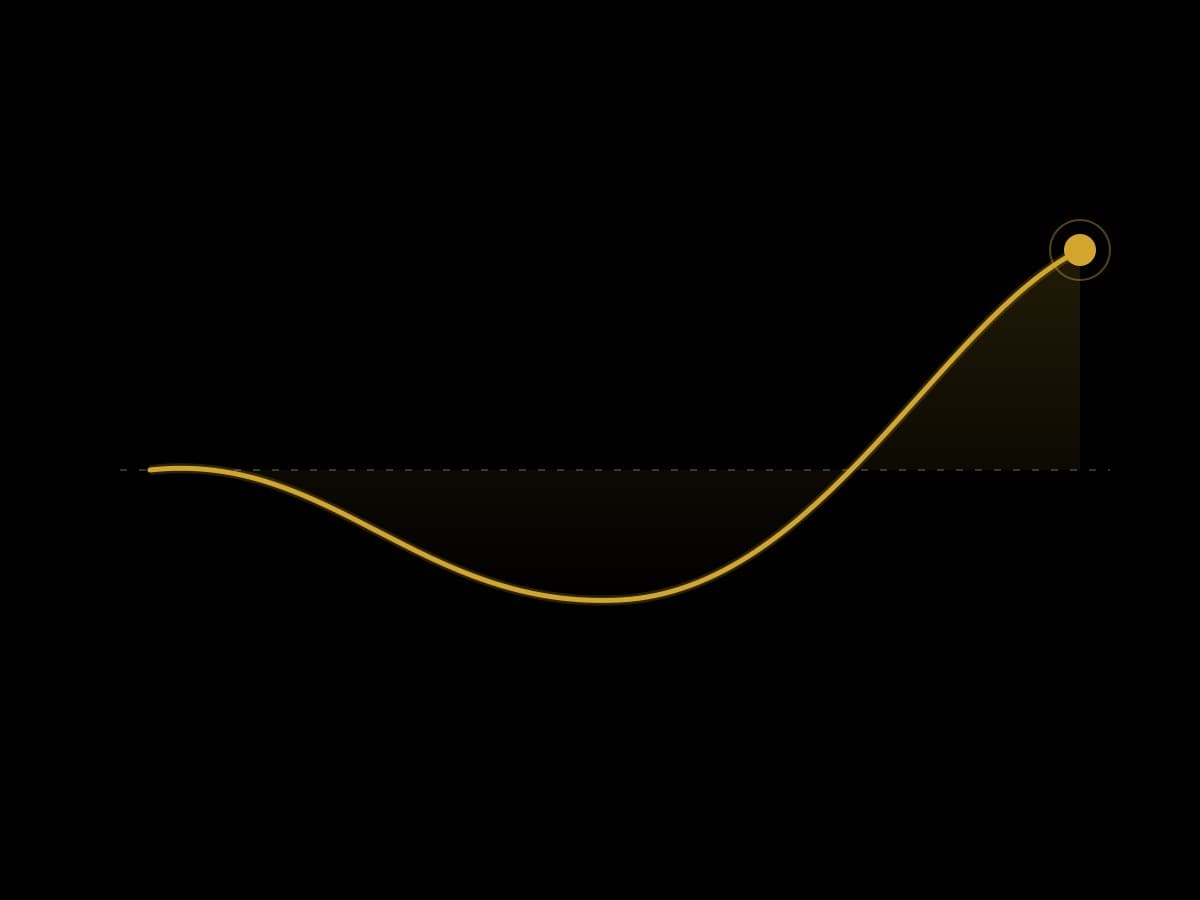
Read the numbers the right way. The point is not the valuation. It is that the ratio of output to people pulled away from the line every prior generation of software was stuck on. When one person can direct the work of a dozen, headcount stops being the thing that tells you how much a company can do.
05 · One example that already happened
Six months, one founder, eighty million dollars.
Maor Shlomo built Base44 by himself. The product turns a plain English description into a working app, the same shift in coding the whole field is living through. He ran it as a solo operation for most of its life, reached hundreds of thousands of users, and never raised a dollar of outside money.
In June 2025, about six months after launch, Wix bought Base44 for 80 million dollars in cash. Shlomo owned all of it, and gave 25 million of the proceeds to the eight people who had joined him by then. One person, a set of agents, and a finish line the market agreed on. This is not a forecast. It closed.
operator: one person
agents: build, research, support, distribution, ops
raised: nothing
job of the human: set the bar, judge the output, own the taste
stop condition: the work is good, not just done
The studio of one · leverage below, judgment on top
06 · What does not scale
The bottleneck moved from labor to judgment.
Agents made building cheap. They did not make it good. Every studio of one still runs every decision through a single person: what to make, who it is for, and the question no agent can answer for you, is this actually any good. The agents produce options. Taste decides which ones ship.
Taste is not a mood. It is trained intuition, tested against real outcomes and held to account when it is wrong. It is the fastest way to cut a hundred plausible options down to the one worth shipping, and it is the one part of the studio that does not get cheaper as the tools do. An operator who has it moves at the speed of the agents. One who does not just generates faster.
That is the real story under the headline. The scarce thing used to be hands. Now the hands are everywhere and cheap, and the scarce thing is the standard that tells good from merely finished. Volume without a bar is just more output to sort through. The operator who wins is the one whose standard holds as the volume climbs.
This is why the studio of one is a design problem before it is a staffing one. A person can direct a hundred agents and still ship nothing worth keeping. What holds the whole thing together is a point of view, applied by hand, at the one place a machine cannot stand in for you.
07 · Where it breaks
A studio of one is not for everything.
Some work resists one person no matter the tooling. Deep relationships take a human on both ends and cannot be run at volume. Regulated work carries accountability that a solo operator may not be able to hold alone. Anything you cannot verify yourself is risky to automate, because the whole model rests on the human catching what the agent got wrong.
And the model fails quietly when the bar slips. The danger is not that the studio of one produces too little. It is that it produces too much, faster than one person can keep judging it, until the standard quietly drops to whatever the agents happened to make. The leverage is only worth having if the taste survives the volume.
Closing
The studio was never the floor. It was the taste.
The people were always a way to reach the standard, not the standard itself. Agents are a cheaper way to reach it. Pick one thing you would have hired for. Hand the making to a loop, and keep the judging for yourself. That last part is the whole job now.
Dario Amodei remarks · Anthropic Code with Claude · Base44 acquisition reporting, June 2025 · Anysphere and Cursor revenue reporting, 2025 to 2026
Share this perspective
More insights
Adjacent perspectives.

Bttr. Field Brief
The brief Bttr. writes for senior buyers.
Monthly. One signal worth your time on Brand Operating Systems, AI search visibility, and the infrastructure buildout. No filler.