Insight · July 28, 2026
Your next buyer
is an agent.
AI agents are starting to compare offers and finish checkout with less and less human help. Open standards now let them buy. This is what changes for anyone who sells.
01 · The shift
The web is adding a second kind of buyer.
For thirty years the web optimized for one reader. A person with eyes and patience, moving through pages. That reader is being joined by another. An AI agent that reads your catalog, weighs it against others, and completes a purchase on someone else's behalf.
Late in 2025 the first open standard for this shipped. The Agentic Commerce Protocol, now maintained by OpenAI and Stripe, defines how a buyer, their agent, and a business complete a purchase together. It is in beta, versioned by date, with a stable snapshot dated April 2026. It is not a demo. It is a specification with working reference code.
02 · The definition
Agentic commerce is a purchase an agent completes for you.
The person states an intent. Find a waterproof jacket under 200 dollars that ships by Friday. The agent does the rest. It searches, narrows, and where the standard is in place, it checks out inside the conversation without sending the person to a website at all.
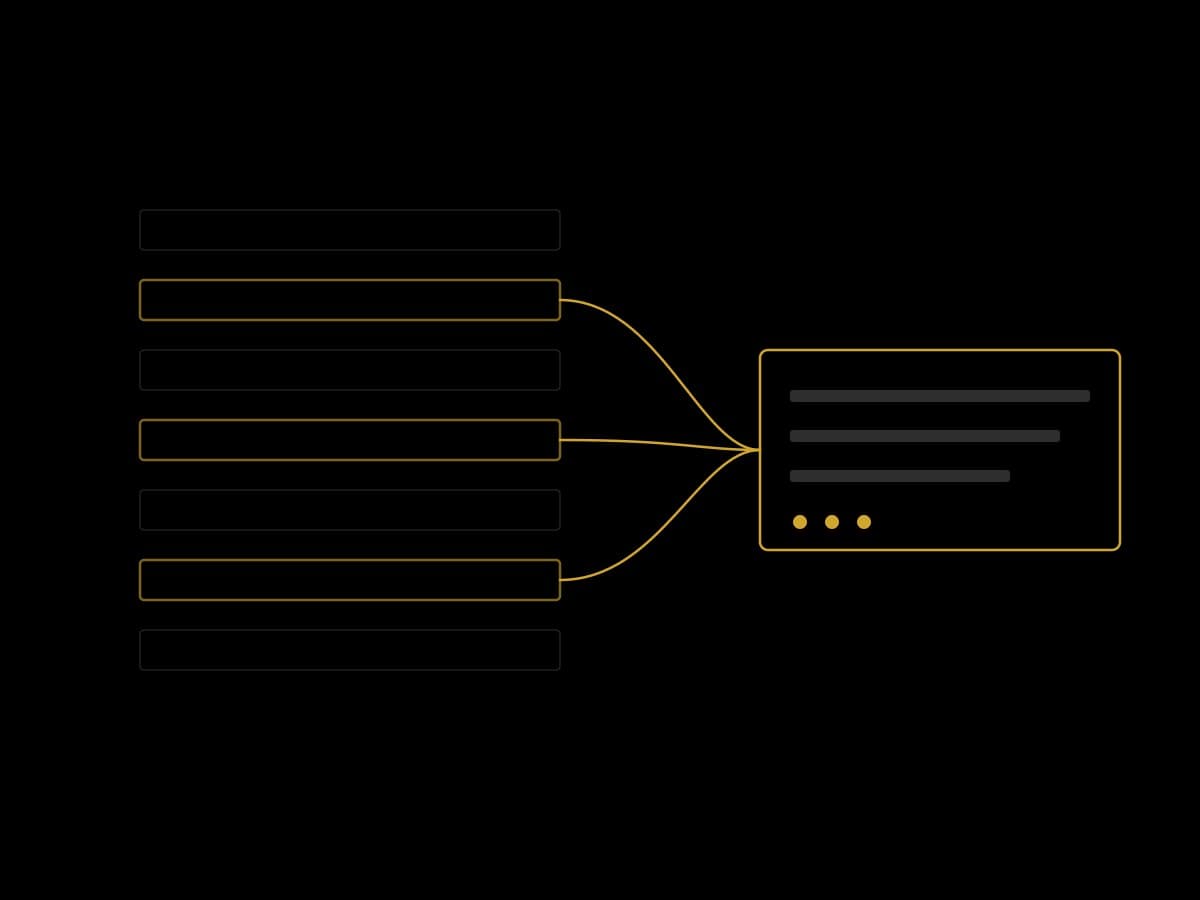
Three things have to be true for that to work, and every serious standard names the same three. The agent has to discover your products, complete a checkout against your system, and move money without ever holding a card number. The Agentic Commerce Protocol calls these the product feed, the agentic checkout, and the delegated payment.
The one line to keep
“A person has to be convinced. An agent has to be able to read you.”
03 · What every transaction needs
Three surfaces, no matter which standard wins.
01
The feed
A structured file of what you sell, priced and in stock, in a format an agent can read. No feed, no presence. The agent surfaces what it can parse, not what looks best.
02
The checkout
Endpoints that let the agent create a cart, update it, and complete the order against your real inventory and pricing. The agent renders the screen. Your system stays the source of truth.
03
The payment
A single use token, scoped to one merchant and one amount, handed to you or your payment provider. The agent moves money without ever holding the card. This delegated step is the part a normal checkout API never had.
04 · A different job
Being found by a person and being bought by an agent are not the same job.
A person lands on your site, reacts to your design, reads your copy, and decides. An agent never sees the design. It reads structure. It compares your price, your availability, and your terms against every rival it can parse, in the time it takes to answer one question.
The old moat, a better looking page and a stronger headline, does very little here. The new moat is being machine legible. Clean data, honest stock counts, a checkout an agent can actually complete. The brands that win the agent are not the loudest. They are the most readable.
05 · The part that makes it safe
One token is the whole trick.
The hardest part of letting a stranger's software buy from you is money. You cannot hand an agent your customer's card. So the standards do not. In the Agentic Commerce Protocol the payment is delegated. The agent receives a single use token, scoped to one merchant and one amount, that works nowhere else.
It passes that token to you or your payment processor. The charge runs on your existing rails. You stay the merchant of record. The agent never sees the card, and you never touch the agent's internals. That one step, a scoped token instead of raw card data, is what separates an agent checkout from an ordinary one.
intent    find a waterproof jacket under 200 that ships friday

feed      your catalog, priced and in stock, machine readable
checkout  create, update, complete against your live system
payment   one single use token, scoped to this merchant

you stay the merchant of record.
the card never reaches the agent.
The Agentic Commerce Protocol · three surfaces, one token
06 · What stays yours
Almost nothing you value has to change hands.
The fear is that an agent layer turns your brand into a commodity feed and takes the customer with it. Read the standards and that is not the deal on the table. Under the Agentic Commerce Protocol the business keeps its existing commerce infrastructure. You set the price. You own fulfillment and returns.
You stay the merchant of record, the name on the receipt and the party the customer's bank sees. The agent is an interface, not an owner. What you give up is the last click, the moment the person would have spent on your site. What you gain is presence in a place people are starting to buy from before they ever open a browser tab.
This is why the standard is not one company's land grab. OpenAI and Stripe maintain the Agentic Commerce Protocol. Google backs a payments protocol of its own. Coinbase and Cloudflare push a rail for machine micropayments. The plumbing is being built in the open, by rivals, because none of them can own the buyer alone.
07 · The open question
The unsettled part is trust, not plumbing.
The checkout mechanics are close to settled. The unsettled part is the one a merchant should care about most. When a request arrives claiming to be an agent acting for a real customer, is it. Visa built a Trusted Agent Protocol for exactly this question. It asks two things of every request. Is this a legitimate, recognized agent, and does it carry valid instructions from the user.
It answers with cryptographic signatures, a registry of known agent keys, and protection against a captured request being replayed later. Expect this layer to matter more than the checkout layer over time, because it is where fraud and consent live.
And a caution. Not every business needs to chase this yet. If your customers do not use agents to buy what you sell, a product feed is housekeeping, not growth. Build for legibility, watch your traffic, and move when agents actually show up in it.
Closing
You still own the store. An agent just walked in.
Pick one product line. Publish a clean, honest feed of it, priced and in stock. Wire a checkout an agent can complete. Then watch who shows up. The first order that closes while no person was ever on your site is the moment this stops being a forecast.
Agentic Commerce Protocol specification, maintained by OpenAI and Stripe · Visa Trusted Agent Protocol · protocol landscape compiled from public specifications, July 2026
Share this perspective
More insights
Adjacent perspectives.


Bttr. Field Brief
The brief Bttr. writes for senior buyers.
Monthly. One signal worth your time on Brand Operating Systems, AI search visibility, and the infrastructure buildout. No filler.