Insight · August 10, 2026
Every session,
from zero.
An agent without memory meets you new every time. Memory is the layer that lets it carry what it learned into the next conversation.
01 · The gap
A tool answers. A colleague remembers.
Ask a model a question and it answers well. Close the tab, come back tomorrow, and it has no idea who you are. Every session starts from zero. No name, no history, no sense of the project you have been working on together for a week.
That is the difference between a tool and a colleague. A tool responds to whatever you put in front of it. A colleague carries what happened last time into what happens now. Agent memory is the layer that closes that gap. In 2026 it stopped being a nice extra and became a first class part of how agents are built, with its own research, its own benchmarks, and a measurable gap between the systems that do it well and the ones that do not.
02 · What it is
So what is agent memory.
Agent memory is a persistent store that sits outside the context window. It keeps what matters from past interactions and pulls the relevant pieces back into the model when they are needed. The context window is working memory, fast and small, wiped between runs. The memory store is the durable part, larger and slower, that survives the session.
The 2023 MemGPT paper framed this as treating a language model like an operating system. An operating system gives a program the illusion of vast memory by moving data between a fast physical layer and a slower store behind it. MemGPT, which grew into the framework now called Letta, does the same for an agent. It moves information between the physical context the model can see and a larger virtual context it cannot, so the agent behaves as if it remembers far more than fits in one window.
So memory is not one thing you switch on. It is a system with three jobs. Decide what is worth keeping. Store it somewhere it can be found again. Retrieve the right piece at the right moment and place it back in front of the model. Get those three right and the agent feels like it knows you. Get them wrong and it either forgets everything or drowns in its own notes.
The one line to keep
“Context is what the model holds. Memory is what it keeps.”
03 · The four kinds
Four kinds of memory, borrowed from people.
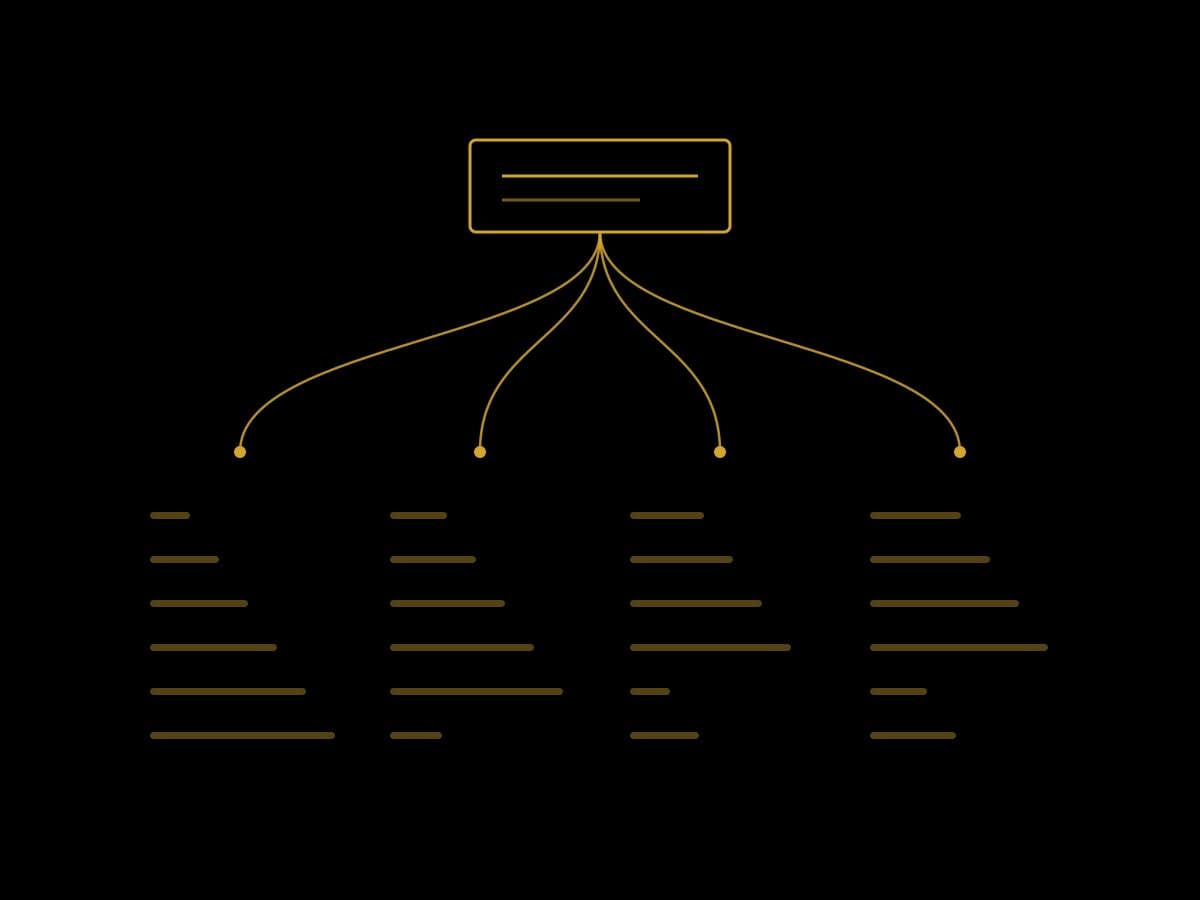
The map most agent builders use comes from cognitive science by way of a 2023 framework called CoALA, which split agent memory the way psychology splits human memory. One short term store, three long term ones.
01
Working memory
The immediate context the model is holding right now. Recent turns, the current task, a partial answer. It lives inside the context window and it is gone when the session ends.
02
Episodic memory
A record of what happened. Specific past events with their details, who said what, when, in which session. The agent reads it back to recall an interaction, not just a fact.
03
Semantic memory
Facts that stay true across sessions. Your name, your preferences, the rules of your business, the state of a project. Generalized knowledge, stripped of the moment it was learned in.
04
Procedural memory
How to do the work. For an agent this is the model weights, the code around it, and the prompt that shapes its behavior. It is the memory the agent runs on rather than reads from.
04 · A bigger window is not memory
Capacity and continuity are different problems.
The obvious fix looks like a bigger context window. If the model can read a million tokens, why bother with a memory system at all. Just paste everything in. This is the most common mistake people make when they first hit the problem.
A larger window solves capacity. It lets the model hold more inside one session. It does nothing for continuity, which is holding what matters across sessions. By 2026 the field treats these as two separate problems with two separate sets of benchmarks. Long context work measures how much a model can read at once. Memory benchmarks like LongMemEval and LoCoMo measure whether an assistant can recall the right thing from a history that spans many conversations.
There is a practical reason the window is not enough. Pasting a month of history into every request is slow, expensive, and noisy. The model has to find the one relevant line inside thousands of irrelevant ones. Memory does the finding first, so only the piece that matters reaches the window. Less to read, and the right thing read.
05 · One example you have already used
A memory that updates itself.
ChatGPT is the version of this most people have touched. Since a broader rollout in April 2025 it works two ways. There are saved memories you ask it to keep, and there is a quieter layer that references your past chats to shape new answers. Both survive the session. Neither lives in the window.
In June 2026 OpenAI added a step it calls dreaming. Instead of only storing what you told it to store, the system looks across many conversations between sessions and rewrites its own view of you into a more current state. Its own example is a fact going stale. A memory that once read you are going to Singapore in July becomes you went to Singapore in July 2026 once the trip has passed. That is the forget job doing real work. Old facts are not just kept, they are revised.
write    keep only what will matter later, not the whole
         transcript. one clean fact beats a raw log.

retrieve pull the few records that fit the moment and
         place them in the window before the model answers.

forget   let old facts expire or update. a memory that
         is wrong is worse than a memory that is missing.
The three jobs · every memory system does these
06 · What it means for your product
Memory is a product decision, not a library import.
Under the store sit real engineering choices. A vector store finds records by meaning. A knowledge graph holds who relates to what. A keyword index catches exact terms. Timestamps mark when a fact was true. Most serious systems use more than one, because no single method retrieves everything a user might ask for.
But the hard problems are not storage. They are product problems. Cross session identity, so the agent knows this is the same person it spoke to last week. Retrieval quality, so it pulls the relevant memory and not a confident wrong one. Staleness, so a fact that has changed does not keep steering answers. Each of these shows up as something the user feels, not a line in a config file.
This is why memory belongs in the product conversation early. What should the agent remember, and for how long. What should it be allowed to forget. When it recalls something about a person, how does that person see it, correct it, or delete it. Those are design and trust questions before they are database questions.
07 · When memory hurts
A wrong memory is worse than none.
Memory is not free and not always good. A system that remembers the wrong thing, or an old thing, will act on it with full confidence. The user gets an answer shaped by a fact that stopped being true months ago, and has no way to see why.
It also raises the stakes on privacy. A store of everything a person has ever said is a store someone has to secure, govern, and be able to erase on request. This is why the mature products give people direct control. ChatGPT lets you turn memory off, view what has been saved, and delete any of it. That control is not a courtesy. It is the price of holding the data at all.
And not every agent needs it. A one shot task with no future does not benefit from a memory system, it just carries the cost and the risk. Memory earns its place on work that continues, where the second session is better because the first one happened.
Closing
Software used to forget you. The good ones remember.
For fifty years a program met you the same way every time. Agents do not have to. The question for anyone shipping one is no longer whether it can answer. It is what it should carry from this conversation into the next, and what it owes the person it remembers.
Memory taxonomy from CoALA, Cognitive Architectures for Language Agents, 2023 · operating system framing from MemGPT, 2023, now the Letta framework · ChatGPT saved memories and chat history, OpenAI, April 2025, and the dreaming update, June 2026 · long term memory benchmarks LongMemEval and LoCoMo
Share this perspective
More insights
Adjacent perspectives.

Bttr. Field Brief
The brief Bttr. writes for senior buyers.
Monthly. One signal worth your time on Brand Operating Systems, AI search visibility, and the infrastructure buildout. No filler.