Neocloud
vs Hyperscaler.
Two tenants dominate the AI infrastructure buildout. They buy the same silicon and run very different businesses. Capital structure, customer concentration, vertical integration, and exit math all diverge. The vocabulary makes them look adjacent. The balance sheets do not.
The short answer
Hyperscalers are diversified platforms that added AI as one capability. Neoclouds are AI native single product businesses underwritten by anchor tenants and asset backed debt. Same silicon. Different balance sheets.
Ten axes of divergence
Where the two business models split.
Origin story
Public cloud platforms (AWS, Azure, GCP, Oracle) extended into AI · AI is one capability inside a broad portfolio
GPU first cloud providers built specifically for AI training and inference · the entire business is AI
A hyperscaler can sustain a soft AI year on the rest of its catalog. A neocloud cannot.
Capital structure
Self funded from cash flow · capex inside a diversified balance sheet
Asset backed debt and project finance · capacity contracts collateralize the build
Neocloud unit economics are visible to the lender. Hyperscaler unit economics are hidden inside a holding company.
Customer concentration
Millions of customers across enterprise, SaaS, public sector, and consumer
Often single digit anchor tenants representing the majority of revenue
A neocloud lives and dies by anchor tenant credit. A hyperscaler does not.
Contract horizon
Mix of on demand, savings plans, and committed use · 1 to 5 year typical
Long dated capacity contracts · 5 to 10 years common, sometimes 15
Neocloud revenue is contracted and predictable. Hyperscaler revenue is elastic and growing.
Vertical integration
Owns land, power deals, mechanical, electrical, network, custom silicon, and the platform layer
Often leases shell capacity, owns GPUs and orchestration, partners on power and real estate
Hyperscalers own more of the stack and capture more margin. Neoclouds move faster by outsourcing the boring layers.
Silicon strategy
Buys NVIDIA at scale, designs custom silicon (Trainium, TPU, Maia, MTIA)
NVIDIA centric · sometimes AMD and custom inference accelerators
Hyperscalers can hedge silicon risk over time. Neoclouds are exposed to NVIDIA roadmap and pricing power.
Workload mix
Training and inference at scale, plus everything else cloud has ever sold
Heavy training emphasis · inference growing as model labs externalize serving
A neocloud campus is closer to a factory. A hyperscaler region is closer to a city.
Geographic footprint
Dozens of regions across multiple continents · sovereign and edge expansion
Smaller number of campuses · power and tenant gravity dictate location
Hyperscalers compete on global presence. Neoclouds compete on time to power.
Pricing
List prices plus committed use discounts · enterprise discounting common
Long dated negotiated capacity rates · spot inventory at varied premium
Neocloud pricing rewards commitment and credit. Hyperscaler pricing rewards consumption.
Exit math
AI revenue rolled into the segment report · accretive to the platform
Direct equity outcomes · IPO, strategic acquisition, or long term private
Neocloud equity is a pure AI infrastructure bet. Hyperscaler equity is a diversified tech bet.
Buyer behavior
Who buys what, and why.
Frontier model lab
Multi billion dollar partnership · capacity bundled with custom silicon, network, and platform integrations
Anchor tenant on dedicated capacity contracts · favored when timeline trumps integration depth
Enterprise CIO
Default choice · integrated with existing cloud footprint, identity, compliance, billing
Considered for cost efficient training and specialized inference where hyperscaler quotas bind
AI native startup
Frequently uses hyperscaler credits during early development · spends a fortune later
Often migrates here for unit economics once training and inference become the dominant cost
Sovereign program
Partners on regional cloud and sovereign AI offerings tied to data residency
Increasingly anchoring neocloud capacity for national AI strategies and supply chain resilience
Industrial off taker
Adopts hyperscaler AI services for digital twins, predictive maintenance, vertical applications
Underwrites bespoke capacity for industry specific training when control matters
Public sector and defense
Long established procurement relationships · sovereign and air gapped offerings
Emerging buyers · neoclouds adapting to FedRAMP, IL5, IL6, sovereign tenancy postures
The risk stack
Where the underwriting actually breaks.
Six axes where the risk shape diverges. Same trend, very different downside.
Demand risk
AI demand shifts mostly cause segment growth to slow · platform absorbs the volatility
If anchor tenants pause training or default, contracted revenue evaporates · refinancing windows close
Silicon risk
Custom silicon program timelines slip · NVIDIA allocation tightens · margin pressure
Pure NVIDIA exposure · pricing power and supply timing dictate gross margin
Power risk
Substation delays push region launches · capital sits idle longer than planned
Anchor contract triggers require power by a date · slippage breaks the deal
Refinancing risk
Low · self funded, investment grade balance sheet
High · debt heavy structure with maturity walls tied to GPU depreciation curves
Concentration risk
Diversified · no single customer breaks the model
Single anchor tenant frequently representing 30 to 70 percent of revenue
Obsolescence risk
Older capacity repurposed across the broader catalog · multi workload utility
GPU generations depreciate fast · single workload halls less easily redeployed
Four sponsor playbooks
How to think about both, depending on what you do.
For investors
Hyperscaler equity is a diversified bet on tech, advertising, e commerce, and cloud with an AI upside option. Neocloud equity is a concentrated bet on AI demand, anchor tenant credit, silicon roadmap, and capital markets staying open. Same trend, different risk shape.
For model labs
Hyperscalers offer integration depth and platform stickiness. Neoclouds offer speed to capacity and contractually predictable cost. Most frontier labs run both, and the split is the negotiation lever.
For enterprises
Default to hyperscaler for breadth, governance, and integration with existing cloud and identity. Add neocloud for narrow high cost workloads where hyperscaler quotas, pricing, or capacity timing become the binding constraint.
For real estate sponsors
A neocloud anchor is a single tenant industrial lease with long dated contracted revenue. A hyperscaler anchor is an investment grade tenant with stronger comps and lower cap rates. Both have a place. Diligence which you are actually underwriting.
The framing line
Hyperscalers bought AI as a feature. Neoclouds are AI as a balance sheet. One swims in a portfolio. The other lives or dies by a tenant and a transformer.
Where Bttr. operates
Same product surfaces. Different tenant downstream.
Bttr. designs the commercialization layer on top of both models · buyer portals, capacity contract experiences, operator dashboards, and financing flows. The downstream tenant is different. The product problem is the same · legibility of a multi billion dollar capacity decision.
Frequently asked
The questions investors actually ask.
What is a neocloud?
A GPU first cloud provider built specifically for AI training and inference. Examples include CoreWeave, Lambda, Crusoe, Nebius, and Together. The whole business is AI infrastructure, not a feature inside a broader cloud catalog.
How is a neocloud different from a hyperscaler?
Hyperscalers are diversified public cloud platforms that added AI as one capability. Neoclouds are AI native, single product, capital structure dominated by asset backed debt and long dated capacity contracts. Same silicon, very different business models, very different risk shapes.
Who are the major hyperscalers in AI infrastructure?
AWS, Microsoft Azure, Google Cloud, Oracle, and increasingly Meta and Apple for first party AI workloads. Each is investing tens of billions of dollars per year in AI specific capacity and custom silicon.
Who are the major neoclouds?
CoreWeave, Lambda, Crusoe, Nebius, Together, Northern Data, Iris Energy, and a long tail of regional and specialty providers. Each has a different mix of anchor tenants, capital structure, and geographic footprint.
Why do neoclouds use so much debt?
Long dated anchor tenant contracts are bankable. Lenders underwrite the contracted revenue, the GPU fleet, and the power. The result is a capital structure that looks more like real estate or infrastructure project finance than traditional venture or growth equity.
Is neocloud risk the same as cloud risk?
No. Neocloud concentration risk, anchor tenant credit risk, silicon roadmap risk, and refinancing risk are all different from how the cloud era was underwritten. The vocabulary is similar. The risk shape is closer to industrial infrastructure than to SaaS.
Where does Bttr. operate inside this split?
Bttr. designs the commercialization layer on top of both. The buyer portals, capacity contract experiences, dashboards, and financing flows that let a tenant or sponsor actually understand what they are buying. Same product surfaces, different downstream tenant. We build for both.
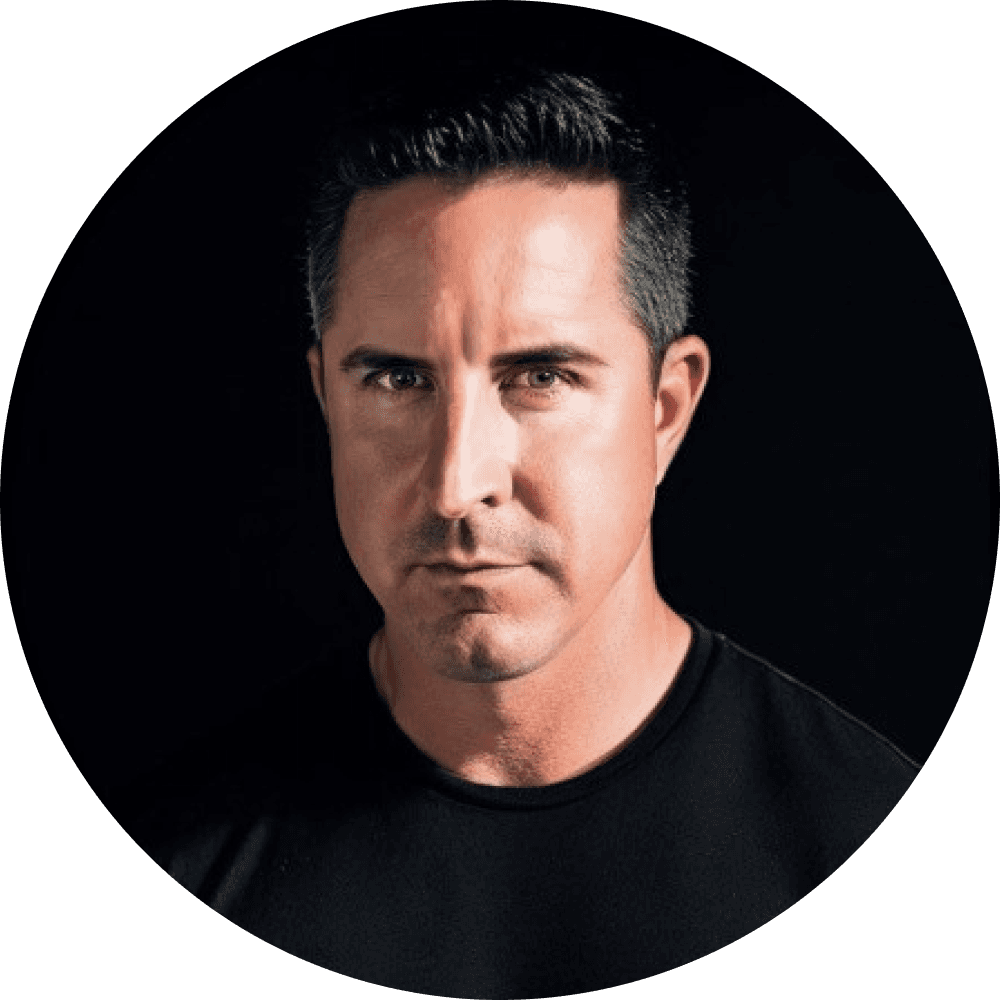
Written by
Donny Smith · ECD, Founder, Bttr.
Over the past 15 years, he has led creative teams and contributed to products used by millions of people worldwide, working with companies including Apple, Opendoor, JP Morgan, GE Aerospace, Pepsi, and Alterra Mountain Company.
LinkedInThe Frontier Series
Get the next Frontier brief in your inbox.
Field notes on AI infrastructure commercialization · capital structure, tenant credit, silicon roadmap, and the surfaces that turn capacity into a product. One brief, no filler.