AI Infrastructure
vs Cloud Infrastructure.
They look adjacent on a slide. In the field they diverge on every axis that matters · power density, cooling, network fabric, site selection, capex per MW, tenancy, sponsor archetype. Treating them as one category is the most expensive category error in infrastructure right now.
The short answer
Cloud infrastructure is elastic transactional compute shared across thousands of tenants. AI infrastructure is sustained dense compute underwritten by anchor tenants on decade long contracts. The building, the buyer, and the balance sheet are all different.
Twelve axes of divergence
Where the two stacks diverge.
Primary workload
General compute · web tier, databases, SaaS, transactional storage, batch ETL
Model training and inference · large dense GPU clusters running for weeks at a time
Cloud is bursty, latency sensitive, and elastic. AI is sustained, capital intensive, and physics constrained.
Power density per rack
5 to 15 kW per rack typical
40 to 130 kW per rack today · roadmap to 250 kW with NVL72 class systems
You cannot retrofit a cloud hall into an AI factory. The structural, electrical, and mechanical assumptions are different.
Cooling
Air cooled with hot aisle containment
Direct to chip liquid cooling and rear door heat exchangers · immersion at the edge
Liquid plumbing, CDUs, and water treatment become first class building systems, not afterthoughts.
Network fabric
Standard ethernet at 25 to 100 Gbps with leaf and spine
InfiniBand or RoCE at 400 to 800 Gbps with NVLink scale up domains inside the rack
AI fabric latency budgets are measured in microseconds. A single slow node stalls thousands of GPUs.
Tenancy model
Multi tenant · thousands of customers per region
Single tenant or anchor tenant · entire campuses dedicated to one model lab or hyperscaler
AI deals look more like build to suit industrial leases than cloud subscription contracts.
Site selection driver
Latency to population centers and network peering · land is secondary
Available firm power, water, and substation capacity · latency is secondary
AI infrastructure goes where the electrons are. New corridors emerge in Texas, the Mountain West, and the Mid Atlantic.
Capex per MW
Roughly $7M to $10M per MW for traditional builds
Roughly $40M to $60M per MW including GPUs, cooling, and high speed fabric
Each MW of AI capacity carries four to six times the capital intensity of cloud, and a tighter financing window.
Contract horizon
OpEx pricing · pay as you go, reserved instances, savings plans
Long dated capacity contracts · 10 to 15 year power purchase agreements behind them
AI buyers underwrite decade long bets. The cost of being wrong on power is the cost of the company.
Sponsor archetype
Enterprise CIO migrating off prem · or a SaaS team optimizing unit economics
Model lab, neocloud, hyperscaler, sovereign program, or industrial off taker
Different buyers, different sales motions, different procurement timelines, different risk posture.
Topology
Distributed regions and PoPs · failure isolation by zone
Large contiguous campuses · failure domains measured at the cluster level
AI campuses concentrate risk and reward. One transformer or one fabric outage takes thousands of GPUs offline.
Storage profile
Object stores, block volumes, OLTP databases
High throughput parallel file systems · checkpoint stores measured in PB per training run
Storage is a first class member of the AI stack, not a commodity tier underneath.
Software boundary
IaaS, PaaS, managed services up the stack
CUDA, NCCL, model serving, orchestration, distributed training frameworks
AI infrastructure success depends as much on software fluency as on building shell quality.
Who buys what
The buyer map looks nothing alike.
Cloud buying lived inside IT for two decades. AI infrastructure buying lives inside capital allocation, energy strategy, and the CEO office. Six archetypes show up in the room.
Enterprise CIO
Pulls workloads off prem. Optimizes unit economics across regions. Standardizes on one or two hyperscalers.
Treats AI as a capability layer, not a buildout. Buys capacity from hyperscalers or contracts a managed AI provider.
Hyperscaler
Operates the largest cloud regions on earth. Optimizes for utilization across millions of customers.
Building AI factories at gigawatt scale. Vertically integrating power, silicon, network, and model serving.
Neocloud
Did not exist as a category. There is no neocloud equivalent in classic cloud infrastructure.
GPU first cloud provider · CoreWeave, Lambda, Crusoe, Nebius, Together. Long dated tenant contracts and infrastructure debt.
Sovereign program
Buys regional cloud capacity from a hyperscaler partner. Focused on data residency and procurement compliance.
Standing up national AI compute capacity. Treating training as a strategic asset alongside grid and semiconductors.
Industrial off taker
Standard SaaS and IaaS consumption. Procurement led by IT.
Anchor tenant of an AI campus. Procurement led by capital allocation and energy strategy, not IT.
Real estate sponsor
Underwrites multi tenant data center REITs and colos with stabilized cash flows.
Underwrites build to suit AI campuses with single anchor tenants and long dated contracted revenue.
Capital stack
Where the dollars actually go.
Walk through a cloud build and an AI build layer by layer. Every line item gets rewritten.
Land and site
Suburban or peri urban parcels near network peering and fiber backbones
Industrial parcels adjacent to substations · often co located with generation
Power
Standard interconnect agreements · grid power with diesel backup
Behind the meter generation, long dated PPAs, on site gas, nuclear and hydro adjacencies
Mechanical and cooling
Air handling, CRACs, chillers
CDUs, manifolds, liquid distribution, dry coolers, immersion tanks
Electrical
UPS, PDUs, standard low to mid voltage distribution
High amperage busways, transformer banks, on site switchgear, sometimes substation ownership
Network and silicon
Switches, routers, peering · commodity x86 servers
NVLink domains, InfiniBand fabric, GPU clusters · Hopper, Blackwell, custom ASICs
Software
Hyperscaler control planes, Kubernetes, managed databases
CUDA, NCCL, Slurm, Ray, vLLM, model serving and orchestration
The framing line
Cloud bought elasticity by the second. AI buys capacity by the decade. That single sentence rewrites every contract, every site decision, and every capital model in the industry.
Where Bttr. operates
We design the commercialization layer.
Bttr. does not pour concrete or sell silicon. We design the surfaces that sit on top of an AI campus and turn it into a product · buyer portals, financing flows, capacity contract experiences, operator dashboards, and the operating systems that connect them.
When a sponsor underwrites a billion dollar campus on a fifteen year contract, the difference between a great deal and a mediocre one often comes down to how legible the product is to the buyer. That legibility is a design problem.
Frequently asked
The questions buyers actually ask.
Is AI infrastructure just cloud infrastructure with GPUs?
No. The two share vocabulary and not much else. AI infrastructure is power, cooling, network fabric, site selection, capex profile, tenancy, and sponsor archetype all reset for sustained dense workloads. A cloud region cannot be retrofitted into an AI factory without rebuilding the building.
Why is power density the biggest difference?
A cloud rack pulls 5 to 15 kW. An AI rack with a 72 GPU NVL system pulls 130 kW today and is on a path to 250 kW. The mechanical, electrical, and structural assumptions of a cloud hall do not survive that step change.
Why does AI infrastructure use liquid cooling?
Air cannot move enough heat at AI power densities. Direct to chip liquid cooling and rear door heat exchangers are the only viable path. This makes water treatment, CDUs, and plumbing first class building systems.
Who buys AI infrastructure versus cloud infrastructure?
Cloud is bought by enterprise CIOs migrating off prem and by SaaS teams optimizing unit economics. AI infrastructure is bought by hyperscalers, neoclouds, model labs, sovereign programs, and industrial off takers underwriting decade long capacity contracts.
How much more does an AI MW cost than a cloud MW?
Roughly four to six times. A traditional cloud MW lands in the $7M to $10M range. An AI MW including GPUs, cooling, and high speed fabric runs $40M to $60M. The financing window is also tighter because the underlying silicon depreciates faster.
Will cloud infrastructure go away?
No. Transactional workloads, SaaS, and general compute still need elastic multi tenant cloud regions. AI infrastructure runs alongside cloud, not on top of it. The two stacks are converging in the catalog and diverging in the field.
Where does Bttr. operate inside this divide?
Bttr. designs the commercialization layer on top of AI infrastructure · the buyer surfaces, dashboards, financing flows, contract experiences, and operating systems that turn a campus into a product. We do not pour concrete or sell silicon.
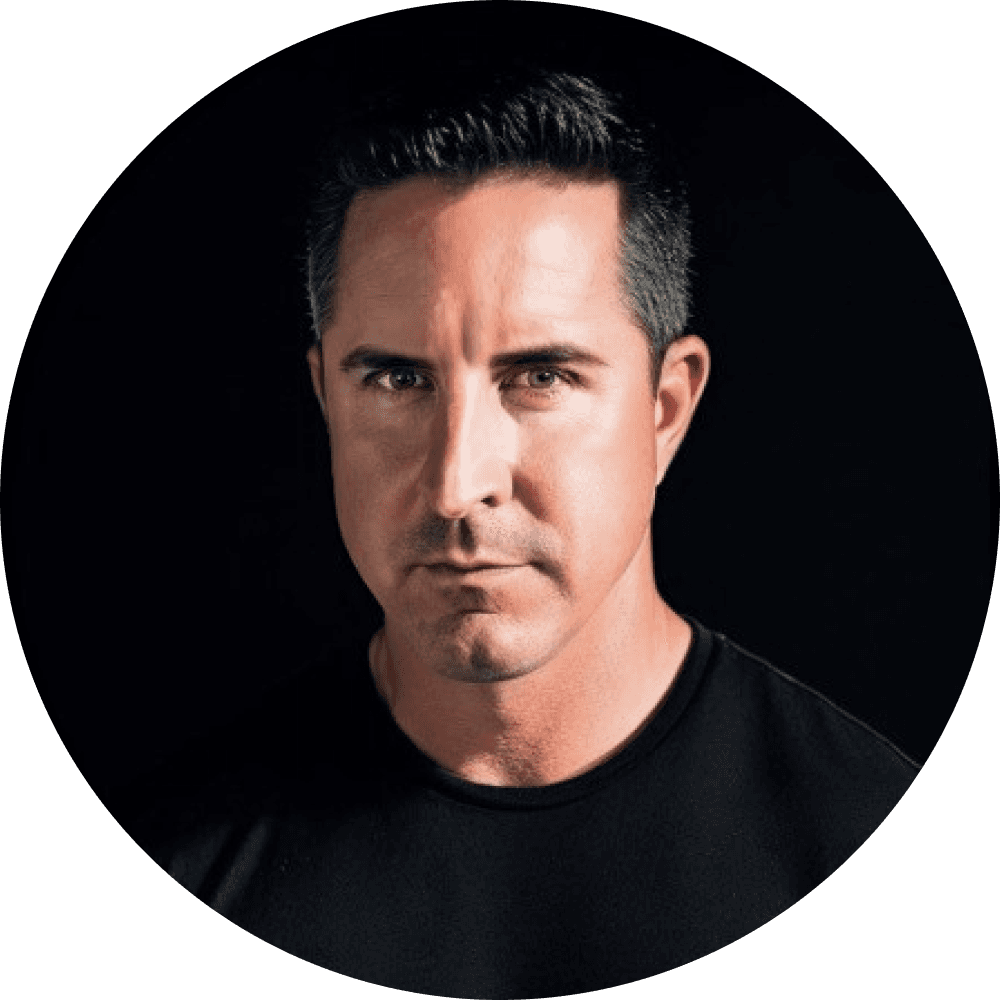
Written by
Donny Smith · ECD, Founder, Bttr.
Over the past 15 years, he has led creative teams and contributed to products used by millions of people worldwide, working with companies including Apple, Opendoor, JP Morgan, GE Aerospace, Pepsi, and Alterra Mountain Company.
LinkedInThe Frontier Series
Get the next Frontier brief in your inbox.
Field notes on AI infrastructure commercialization · power, capital, contracts, and the surfaces that buyers actually touch. One brief, no filler.