Insight · July 26, 2026
The hour stopped
measuring the work.
When an agent does in one hour what took a day, the hour stops mapping to the value. WPP is already moving its revenue off it.
01 · The shift
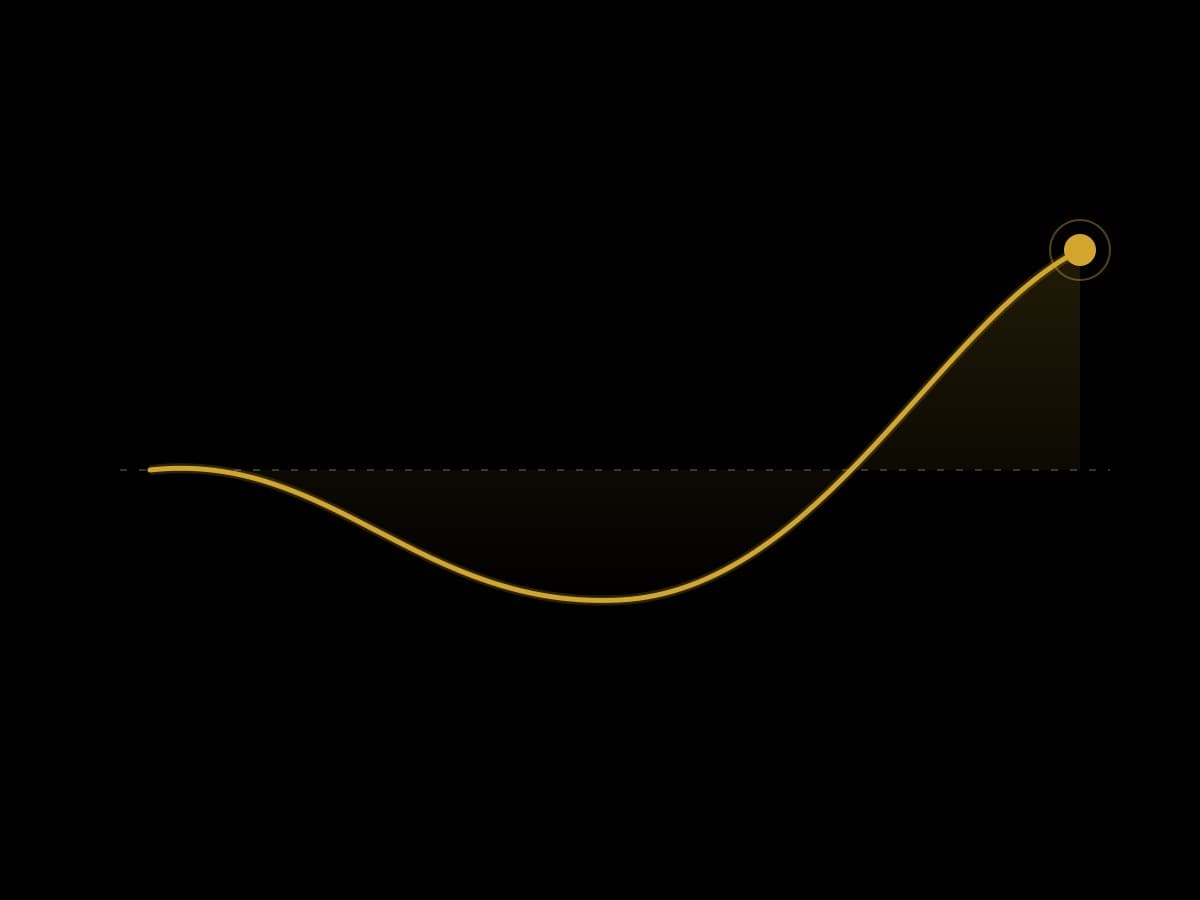
The unit agencies sold for a century came unglued from the value.
For a hundred years an agency sold an hour. The hour was a proxy. It stood in for skill and effort, and clients accepted it because effort and value moved together. More hours meant more work meant more value. AI broke that link. A senior team now produces in an afternoon what used to fill a week, and the hour keeps ticking without measuring anything a client wants to buy.
In February 2026 WPP, the holding company behind Ogilvy and other agencies, said it out loud. Its chief financial officer, Joanne Wilson, told analysts that a commercial model tied more closely to client outcomes would let the company “move away from time and materials and decouple revenue from headcount.” Nearly a quarter of WPP net sales, between 20 and 25 percent, already comes from fees linked to performance rather than hours.
02 · The problem
Hourly billing now punishes your best work.
Picture the mechanics. A deliverable that took twenty hours now takes five. Bill by the hour and you just cut your own invoice by seventy five percent for getting faster. The client watches the same output arrive sooner and asks the obvious question. Why am I still paying the old number.
That conversation is already common. Productive.io surveyed more than 180 agencies in 2025. Roughly a third had already fielded a request for an AI discount, and about half expected one soon. The requests cluster in one place, at firms still anchored to the hour. Hourly billing puts your cost structure on the invoice and invites the client to negotiate it down. Only 13 percent of agencies in that survey were cutting rates. The rest were holding, raising, or changing how they price.
The one line to keep
“The hour measures effort. Clients were always buying the outcome.”
03 · What replaces the hour
Four ways to price, none of them a clock.
01
Fixed price per deliverable
You price the thing, not the time. A brand system, a landing page, a research report. If a tool makes it faster, the margin is yours. If it runs long, the risk is yours. The client buys a known outcome for a known number.
02
Retainer
A flat monthly fee for a standing capability. The client gets access and output. You keep every efficiency you find. This is the model AI rewards most, because your cost falls while the fee holds.
03
Outcome or performance
The fee ties to a result the client cares about. Traffic, qualified leads, revenue, a launched product. Hardest to structure, strongest to defend, because it is paid from value created rather than time spent.
04
Subscription or usage
A recurring fee for continuous access, sometimes metered. Globant launched exactly this in June 2025 with a model it calls AI Pods, a subscription for AI powered engineering priced on a token metered capacity, built to align with outcomes rather than effort.
04 · What actually changed
Effort and value used to move together. Now they do not.
The old models were not wrong. They were honest accounting for a world where effort and value tracked each other. Break that link and every hourly invoice starts lying in the client's favor. The work is worth what it does for the business, and the hours behind it are now a poor guide to that number, sometimes off by a factor of four.
WPP is not running one new model. Wilson described three at once. The old time and materials. Output pricing, charging for the deliverable rather than the hours, still a minority of the business but growing. And licensing and subscription fees tied to its data and marketing platforms. That is the honest picture of a transition. You do not flip a switch. You add the new models where they fit and let the hour recede.
05 · The same deliverable, priced three ways
One landing page. Three invoices. Only one rewards speed.
Take a single deliverable and price it three ways. The work is identical. What changes is who keeps the gain when a tool makes that work faster, and who carries the risk when it runs long.
Deliverable · one conversion focused landing page

By the hour     18 hours times your rate    faster work lowers the bill
Fixed price     one number for the page     faster work raises the margin
On outcome      a base plus a share of lift paid from the value created
The clock is the only line where getting better costs you money
06 · Making the switch
Price the outcome, protect the downside.
Moving off the hour is not a leap of faith. It is a set of concrete moves. Start where the outcome is legible. Deliverables with a clear finish line price cleanly as fixed work. Results a client already tracks, leads, signups, revenue, can carry a performance component. Ambiguous discovery work, where nobody can name what done looks like, stays on the hour a while longer.
Protect the downside with scope. A fixed price needs a defined edge, what is included and what triggers a new number, or a fast job turns into a free one the moment the client keeps adding to it. The scope is what makes fixed pricing safe rather than a bet.
Price from the client's economics, not yours. The question is not how many hours the work took. It is what the result is worth to their business. When that answer is large, an hourly invoice was quietly leaving most of the value on the table.
07 · When the hour still fits
The clock is not dead everywhere.
The hour still works for genuinely open work. Early discovery, research with no known endpoint, engagements where the scope shifts week to week. When neither side can describe the finish line, time is the only honest unit left, and pretending otherwise just moves the risk around.
The hour also stays useful as an internal measure. Knowing what work costs you in time is how you price everything else well. The shift is not to stop counting hours. It is to stop selling them.
Closing
You were never selling hours.
Pick one deliverable you bill by the hour and one where the client can name the outcome. Price the first as a flat number and the second on the result. Watch what happens to the margin the next time a tool makes the work faster. That is the whole case, in two invoices.
WPP 2025 preliminary results and strategy update, February 2026, remarks by CFO Joanne Wilson · Globant AI Pods announcement, June 2025 · Productive.io agencies in the AI era survey, 2025
Share this perspective
More insights
Adjacent perspectives.

Bttr. Field Brief
The brief Bttr. writes for senior buyers.
Monthly. One signal worth your time on Brand Operating Systems, AI search visibility, and the infrastructure buildout. No filler.