January 2026
LEGO Just Shipped
the Anti-App Product
No screen. No app. No subscription. The SMART brick proves that the best technology disappears.
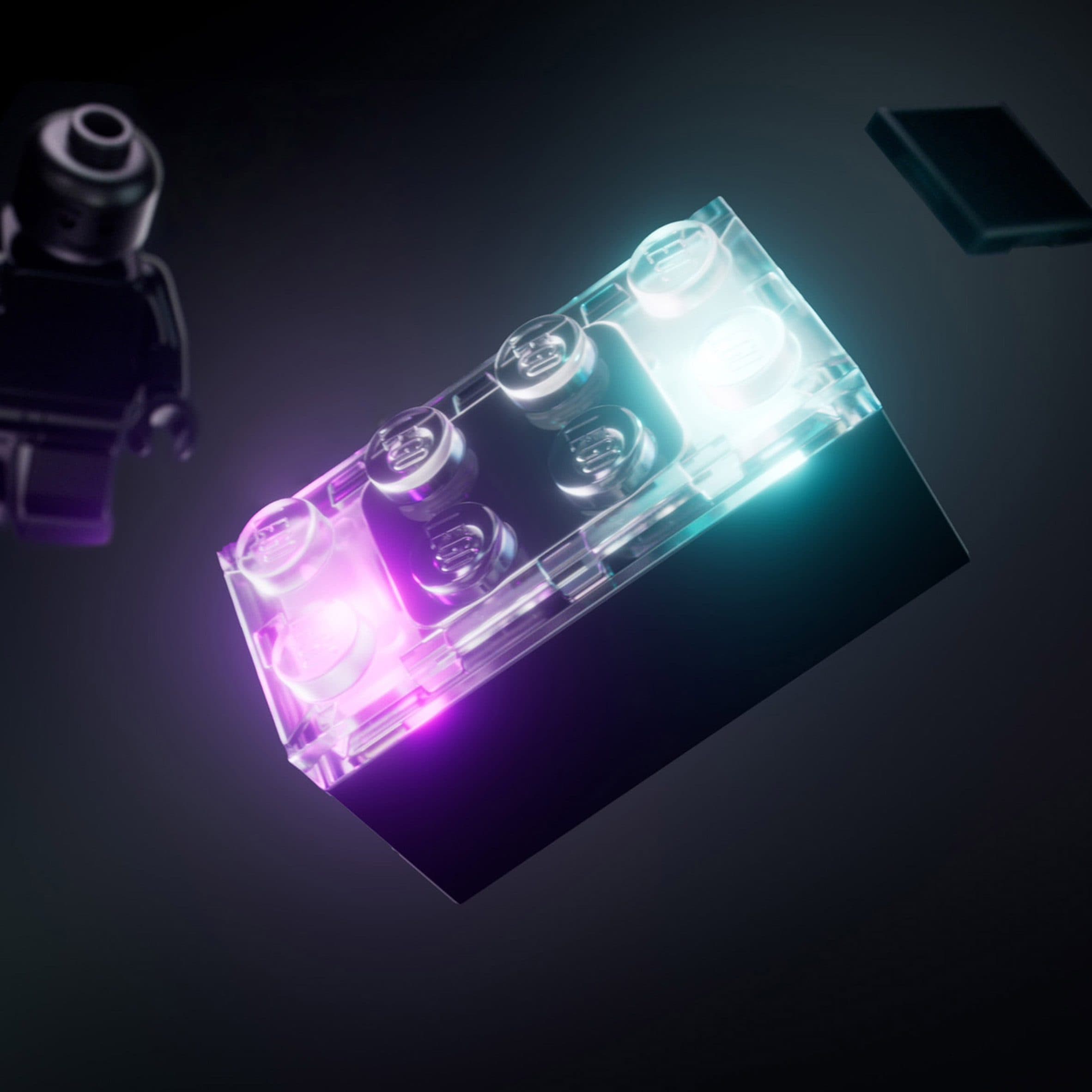
LEGO announced SMART Play—a platform with sensors, accelerometers, light detection, and sound synthesis. All embedded in a brick smaller than a standard stud. No screen. No app. No login.
The technology disappears into the build. You interact with physical objects, and physical objects respond. Move a figure, adjust a structure, trigger a tagged element—the build reacts in real time with sound and behavior. No pairing screens. No companion apps. No accounts.
LEGO calls it "the most consequential addition to the LEGO System since the Minifigure." The consequential part is what they left out.
The Connected Toy Graveyard
While every other toy company spent the last decade chasing apps, LEGO watched. They watched the pattern repeat.
The pattern was clear. Apps do not make toys better. They make toys into accessories for screens. The toy becomes the peripheral. The screen becomes the experience. And when the app loses support, the toy becomes e-waste.
LEGO Dimensions was LEGO's own attempt at toys-to-life. They killed it in 2017. Then they spent seven years figuring out what they should have built instead.
What LEGO Understood
The SMART brick is not a gadget you add to a build. It is infrastructure that disappears into a build. The distinction matters.
The technology is the product. It demands attention. It requires its own interface. It becomes the point.
The technology enables the product. It disappears. It requires no interface. It becomes invisible.
Every connected toy that failed made the same mistake. They added technology as a feature. LEGO added technology as plumbing. You do not think about plumbing. You just expect water when you turn the tap.
The SMART brick charges wirelessly, has no display, and is backward compatible with every LEGO set ever made. It exists to enable, not to demand.

The Decisions That Made It Work
Screens compete for attention. The brick should amplify the physical build, not replace it.
Apps create dependencies. When the app dies, the product dies. The brick works standalone.
Accounts create friction. A child should be able to play immediately, not onboard.
Fifty years of existing sets still work. New technology serves the system, not the other way around.
No proprietary cables. No ports to break. No accessories to lose.
SMART Play enhances sets but is not required. Non-smart LEGO remains fully valid.
Each decision is a rejection. No to screens. No to apps. No to accounts. No to proprietary accessories. No to mandatory upgrades. The product is defined by what LEGO refused to add.
The best technology is infrastructure.
Not interface.
What This Means for Product Design
The SMART brick is a case study in restraint. It demonstrates what happens when a company asks "what should we not add?" before asking "what can we add?"
The pattern applies everywhere:
- 1Enterprise software: Your ERP does not need AI chatbots. It needs to process transactions without crashing.
- 2Healthcare devices: Your monitoring system does not need a dashboard redesign. It needs to alert reliably.
- 3Industrial controls: Your HMI does not need touch gestures. It needs to work with gloves in -20°C.
- 4Consumer electronics: Your smart home does not need voice assistants. It needs switches that respond.
Technology should disappear into the experience, not sit on top of it demanding to be noticed.

LEGO spent seven years learning that the best feature is often no feature at all.
What would your product look like
if the technology disappeared?
Share this perspective
More Insights
Perspectives on product design, technology, and the decisions that separate products that last from products that don't.

We build products where the technology disappears. That means fewer features, better infrastructure, and experiences that work without demanding attention.